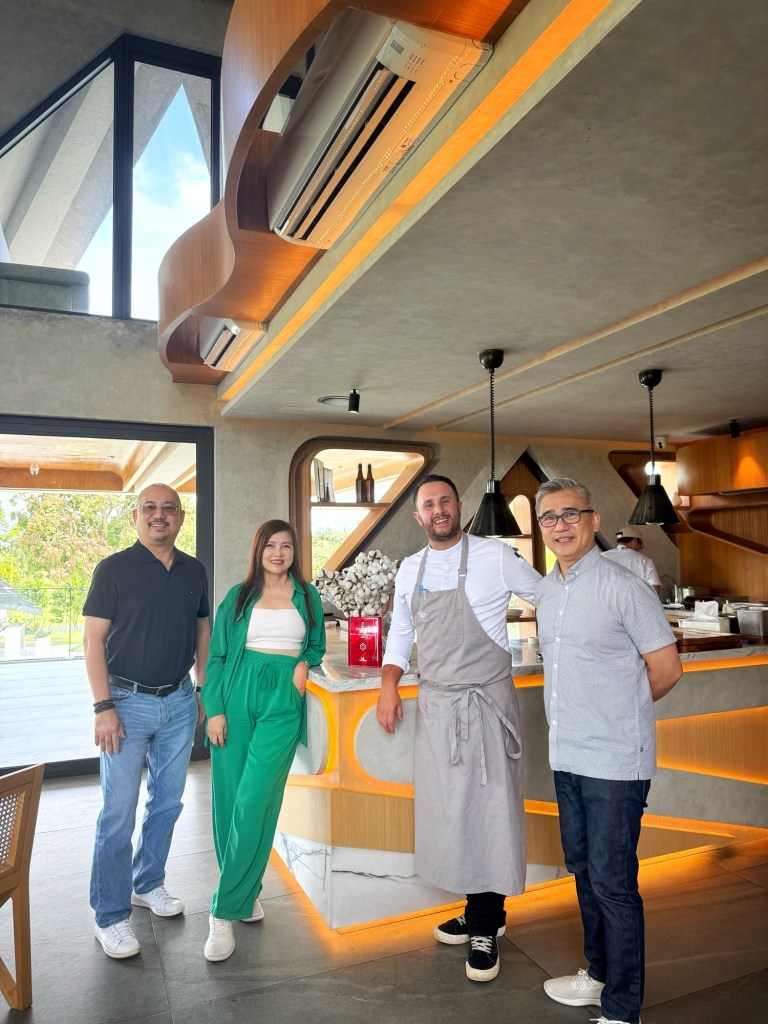
Last Thursday, Nov 27, after a two-hour drive we arrived at Asador Alfonso, stiff from travel but buzzing with anticipation.
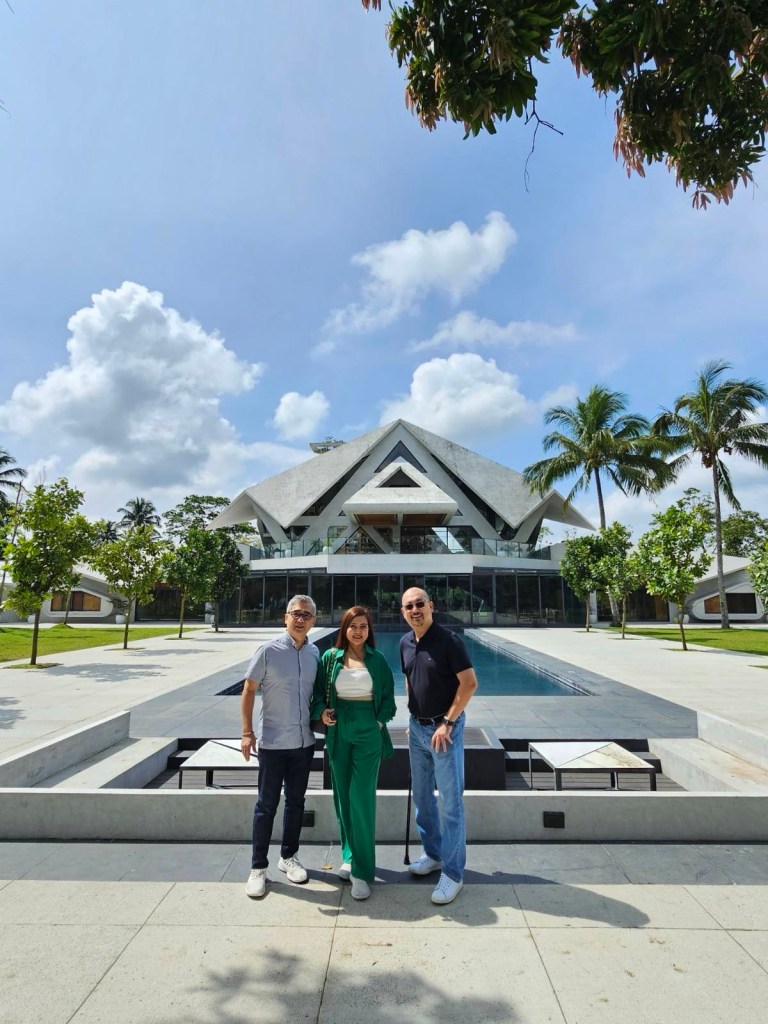
Set on an impressive 9.4-hectare estate, the restaurant reveals itself slowly, almost theatrically, as you approach. Even from the driveway, the architecture announces itself with quiet confidence: clean modern lines, expansive glass panels, and bold folded concrete shapes inspired by lava flows. The whole estate is dubbed The Lava Rock.
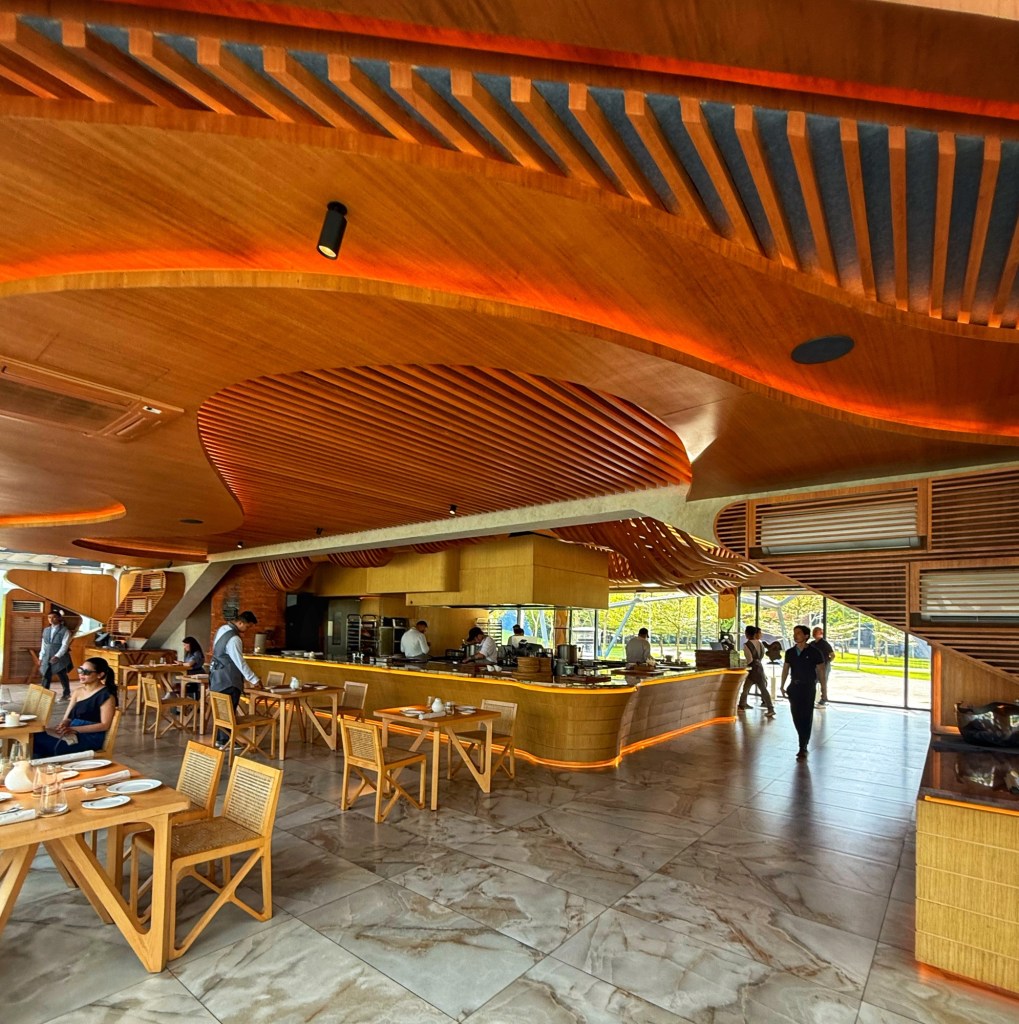
The theme is echoed inside the restaurant with its open kitchen and the use of natural elements like warm wood and stone to connect guests with the natural surroundings.
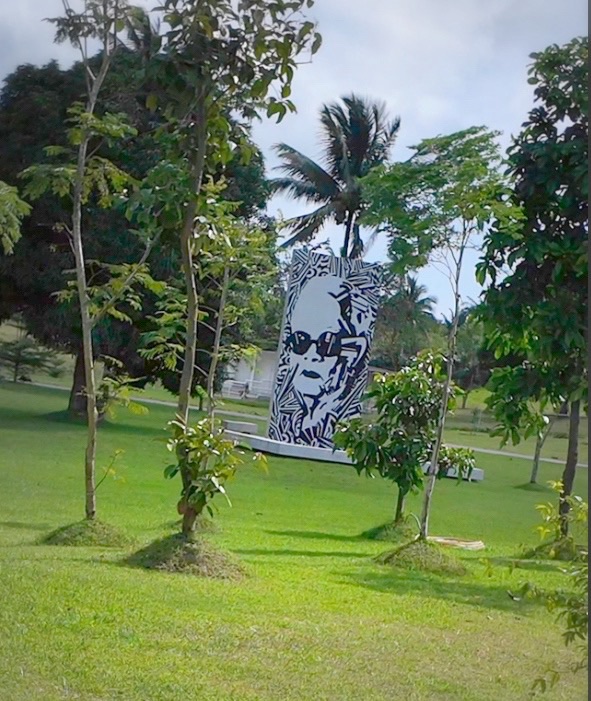
Once inside, the space continues to surprise. From the waiting lounge, your eyes are drawn to the striking black-and-white graffiti wall of Pablo Calma, framed perfectly by the vast green expanse of the estate. Stark and expressive it feels like a story unfolding across the landscape, making the wait part of the experience rather than just a pause before the meal.
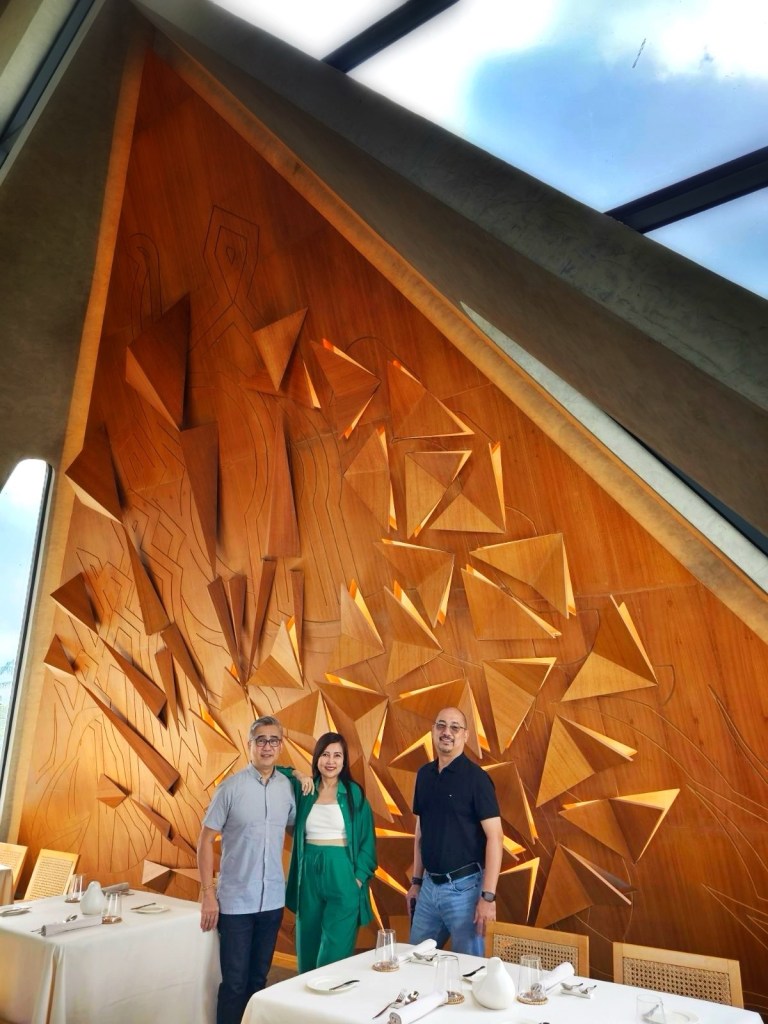
Only later did I discover the origami wall on the second floor, a stunning piece of art whose sharp geometric folds catch the light in a way that makes it seem alive, almost shifting as you move around it. Between the graffiti and this unexpected artwork, it was clear that every corner of Asador Alfonso had been designed to spark discovery.
About Asador Alfonso
Asador Alfonso sits on a sprawling 9.4-hectare estate in Alfonso, Cavite — a property developed by the family behind architect Carlo Calma, who envisioned the land as a multi-layered destination blending architecture, nature, and gastronomy. Initially conceived as a private retreat called The Lava Rock, the estate draws inspiration from the dramatic volcanic terrain surrounding Taal, with design elements echoing lava flows, sharp creases, and rugged natural forms.
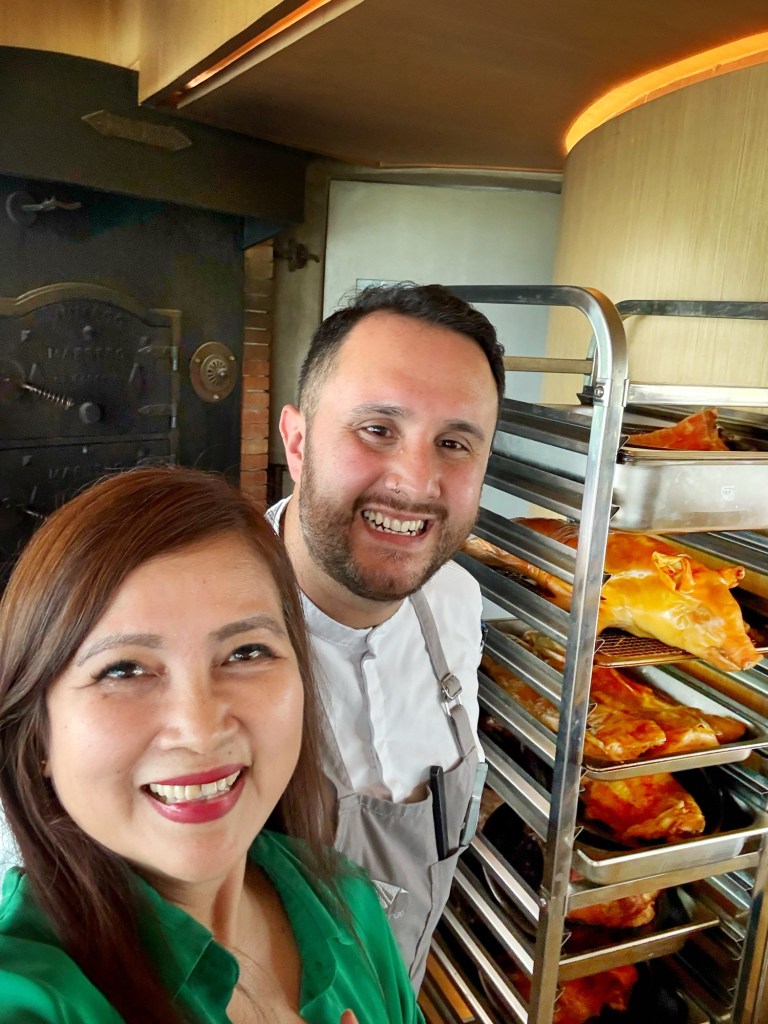
Culinarily, Asador Alfonso is led by Spanish Chefs chef Chele González and Chef Rodrigo Andres Osorio who bring ancestral Spanish roasting techniques to Cavite. Their menu highlights dishes rooted in central Spain’s traditions — including lechazo slow-roasted suckling lamb and cochinillo — while integrating the restaurant’s volcanic theme through its central oven using wood, designed to resemble a glowing crater at the heart of the dining space.
More than a restaurant, Asador Alfonso represents an evolving destination — blending food, architecture, landscape, and art into a single immersive experience.
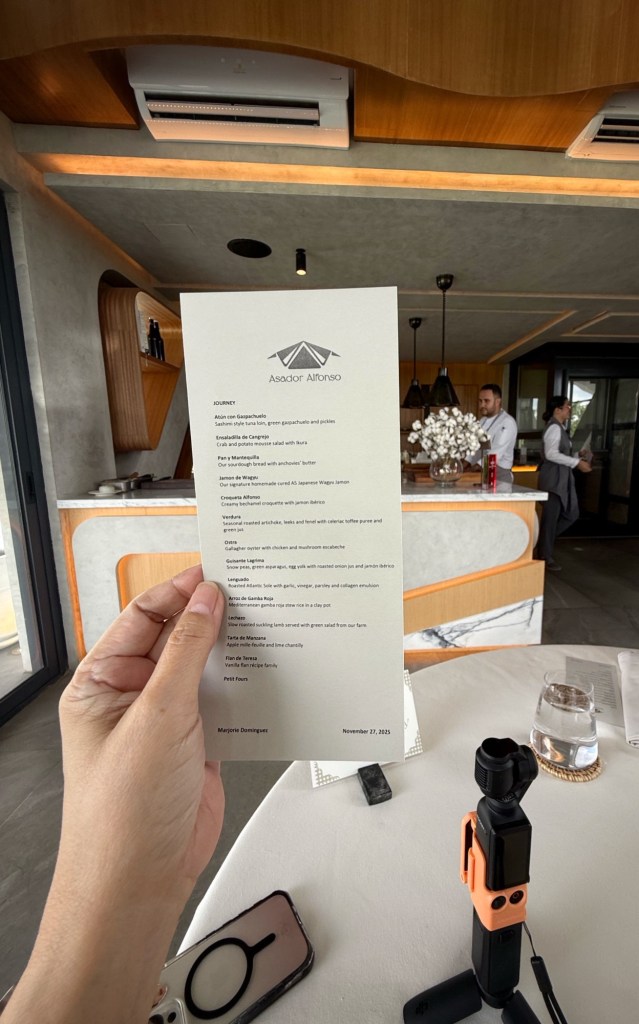
JOURNEY
described as a multi-course menu from the North & South of Spain. We were told that 80% of their ingredients are from Spain while 20% are sourced locally. They have two ovens , one is the flat grill from the northern part of Spain and the other one a brick oven that cooks the cochinillo and lechazo
First Course
Atun con Gazpachuelo
Spanish cold soup, sashimi style tuna loin comes with tomato tartare and piperasco or pickled green chili on top. The best way to eat it we were told is to incorporate the sauce with the tuna
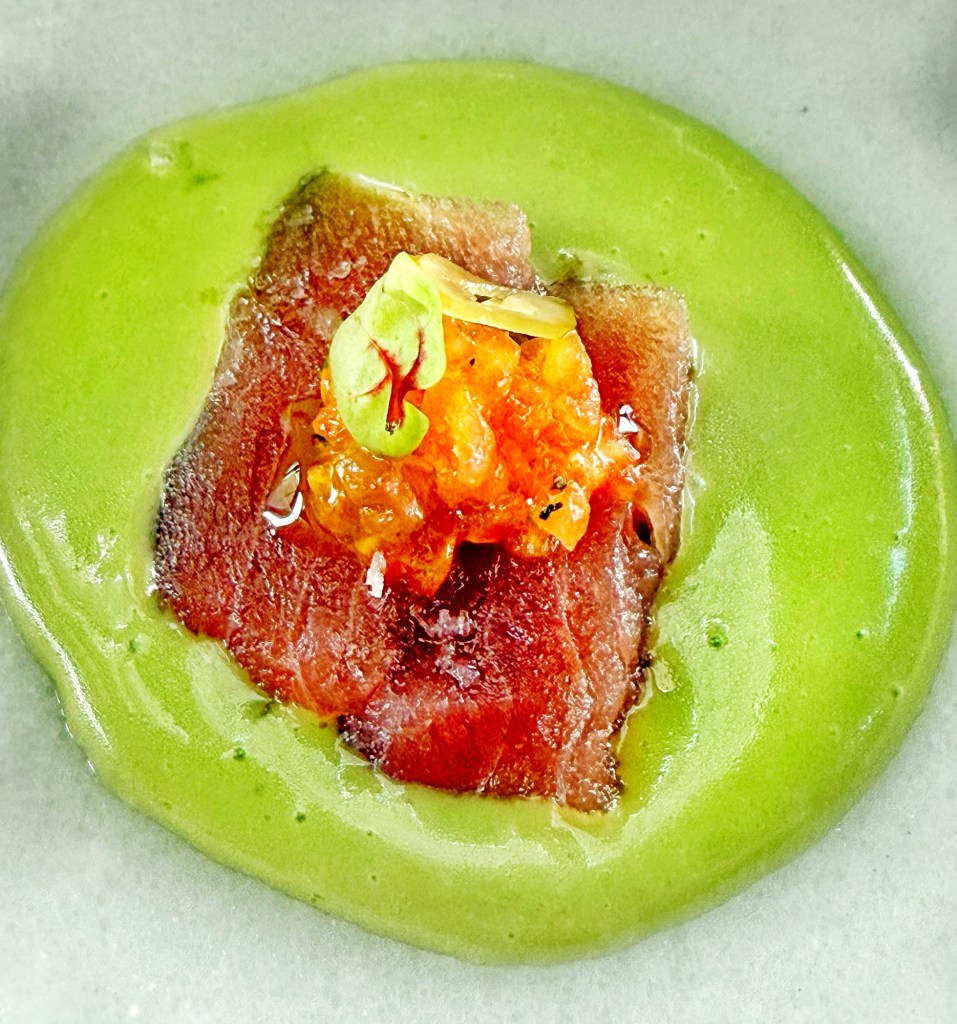
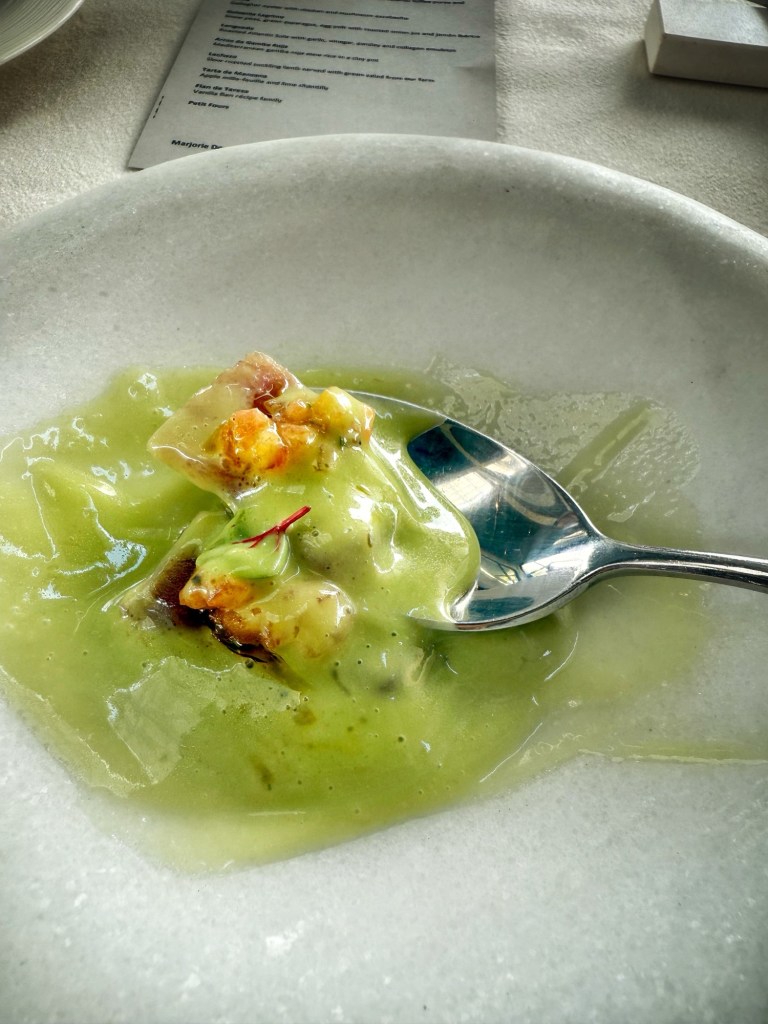
The tuna was fresh and married well with the Chef’s version of the Spanish cold soup which is more like emulsion or a sauce rather than a soup
Second Course: Ensaladilla de Cangrejo
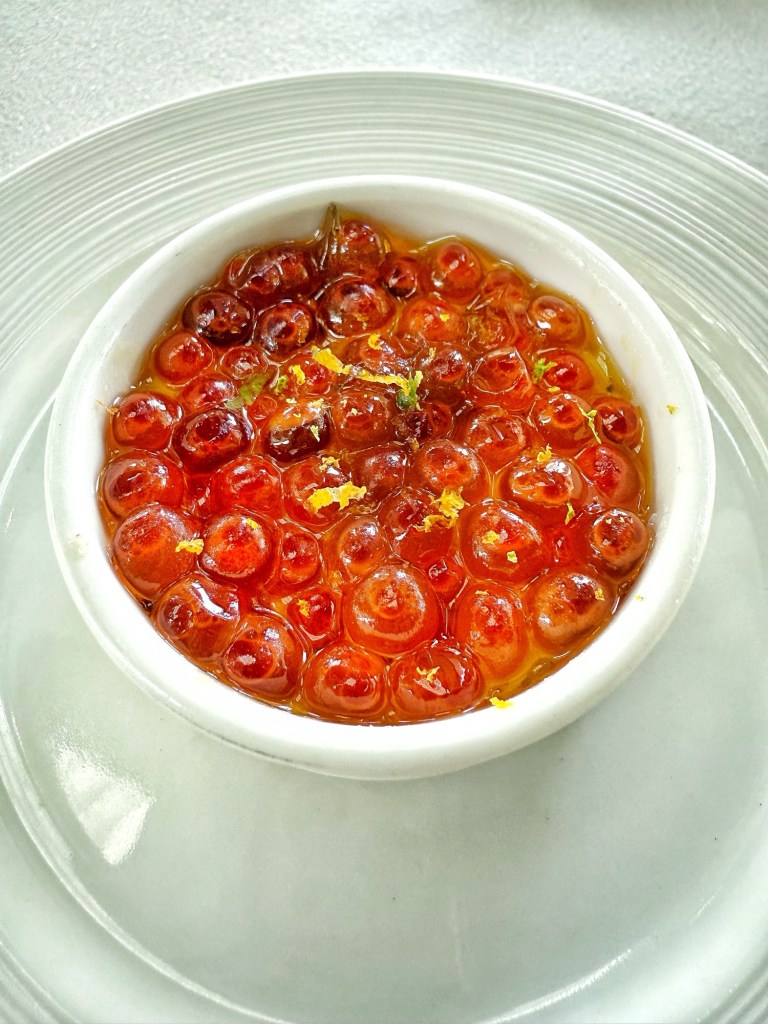
Crab and potato mousse salad with Ikura
A crab and potato mousse salad sounds familiar enough—comforting, even—but here it arrives with a whisper of Japan. The silken mousse, cool and delicate, becomes suddenly more intriguing under glossy pearls of ikura that burst with brine and brightness. It’s the kind of pairing I never expected, yet now can’t imagine the dish without: a classic Spanish ensaladilla given a clever, cosmopolitan twist.
I’m already plotting how to recreate this at home—ikura and all.
Third Course: Pan y Mantequilla
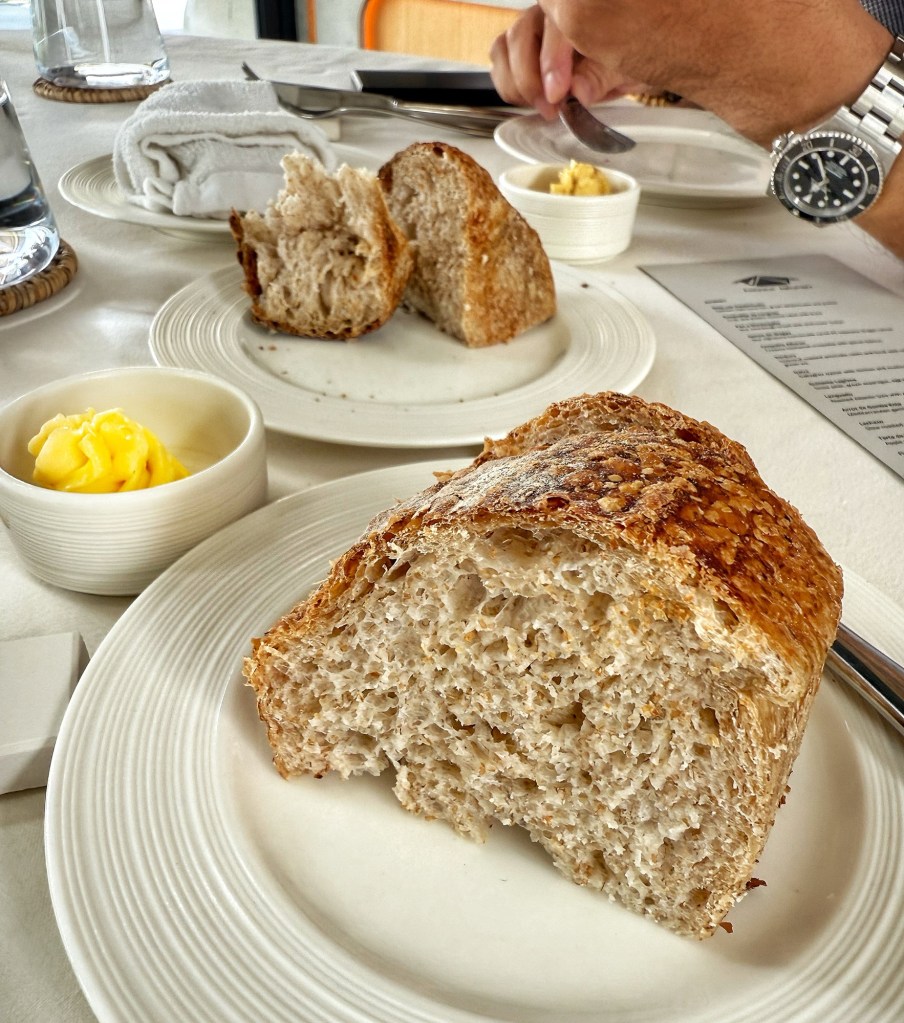
Our sourdough bread with anchovies’ butter
There’s a quiet kind of drama in something as simple as bread and butter—especially when it arrives warm enough that the steam still sighs from the crust. Our sourdough is baked in-house, its exterior crackling under the knife, giving way to an interior so airy and tender it practically melts on the tongue.
But the real surprise comes in the form of the anchovy butter: a briny, velvety spread that lifts each bite into something far more indulgent than its humble name suggests.
Note to self: figure out how to make anchovy butter at home—and then put it on everything.
Fourth & Fifth Courses: Hamon de Wagyu and Croqueta Alfonso

Our signature homemade cured A5 Japanese Wagyu Jamon
The moment these two dishes arrive together, the table goes quiet—everyone instinctively leaning in to admire the artistry. Visualize A5 Japanese Wagyu, but not as the marbled steak we know. Here it’s transformed, cured into jamón and sliced impossibly thin, translucent almost, each ribbon shimmering with fat. The difference between this Jamón de Wagyu and Spain’s revered Jamón Ibérico? Time.
The Wagyu version is cured in just a week, while its Iberian cousin slumbers for thirteen years. And yet, on the tongue, the Wagyu feels nothing short of celestial—decadent, sinful, a whisper of luxury that dissolves before you can quite catch it.
Beside it: the deeply comforting Croqueta Alfonso. Imagine a golden, crunchy exterior giving way to molten béchamel enriched with Jamón Ibérico—a grandmother’s recipe passed down through generations in Spain. It’s soul food at its finest, the kind that tastes like memory. There’s also a vegetable variation, equally creamy and studded with Jamón Ibérico, proving that simplicity, when perfected, can stand proudly alongside decadence.
Together, the two courses play like a duet: indulgence and nostalgia, refinement and home. And every bite feels like a small celebration.
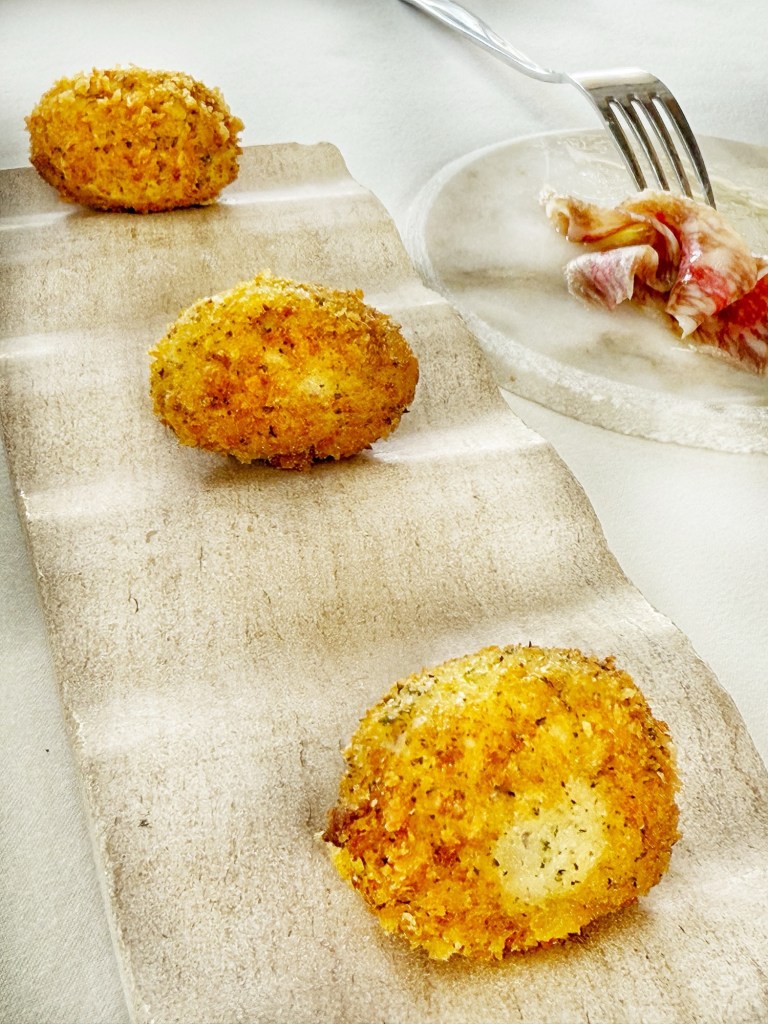
Creamy bechamel croquette with jamon ibérico
6th course : Verdura
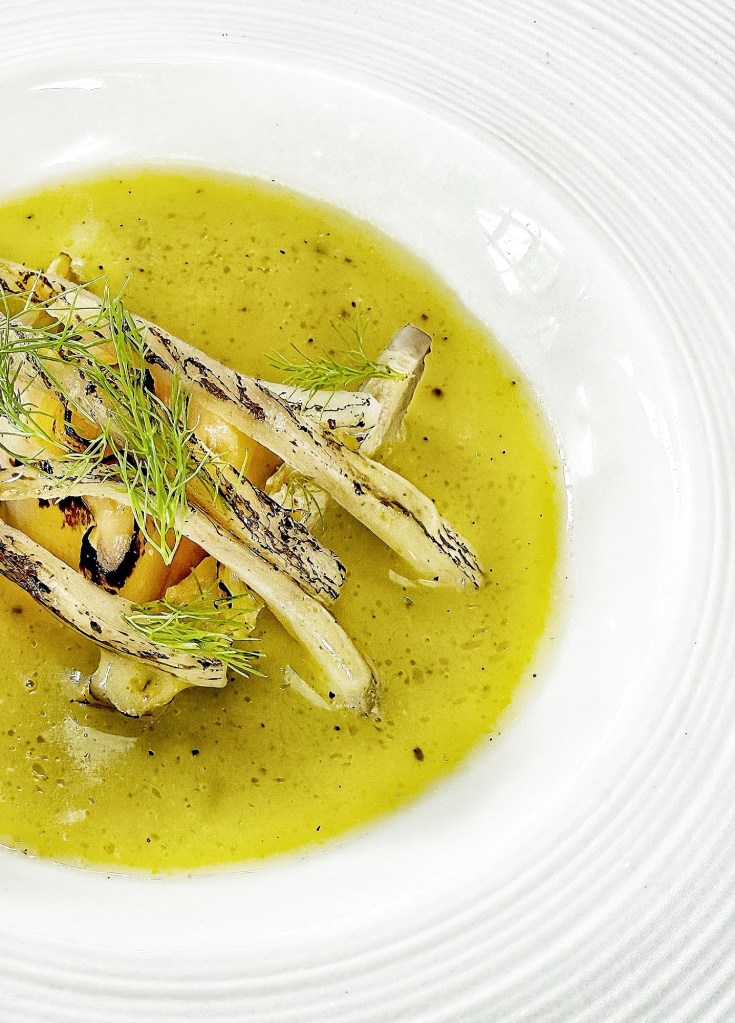
Seasonal roasted artichoke, leeks and fenel with celeriac toffee puree and green jus
A quiet stunner arrives in the form of Verdura, a celebration of the season’s most expressive vegetables. Roasted artichoke, caramelized at the edges, anchors the plate alongside tender leeks and fennel, the trio resting on a lush celeriac–toffee purée.
I think this was the moment I fell in love with artichoke. I never realized it could taste so sweet and deeply flavorful when roasted, its natural sugars surfacing like a secret it had been keeping all along. The celeriac purée, enriched with toffee, brings an unexpected sweet-savory harmony—the earthiness of celery root meeting the warm caramel notes of toffee in a way that makes each bite feel both grounded and indulgent.
A whisper of green jus ties everything together, brightening the richness without ever overshadowing it.
7th & 8th Course : Surf & Turf
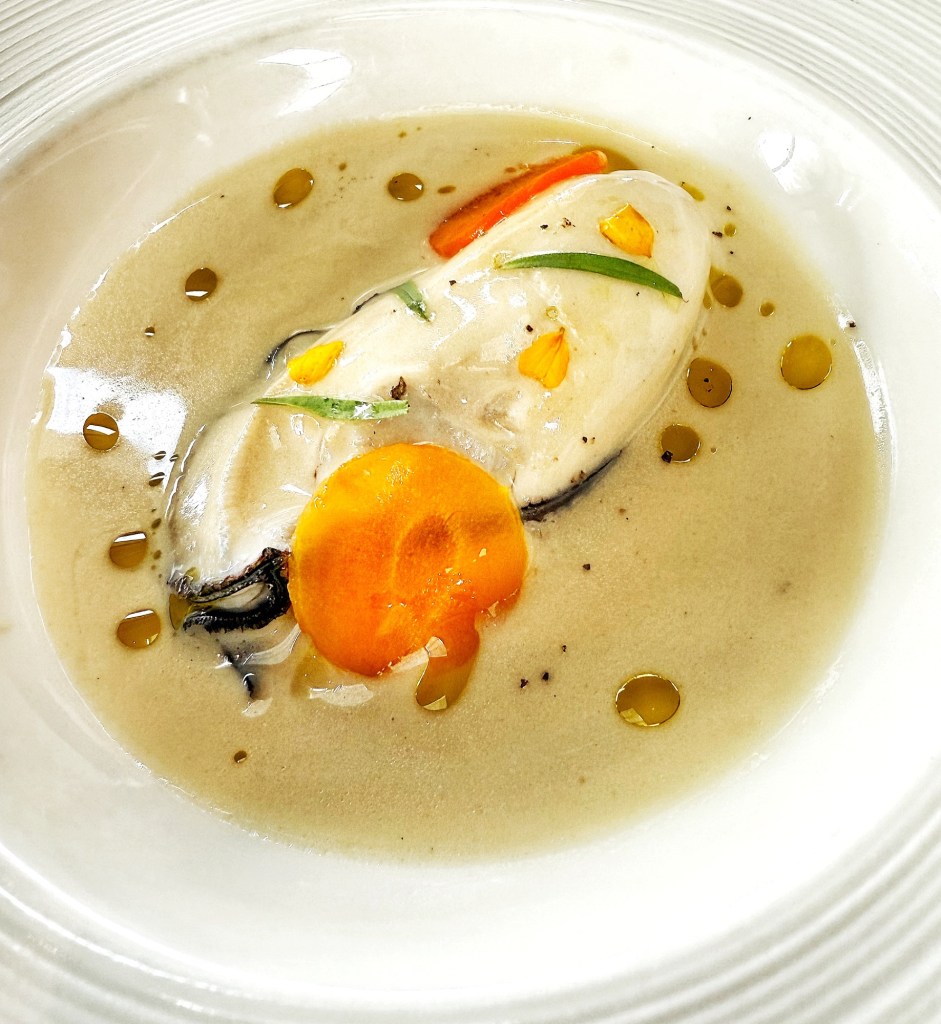
Gallagher oyster with chicken and mushroom escabeche
The next duet arrives as Ostra, a playful surf-meets-turf interlude built around a pristine Gallagher oyster, flown in from the craggy shores of Ireland. It’s paired with a delicate chicken-and-mushroom escabeche—a nod to the classic preservation technique in which seafood or vegetables are briefly fried, then bathed in a bright, vinegary marinade. Here, the escabeche comes alive with tender pickled carrots and a gentle gloss of extra-virgin olive oil, adding acidity and warmth that set the oyster’s briny sweetness into brilliant relief.

Immediately on its heels comes a bite of pure indulgence: crispy pork trotters from their signature cochinillo. On some days we were told , the kitchen swaps in the cochinillo’s ears instead—equally crisp, equally irresistible.

The morsel is crowned with a house brava sauce, a silky emulsion built from slow-roasted vegetables blended to sweetness, then lifted with a ribbon of olive oil. A whisper of aglio olio threads through it all, adding garlic warmth that clings to every crackly edge of the pork.
9th Course : Guisante Lagrima
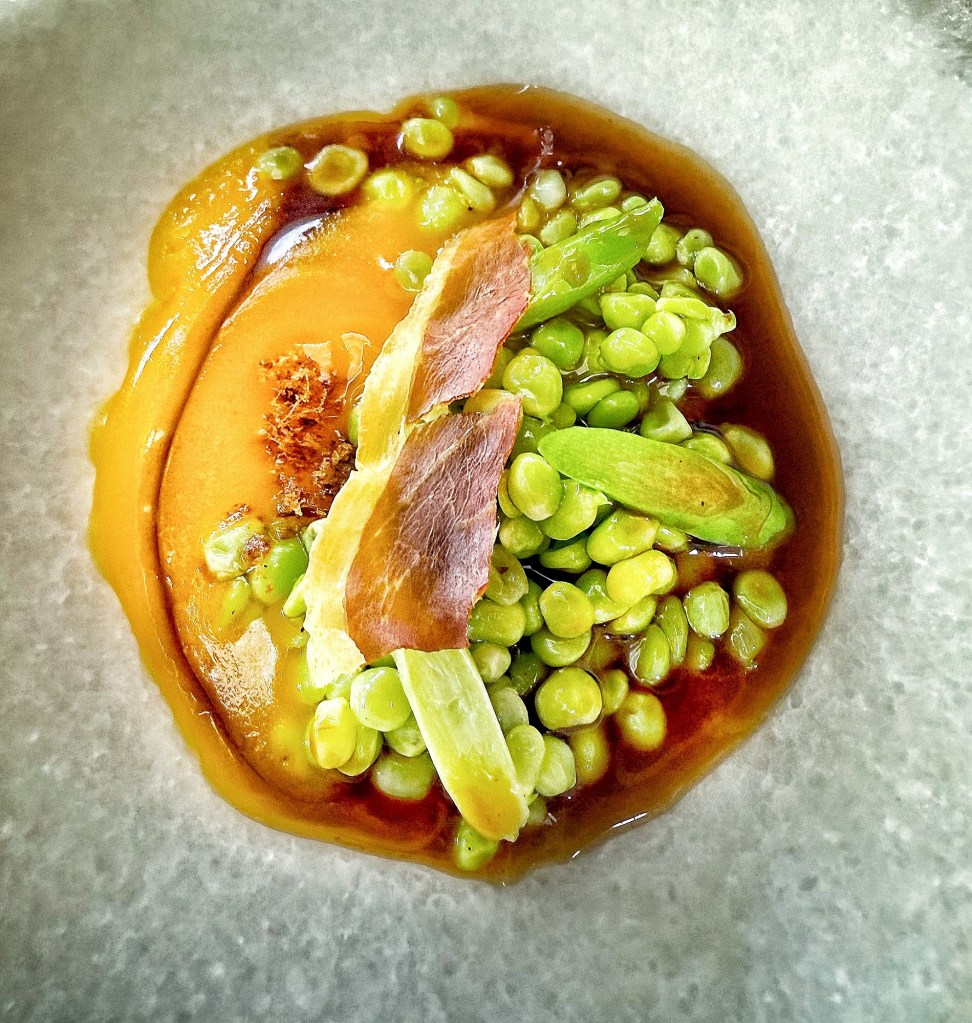
Snow peas, green asparagus, egg yolk with roasted onion jus and jamón ibérico
Per my google research I learned that in the Basque Country, few seasonal ingredients inspire as much anticipation as the guisante lágrima, the diminutive “tear pea” harvested along the coast of Gipuzkoa. Known for its tiny, tapered shape and exceptional sweetness, the pea is often described by local chefs as “vegetable caviar,” a nod to both its delicacy and its premium price. Its short harvest window and labor-intensive picking—farmers identify ripeness by gently running their fingers along each pod—have made it one of Spain’s most prized spring ingredients.
This year, ASADOR Alfonso is among the restaurants showcasing the crop in its purest form. The kitchen presents the peas with a sous-vide egg yolk, cooked at low temperature to achieve a velvety, custard-like consistency. The yolk acts as a warm, neutral foundation, allowing the fresh sweetness and snap of the guisante lágrima to stand out without distraction.
The result is a restrained, ingredient-driven dish that highlights both the rarity of the pea and the precision required to serve it well—an example of how thoughtful technique can elevate a fleeting seasonal product without overshadowing it.
10th Course: Lenguado
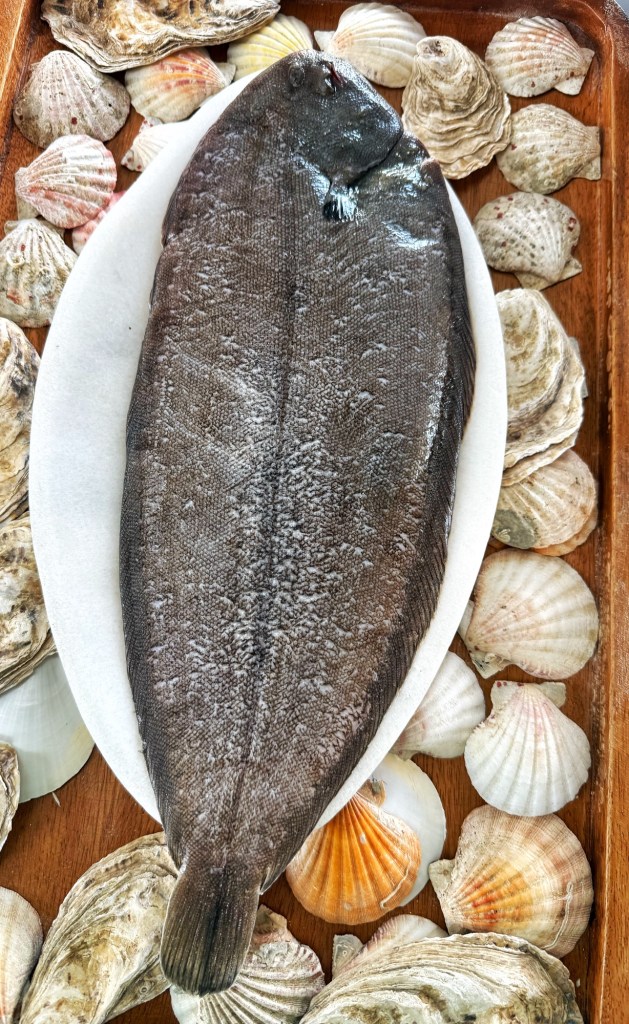
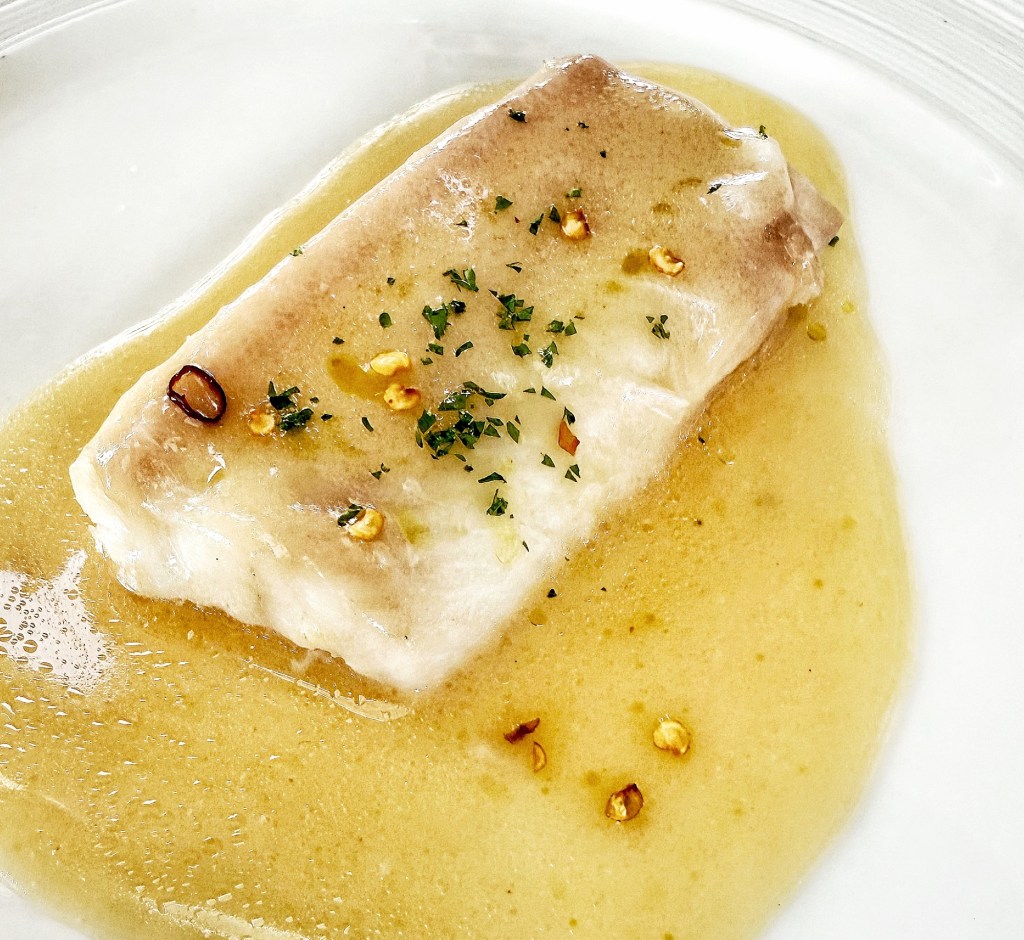
Roasted Atlantic Sole with garlic, vinegar, parsley and collagen emulsion
Some dishes announce themselves with drama; others win you over with a quieter sort of authority. The roasted Atlantic sole at this stage of the menu falls firmly into the latter camp—a dish that seems almost modest until you take the first bite and realize how much thoughtful cooking is quietly at work.
Sole is a fish that gives you nowhere to hide. Roast it even a shade too long and the flesh tightens; under-season it and it goes flat. But here, the kitchen threads that narrow path beautifully. The fish arrives with the gentlest golden crust, the interior still tender and just translucent enough to signal confidence rather than caution.
What really charms is the way the classic Basque trio—garlic, vinegar, and parsley—is handled. The garlic never bullies, the vinegar cuts with a clean line instead of a shout, and the parsley does what parsley rarely gets credit for: it lifts everything with a bright, herbal clarity. It’s a familiar combination, but treated with an understanding that tradition doesn’t need reinvention—just execution.
Then there’s the collagen emulsion, drawn from the fish itself. This is the kind of detail food obsessives live for. Silky, quietly marine, and utterly seamless, it binds the sauce together in a way that makes each bite feel almost impossibly cohesive. It’s subtle, the sort of technique that isn’t meant to be noticed so much as felt.
In a long tasting menu, this course does something invaluable: it resets the palate without lowering the stakes. It’s clean, confident cooking—proof that simplicity, when done well, is its own small luxury.
11th Arroz de Gamba Roja
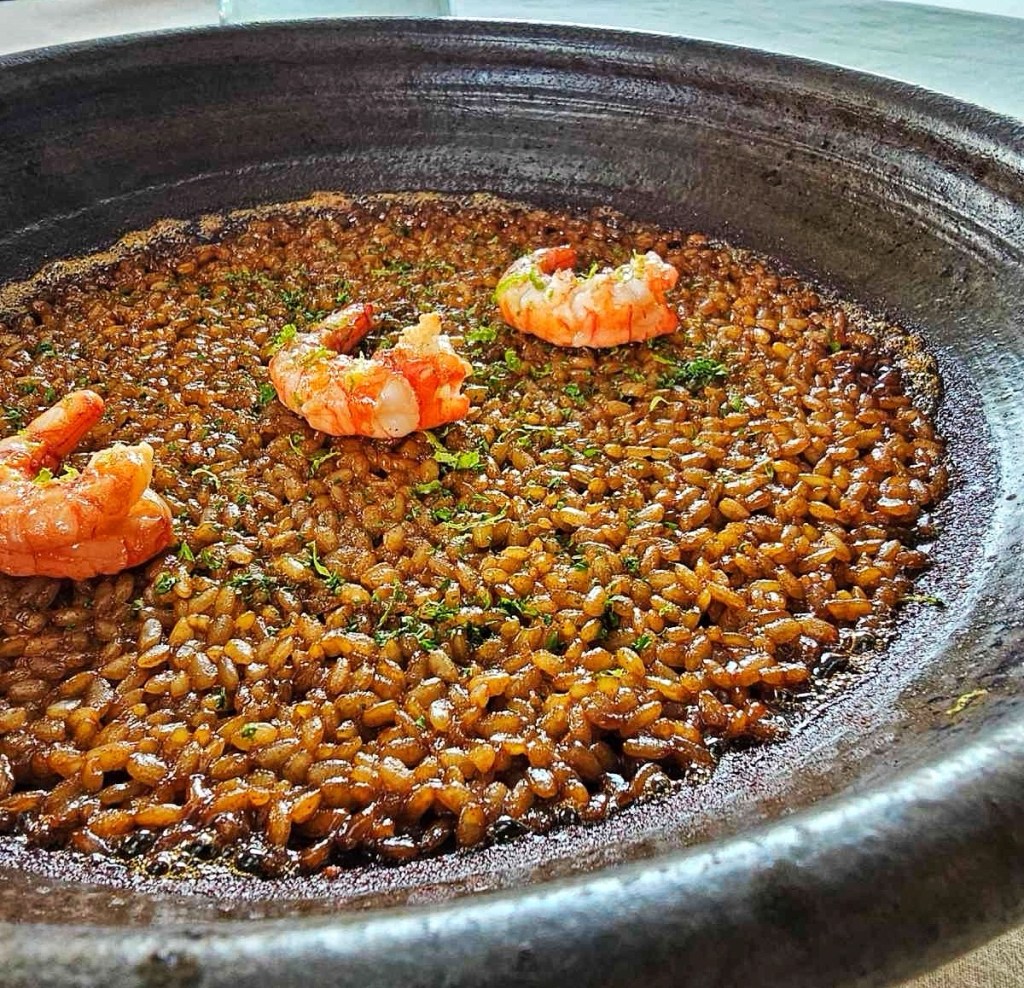
Mediterranean gamba roja stew rice in a clay pot
Every long tasting menu has a moment when comfort sneaks in—when the chef, after stretches of precision and delicacy, offers something that feels like it was cooked as much for the soul as for the palate. Here, that moment arrives in the form of Arroz de Gamba Roja, a clay-pot rice that carries the unmistakable depth of Mediterranean kitchens where seafood and fire have been in conversation for centuries.
The star, of course, is the gamba roja, that ruby-colored prawn whose flavor seems almost too intense for its size. Its head alone contains a universe of sweetness and salinity, and the kitchen uses every bit of it to build a broth that’s more elixir than stock. The rice absorbs this essence slowly in the clay pot, each grain swelling with the prawn’s mineral-rich warmth until it reaches that perfect point: loose enough to stew, tight enough to hold its shape, fragrant enough to signal that restraint was not the intention here.
There’s nothing shy about this dish. The clay pot arrives with that unmistakable, slightly smoky aroma—the kind that makes you lean in before you even pick up a spoon. The stew has a glossy, brick-red hue that only gamba roja can give, and the flavor follows suit: deep, savory, and unapologetically oceanic. It’s the kind of rice that demands you slow down, not out of ceremony, but because every spoonful tastes like it’s been earned through time—time simmering, time reducing, time coaxing all that prawn intensity into harmony.
It’s a generous dish, emotionally and culinarily, and at this point in the menu it feels almost celebratory. A reminder that fine dining doesn’t have to whisper—sometimes it can embrace you with both arms.
12th Course: Lechazo
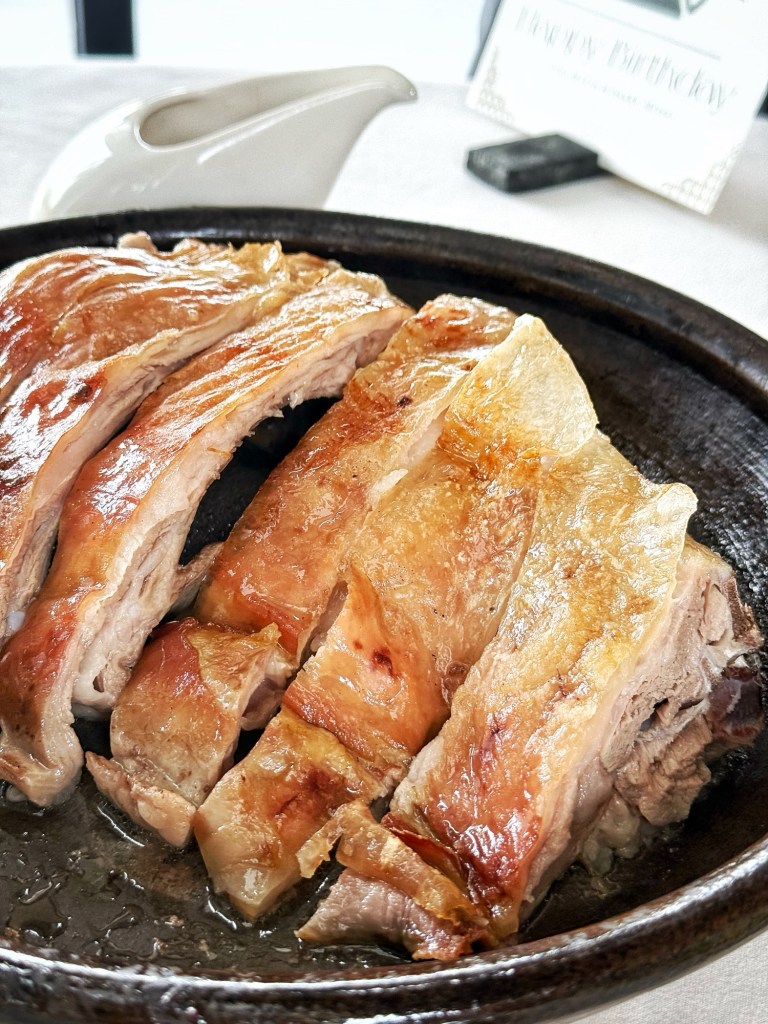
Slow roasted suckling lamb served with green salad from our farm
As the tasting menu reaches its penultimate stretch, Lechazo arrives with a kind of unpretentious authority. Slow-roasted in the restaurant’s massive Asador oven, the lamb doesn’t need adornmen, the cooking speaks for itself. This is no gamy, assertive meat; it’s a 20- to 30-day-old suckling lamb, tender as the finest lechón de leche, with a delicate aroma that hints at grass and milk rather than barnyard.
The ribs practically dissolve on the tongue, each bite a fleeting, buttery luxury. And yet, the dish is anchored by greens from the restaurant’s own farm, tossed in a citrusy vinaigrette. They offer a crisp, bright counterpoint, a moment of respite that cuts through the richness without diminishing it, letting the lamb’s flavor linger even longer.
There’s an elemental honesty here: fire, time, and the finest ingredients. No tricks, no smoke and mirrors—just the slow magic of roasting, paired with a green salad that feels almost like a breath of fresh air in the middle of indulgence. In a menu of meticulous technique and rare treasures, this course reminds you that simplicity, when executed perfectly, can feel like extravagance.
13th Course : Tarta de Manzana

Apple mille-feuille and lime chantilly
The tasting menu concludes with Tarta de Manzana, a refined take on the classic apple tart. Carefully selected apples are baked to tender perfection, retaining a balance of natural sweetness and subtle acidity. The pastry is crisp and buttery, providing structure without overshadowing the fruit, while a light glaze or sugar finish adds a polished touch.
Simple in presentation but precise in execution, the dessert offers a gentle, satisfying close to the menu. It highlights seasonal fruit and technique over embellishment, leaving diners with a final note of elegance and restraint.
14th Course : Flan de Teresa
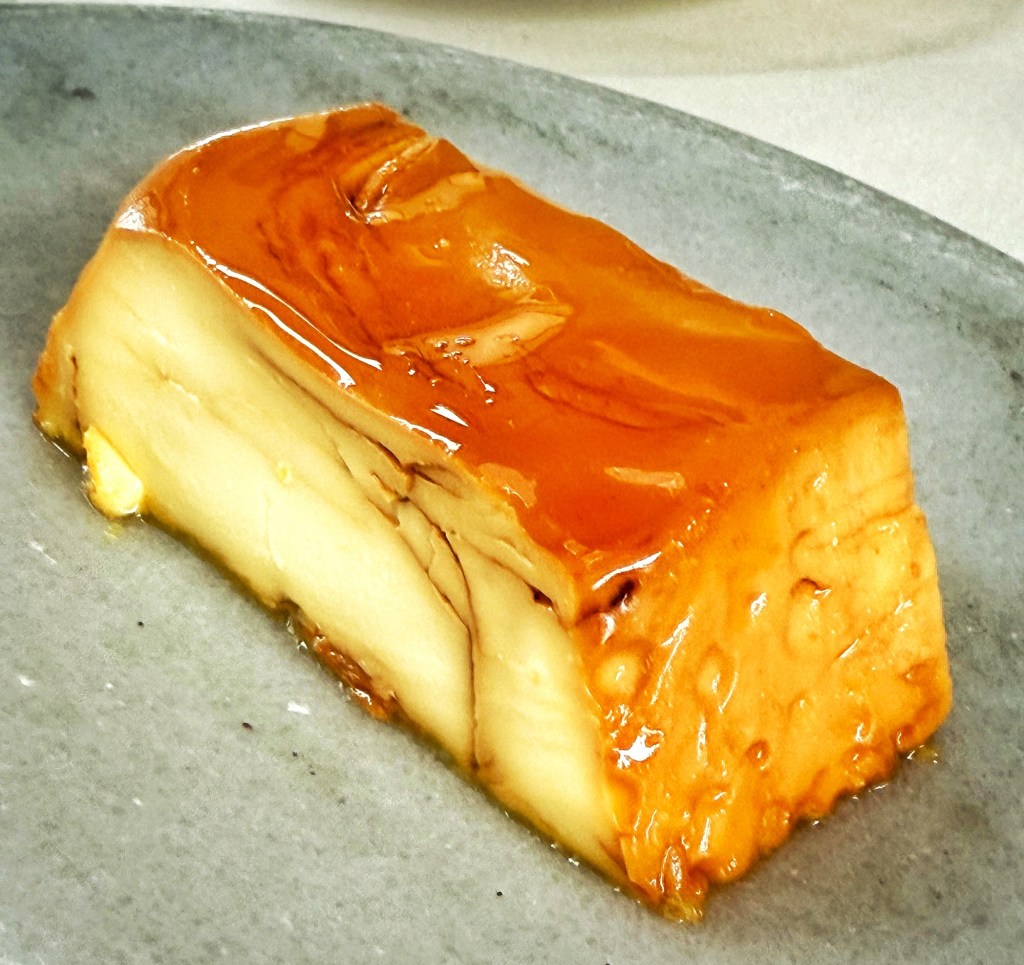
Vanilla flan récipe family
The tasting menu closes on a note of quiet intimacy with Flan de Teresa, a vanilla flan made from a cherished family recipe. The first spoonful immediately transported me to memories of my beloved late mother-in-law’s exquisite Leche Flan—that same luxurious texture that rests silkily on the palate before melting effortlessly into a creamy, lingering finish.
Here, tradition meets precision. The custard is smooth, dense yet yielding, with a gentle wobble that speaks of careful, slow cooking. The vanilla is fragrant but never heavy, while the soft caramel adds just the right whisper of sweetness. Each bite feels both personal and timeless, carrying the warmth of home kitchens and family tables.
15th Course: Petit Fours
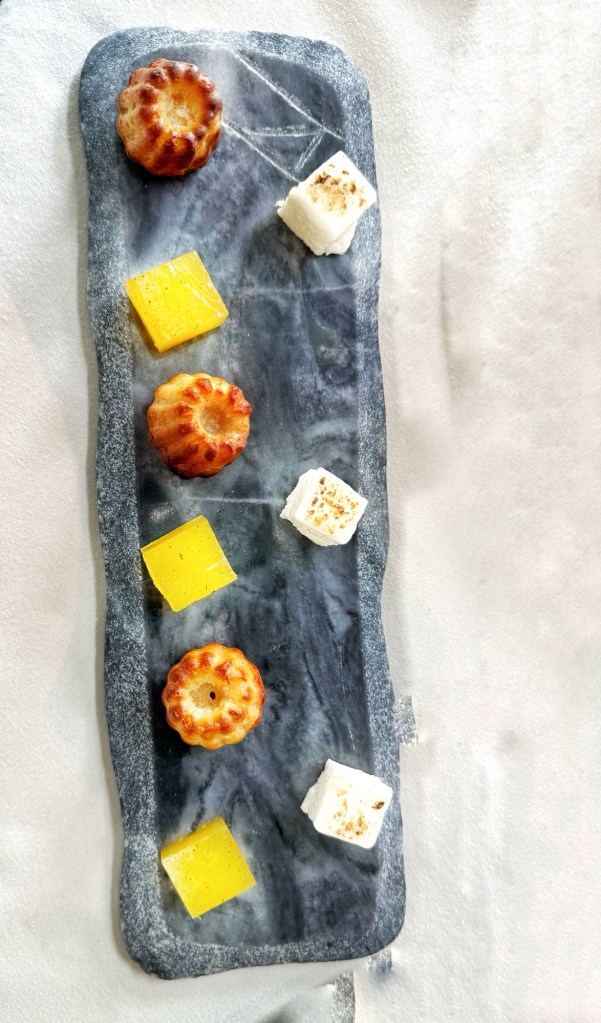
Just when you think the meal has whispered its final note, the kitchen sends out a trio of petit fours-small bites with big personality.
First comes the canela morsel, a tiny square that somehow manages to hold a whole pantry of warmth: five spice blooming through orange and lemon-kissed brown butter, rounded out with the gentle sweetness of milk. It’s the sort of bite that makes you pause, the way a good memory does.
Then there’s the pineapple jelly draped in gin, a playful, grown-up wink. The pineapple hits first, bright and tropical, followed by a cool, botanical shimmer from the gin coating, like someone slipped a cocktail into confectionery form.
Finally, the arroz con leche bite delivers the cozy nostalgia of rice pudding, concentrated into a creamy, melt-in-the-mouth cube. Or, if you lean toward the lighter side of indulgence, there’s the marshmallow studded with orange peel, buoyant and citrusy, a soft little cloud perfumed with sunshine.
By the time you reach the fifteenth course at Asado Alfonso, you think you’ve learned the rhythm of the place. You expect precision, of course-this is a Michelin-starred dining room, after all-but what you don’t anticipate is the tenderness threaded through each dish, the way the kitchen seems to lean in closer with every plate.
Just when dessert has already stretched into a miniature trilogy-the canela bite perfumed with five spice and browned butter, the pineapple gelée kissed with gin, and that nostalgic arroz con leche confection-the meal feels as though it’s humming its final chord.
You’re ready to rise, blissfully full and certain the evening has given you everything it could.
The Final Bite
But Asador Alfonso has one more parting whisper. A server approaches with a petite chocolate cake, its top crowned with a toasted meringue swirl-playful, almost coy, as if to say, Did you think we were done showing affection?
It’s the kind of closing gesture that makes you exhale, not because you’re stuffed, but because you’ve just been reminded that generosity can be an art form.
Soft, sweet, and quietly triumphant, this last morsel feels less like a dessert and more like a signature at the bottom of a handwritten letter.
A fitting conclusion to the Michelin-starred Asado Alfonso experience-an ending that doesn’t simply close the meal, but seals it.
Price per person for JOURNEY MENU LUNCH is P5900 ( min of 2 persons)
 Pigoutmanila