Following Part 1 of our Celera experience, we arrive at the heart of the evening: the degustación menu aptly named “Discovery.” This is where the kitchen’s voice becomes fully articulated. Each course revealing intent, restraint, and a sense of exploration that defines Celera’s approach. read part 1 here
https://pigoutmanila.com/2026/01/14/celera-michelin-one-star/
1st Course
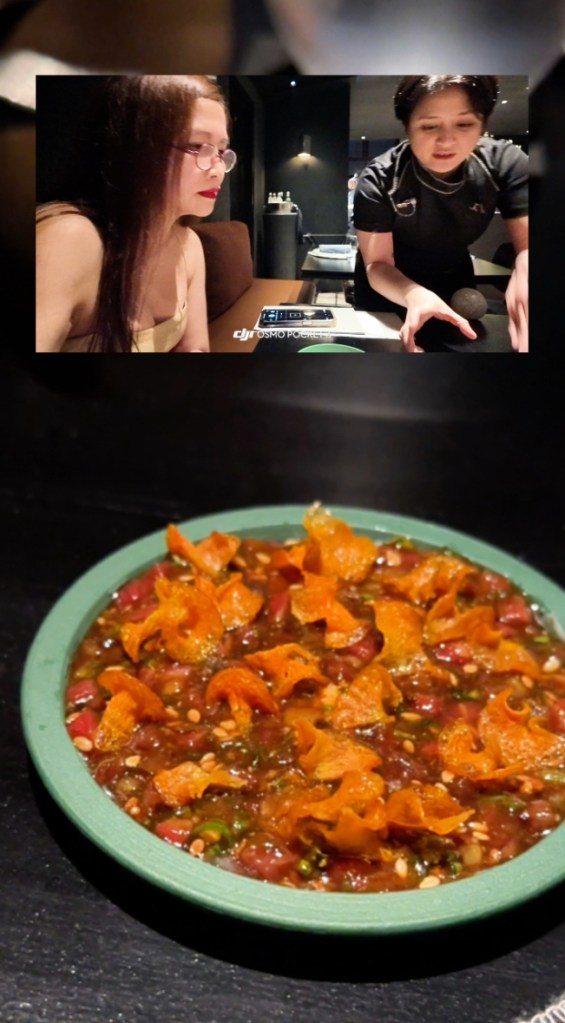
Smoked squab bone broth. Whey. White pepper. Double gold beef tenderloin, new herbs, fermented byadagi chili, buckwheat beetroot tart
At the base of the cup is yuzu ponzu, bright and quietly acidic. Above it floats a white pepper foam, aromatic and restrained. The final pour is the smoked squab bone broth, made from the bones of young pigeon, first smoked, then slowly reduced into a clear, deeply flavored soup. We were guided through the experience: swirl it like tea, drink half from the cup, then pause.
Alongside it sits a tartare of double-gold tenderloin, enriched with cheese, bone marrow, and spring onions. Half is eaten on its own; the rest is folded back into the broth, deepening the soup and completing the dialogue between cup and plate.
The result is unexpectedly familiar. The dish recalls bak kut teh, the iconic Chinese pork rib soup from Singapore that we first encountered years ago—traditionally simmered with garlic, cloves, cinnamon, star anise, fennel seeds, coriander, and white pepper. Here, those comforting, peppery notes are reimagined: beef in place of pork, squab instead of ribs yet the soul remains intact.
It is bak kut teh not as nostalgia, but as interpretation , richer, more refined, carrying the warmth and spice of the original while discovering new depth through smoke, marrow, and citrus. An opening course that quietly signals what lies ahead: cuisine rooted in tradition, but unafraid to wander.
2nd course
hand-ground white Peking duck and chicken, Baguio strawberries, rempeyek pancake
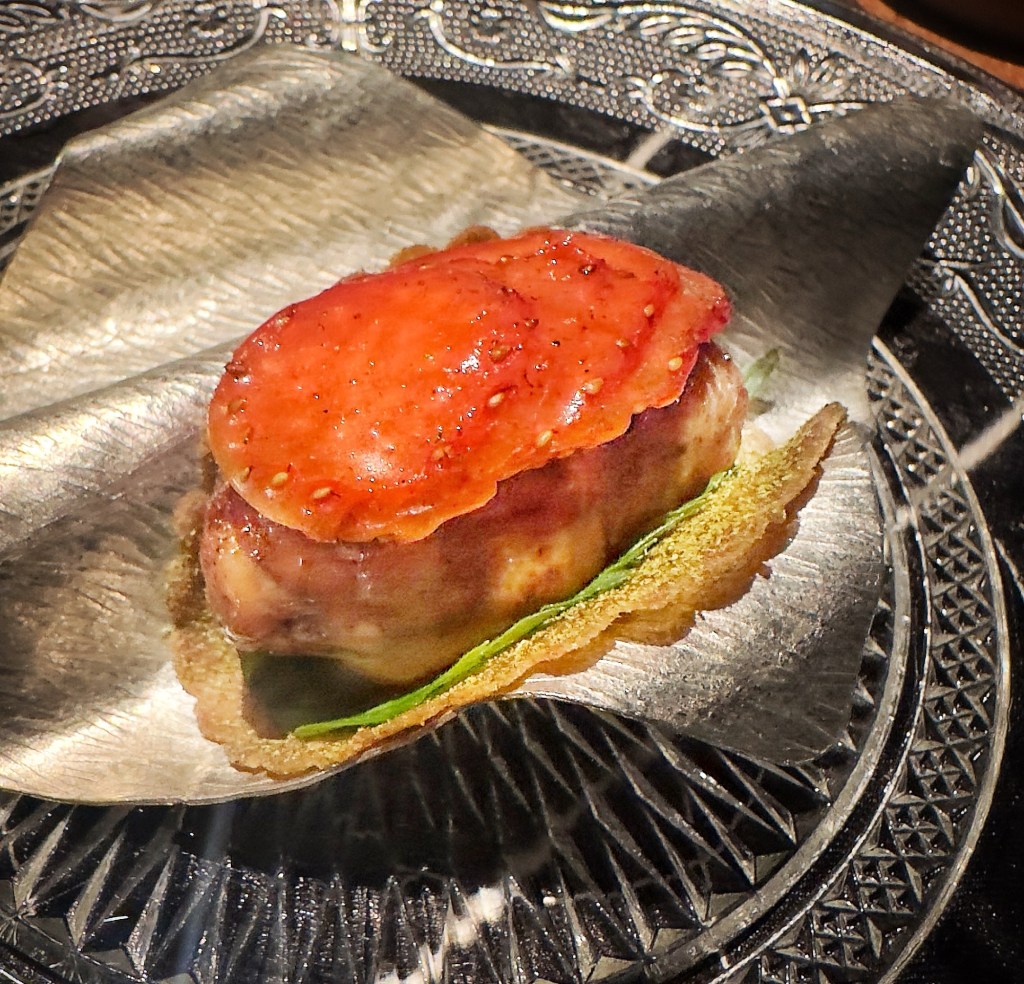
Hand-ground white Peking duck and chicken arrive shaped into a plump, elegant cylinder, topped with char-grilled Baguio strawberries and a delicate rempeyek pancake. The rempeyek is paper-thin and lacy, delivering a light, nutty note that plays beautifully against the tenderness of the meat.
With the ground Peking duck and chicken, I honestly found myself wondering how the chefs managed to keep it so moist and succulent. The texture was so rich and satisfying, I momentarily thought I was eating pork, a testament to both technique and thoughtful preparation. Each bite is deeply flavorful and comforting, elevated by the strawberries whose sweetness becomes more pronounced with roasting. Together, the elements come together effortlessly, creating a dish that feels indulgent yet refined, and thoroughly memorable. ✨
3rd course
duck liver mousse with local goat’s cheese,caviar, honey tuile
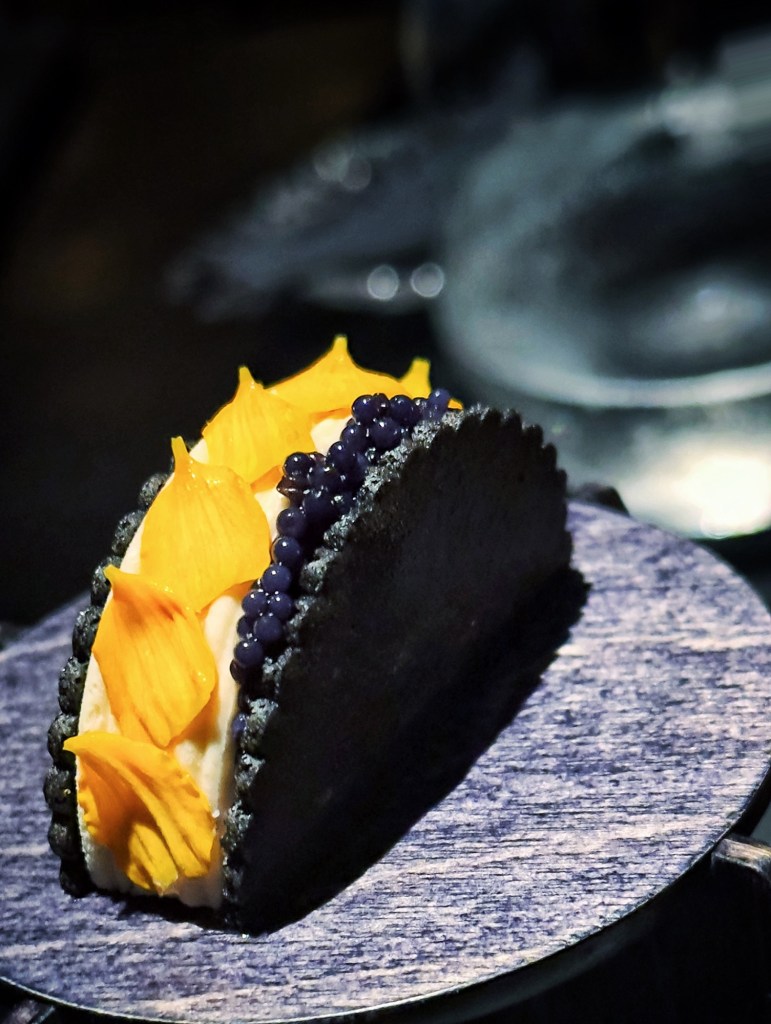
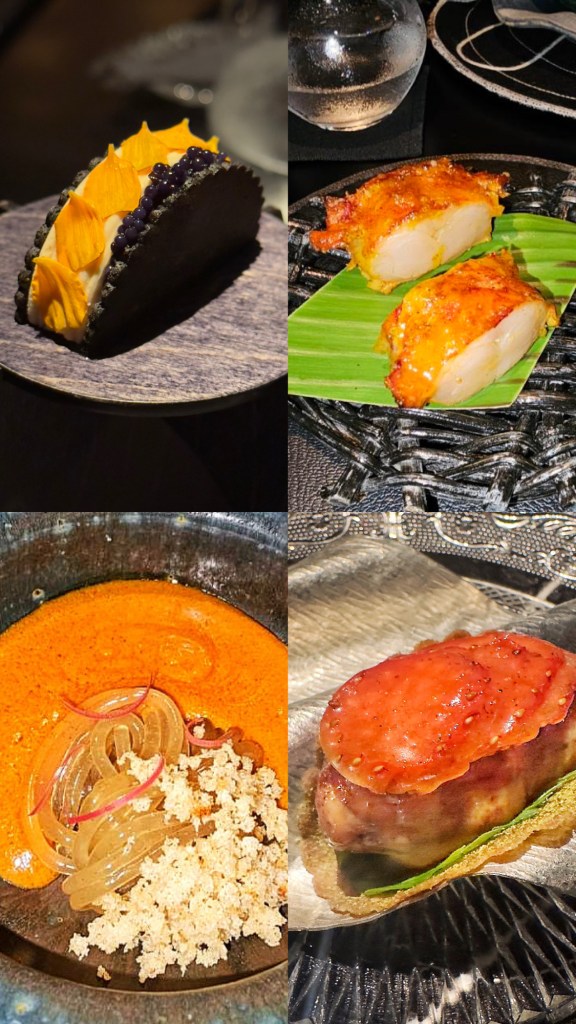
The handsome hubs and I are unapologetic foie gras devotees, so this course won us over instantly. At first glance, it evokes a decadent Oreo, jet-black honey tuile neatly sandwiching a velvety duck liver mousse. Thin and crisp with a whisper of sweetness, the tuile provides a precise counterpoint to the luxurious richness of the foie, turning indulgence into something elegantly composed rather than excessive.
The mousse itself is luxuriously smooth, layered with the gentle tang of local goat’s cheese, while pops of caviar add briny depth and quiet indulgence. Marigold petals lend a final flourish, both visually and texturally. Playful yet elegant, this course feels indulgent without excess : comforting, refined, and utterly irresistible.
4th course
coconut sugar milk bread, aged kesong puti
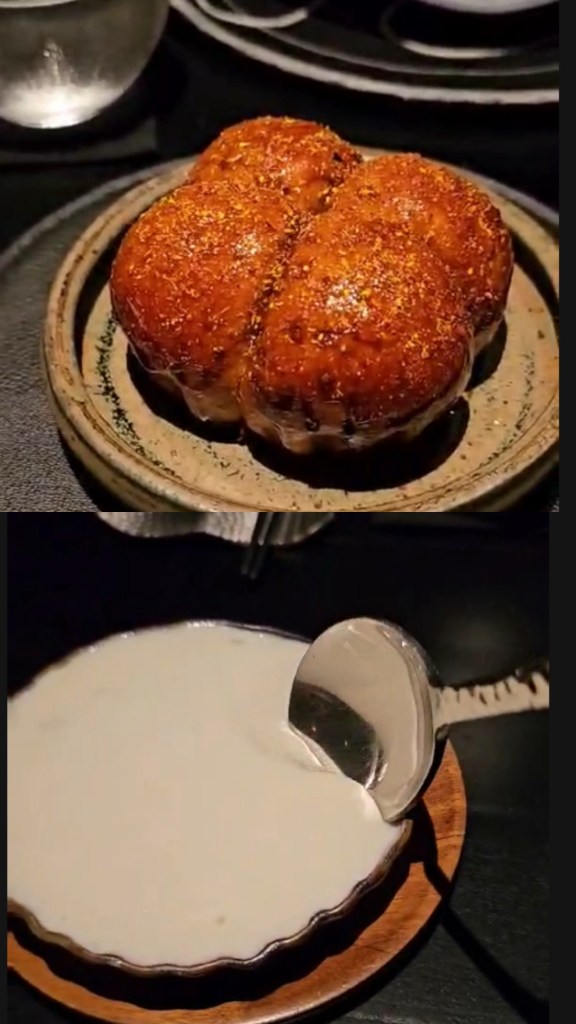
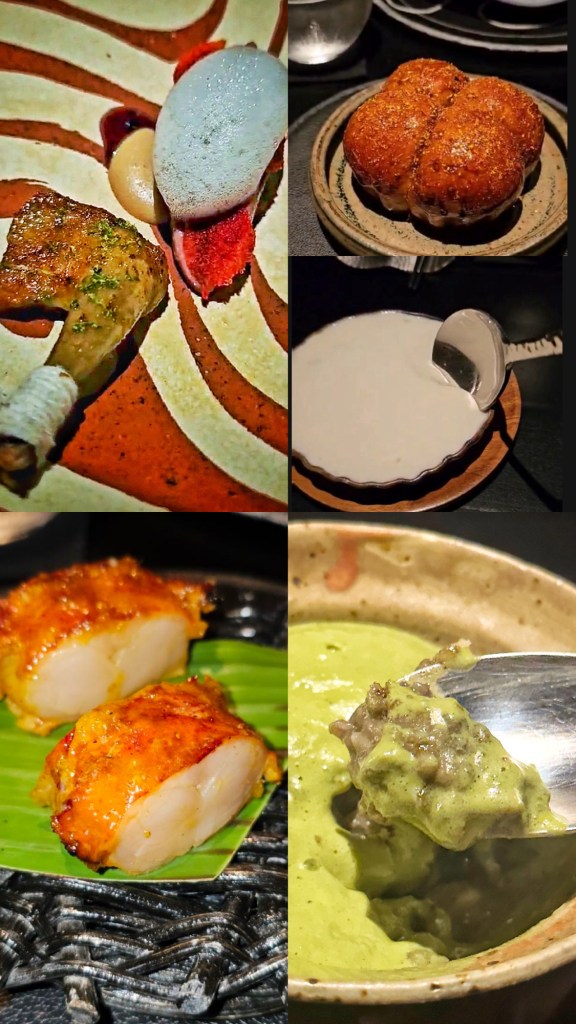
The bread course arrived as a moment of pause. Coconut sugar milk bread, softly sweet and pillowy, was paired with aged kesong puti. The instruction was simple and almost ceremonial: tear, dip, repeat. The gentle sweetness of the bread against the tangy, umami depth of the aged cheese grounded the meal, reminding us that restraint can be just as memorable as flourish.
5th & 6th Courses
bbq maine lobster tail, smoked fish head noodles, together with…
cold laksa bisque, chicken skin
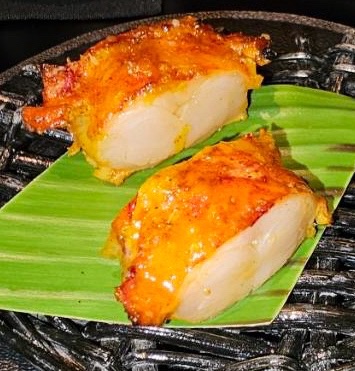
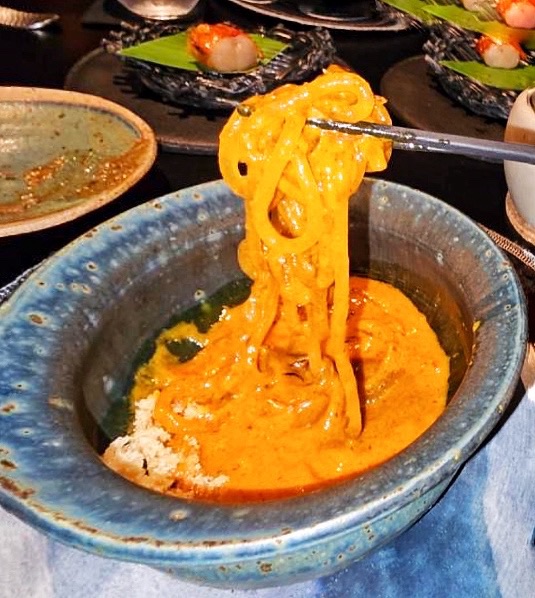
The menu then shifted gears. A barbecued Maine lobster tail emerged, its flesh luscious and lightly kissed with smoke, accompanied by smoked fish head noodles that delivered a deeper, more assertive savoriness.
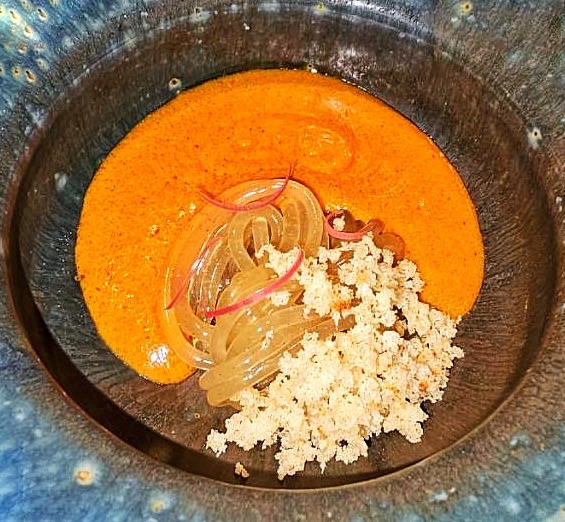
This was followed by a cold laksa bisque, unexpected in temperature yet unmistakable in character. Familiar spices were softened and refined, while shards of crisp chicken skin added indulgent texture. We were encouraged to experience the courses in tandem: lobster dipped into the chilled bisque but not before we added the aged kesong puti, noodles woven into each bite. It was a playful yet deliberate convergence of flavors, where smoke, spice, and sweetness met in careful balance.
7th course
pan-seared and butter-basted squab, masak merah,spinach, daikon
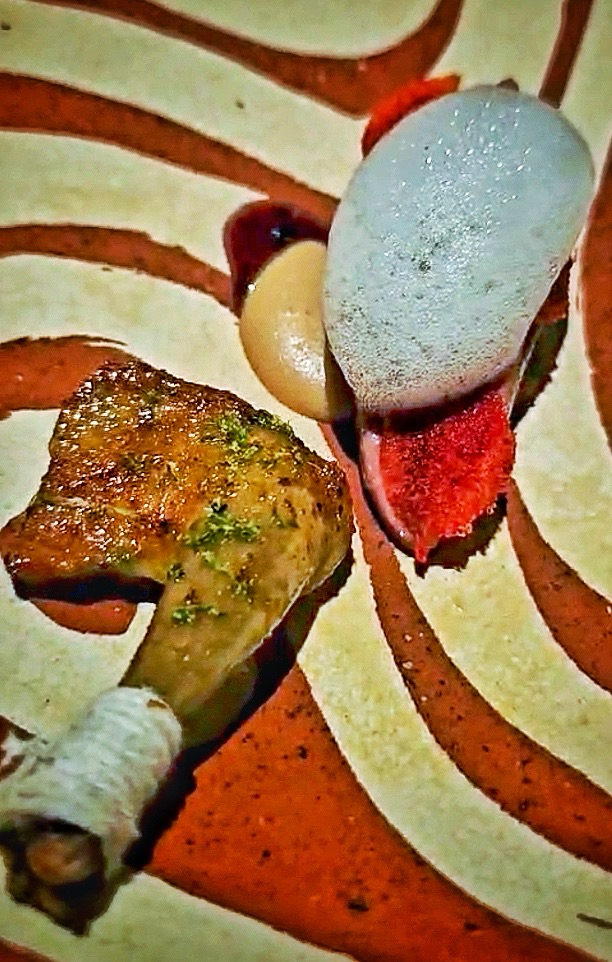
This was the point in the menu where technique met storytelling. A pan-seared, butter-basted squab arrived dressed in masak merah, with spinach and daikon acting as quiet supporting characters.
Squab a young pigeon, harvested at roughly four weeks, is a meat that rewards restraint. Properly handled, it is tender, slightly gamey, and deeply satisfying. The kitchen chose not to mask this but to frame it. The server walked us through the anatomy of the dish: the breast, the tenderloin tucked underneath, and the drumstick, each cooked separately, each with its own role on the plate.
Spinach and daikon were folded into the tenderloin, lending freshness and a subtle crunch that cut through the richness. Then came the masak merah, poured tableside. Traditionally a Malaysian classic translating to “cooked red,” the sauce is known for its bold interplay of dried chilies, tomatoes, ginger, garlic, and onions. This version leaned more elegant than fiery, gently infused with star anise, cinnamon, and lemongrass—warm, aromatic, and just assertive enough.
We were advised to eat with intention: start with the breast beneath, follow with the tenderloin, and finish with the drumstick. It was a guided progression of flavor and texture, one that unfolded slowly and deliberately, proof that even a familiar regional sauce, when thoughtfully reimagined, can feel entirely new.
8th course
arborio, donaal, tausi, smoked fish bone brodo
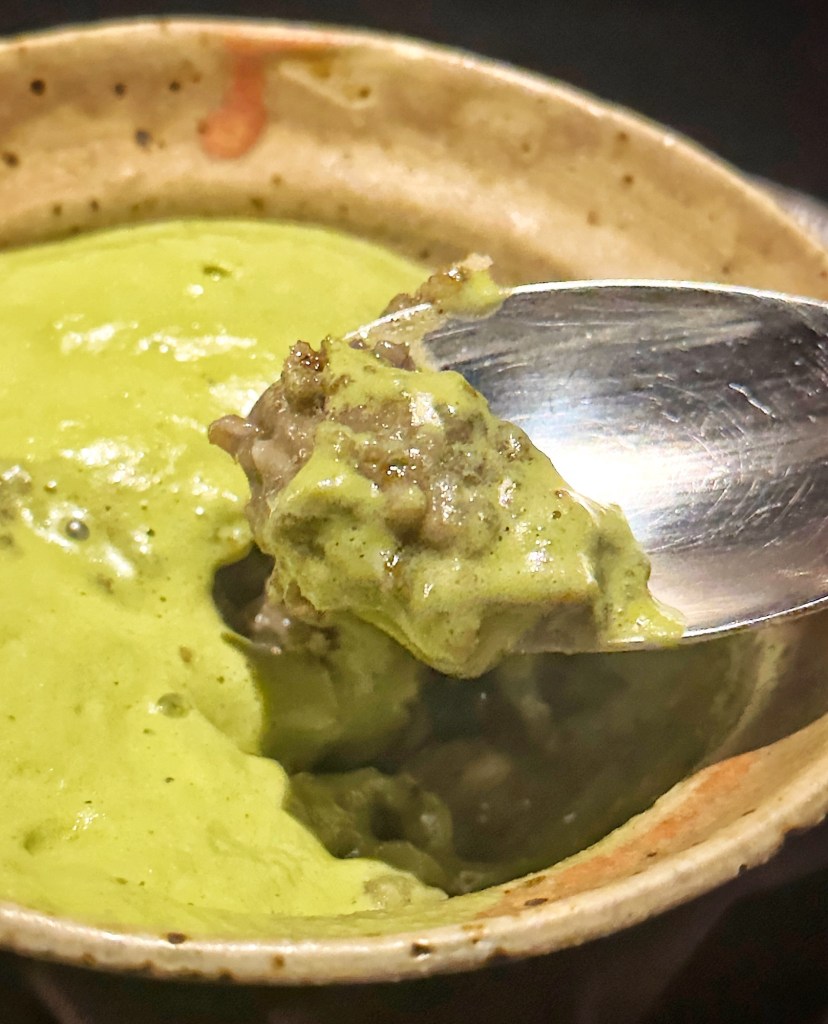
“ Donaal is a preferred non-glutinous heirloom rice variety in the Cordillera region, noted for its red or white, short-grain, and tender characteristics when cooked. While Arborio rice is a plump, Italian, medium grain rice famous for making creamy risotto”
At its core, this course presents itself as a deeply comforting risotto, made luxuriously creamy with squid ink and finished with a light basil foam. The inky richness of the rice is layered thoughtfully with chicken crumbs, adding both depth and a satisfying textural contrast.
Scattered throughout are bits of singkamas, offering a gentle crunch and a subtle sweetness that lifts the dish, while the smoked fish bone brodo lends a quiet, savory backbone. Each spoonful feels deliberate yet approachable: a play on familiar risotto, elevated through unexpected layers and restrained creativity.
Dessert
dill meringue, borracho, amazake granita, sobacha
Dessert arrived as a study in restraint rather than excess, an exercise in balance that closed the meal on a thoughtful, almost meditative note.
The dill meringue set the tone: airy and crisp, with a whisper of herbaceousness that felt refreshing instead of sweet. Beneath it was borracho, a term that literally means “drunken” in Spanish, referring to cake or bread soaked in alcohol or syrup. Here, it provided a soft, indulgent base: moist, gently boozy, and just rich enough to anchor the lighter elements.
The plate was cooled by an amazake granita, made from amazake, a traditional Japanese fermented rice drink known for its natural sweetness and low alcohol content. Frozen into delicate crystals, it offered a clean, mildly sweet contrast, refreshing the palate as it melted.
Threaded through the dessert was sobacha, a Japanese tea made from roasted buckwheat. Nutty, toasty, and slightly earthy, it added depth and a subtle bitterness that tempered the sweetness and tied the dish together.
The result was a dessert that felt intentional , less about indulgence, more about harmony , ending the meal with clarity rather than crescendo.
kueh, bonbon, compressed fruit
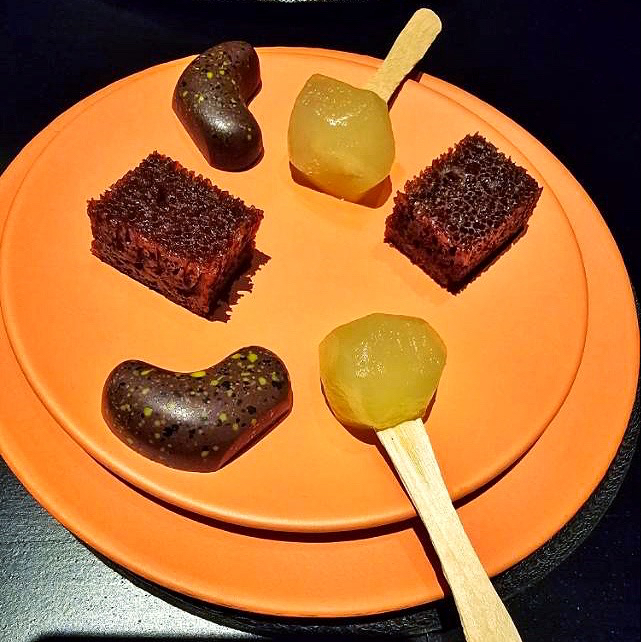
Dessert leaned into nostalgia, technique, and a quiet sense of play. Familiar ideas reworked through a more contemporary lens.
At its heart was kueh, a broad term used across Southeast Asia to describe traditional bite-sized cakes and sweets, often made with rice flour, coconut milk, and palm sugar. These are desserts rooted in memory and ritual: soft, chewy, and gently sweet, more about texture and comfort than spectacle.
Alongside it came a bonbon, the patisserie world’s polished counterpart. Typically a small, molded confection with a delicate shell , often chocolate, encasing a soft or liquid center, the bonbon delivers sweetness in a controlled, intentional bite. It is dessert distilled to its essence.
Completing the trio was compressed fruit, a modern technique where fresh fruit is vacuum-sealed, allowing its own juices or an infused syrup to be drawn deep into its flesh. The result is fruit that looks familiar but tastes more intense: glossier, denser, and amplified in flavor.
Together, these elements told a quiet story of contrast: heritage beside precision, softness against structure, tradition meeting technique ending the meal not with excess, but with thought.
Final note
By the final course, the Discovery Degustación settles in quietly. No theatrics, no forced crescendo, just a sense of completion. Celera understands that the most lasting meals are the ones that leave space to think, to remember, to feel. This is dining that stays with you, not because it demands it, but because it earned it.
DISCOVERY MENU is P5990+ per person
Celera is located 3rd Floor, 238 Pablo Ocampo Sr. Extension, Comuna, Makati City, 1203 Metro Manila,
25th stop to our #ProjectMichelinPhilippines journey
 Pigoutmanila