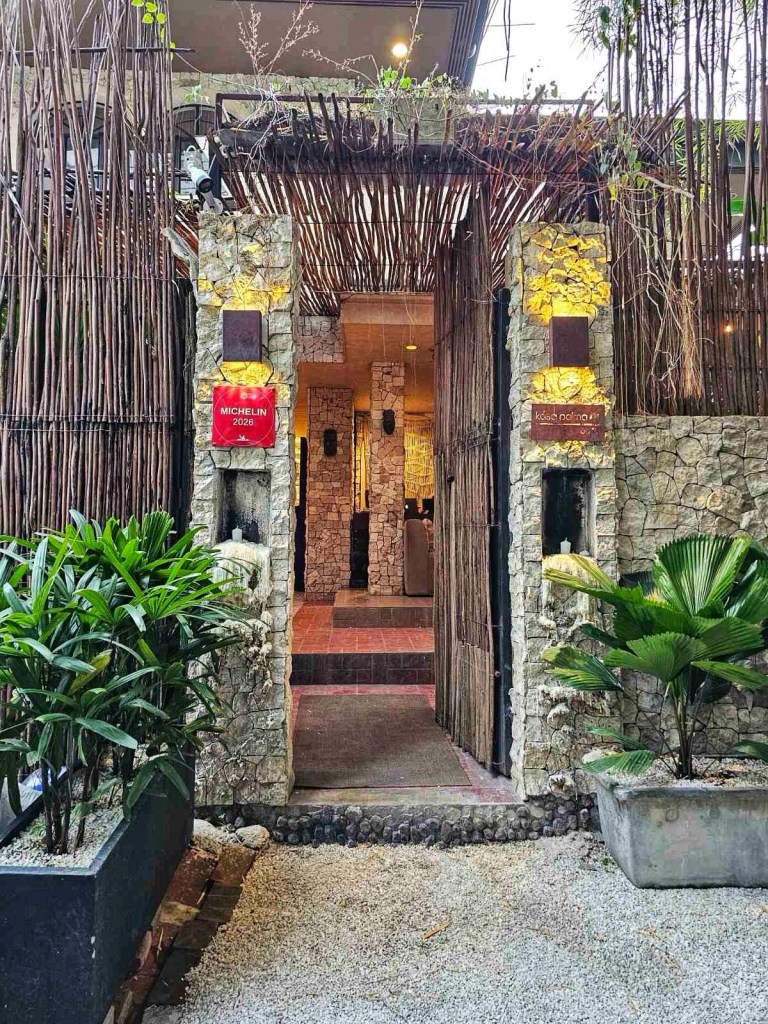
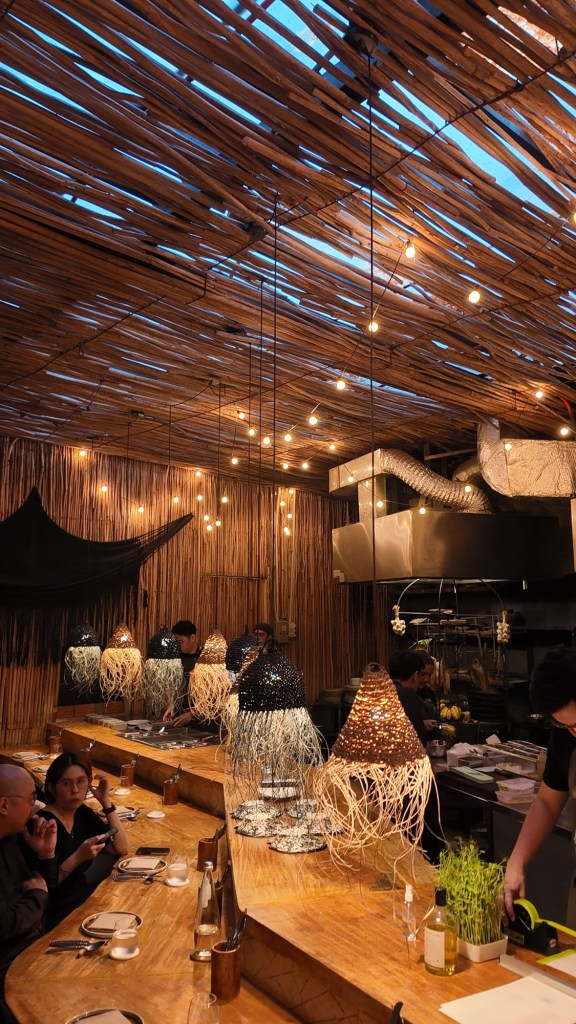
Tucked into a quiet pocket near Rockwell, Makati, Kasa Palma feels like one of those places you’re quietly tipped off about rather than openly advertised. It’s a charming house-turned-restaurant, and the transition happens almost immediately—capiz lights glowing overhead, pale pebble stones crunching underfoot, the outside world slipping away. Before you’ve even had time to look around, you’re drawn to the oversized bar at the center of it all, warm and luminous, where the soft clink of glassware and a low buzz of conversation make waiting feel intentional. We lingered longer than planned, which, it turns out, is exactly the point.
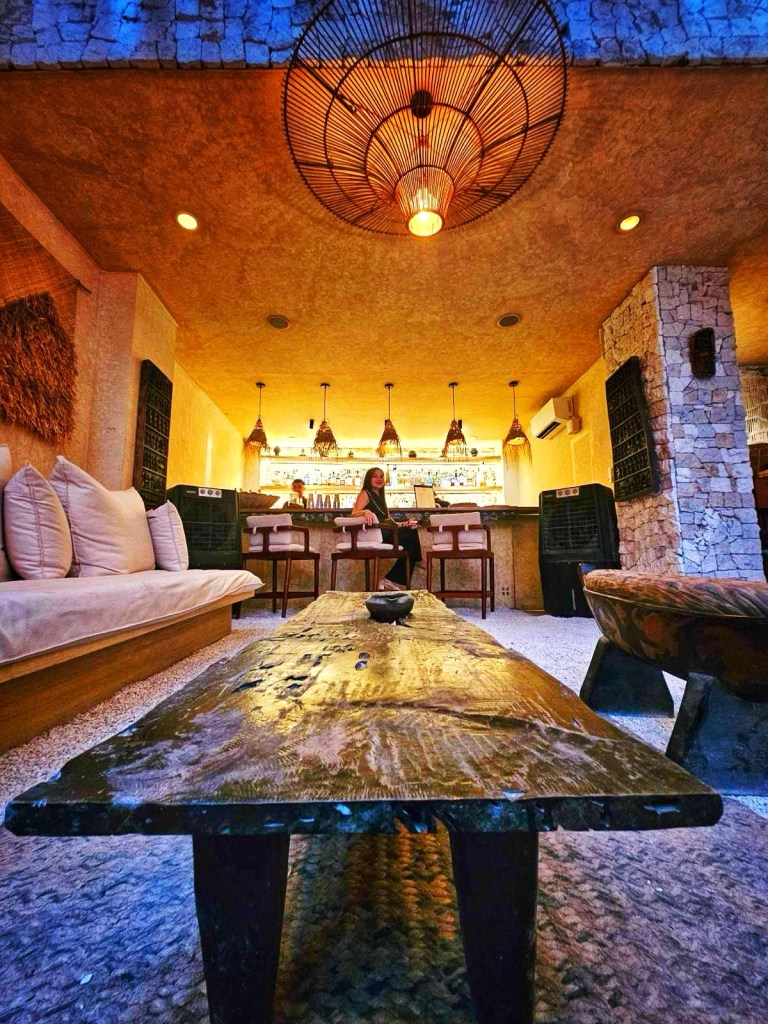
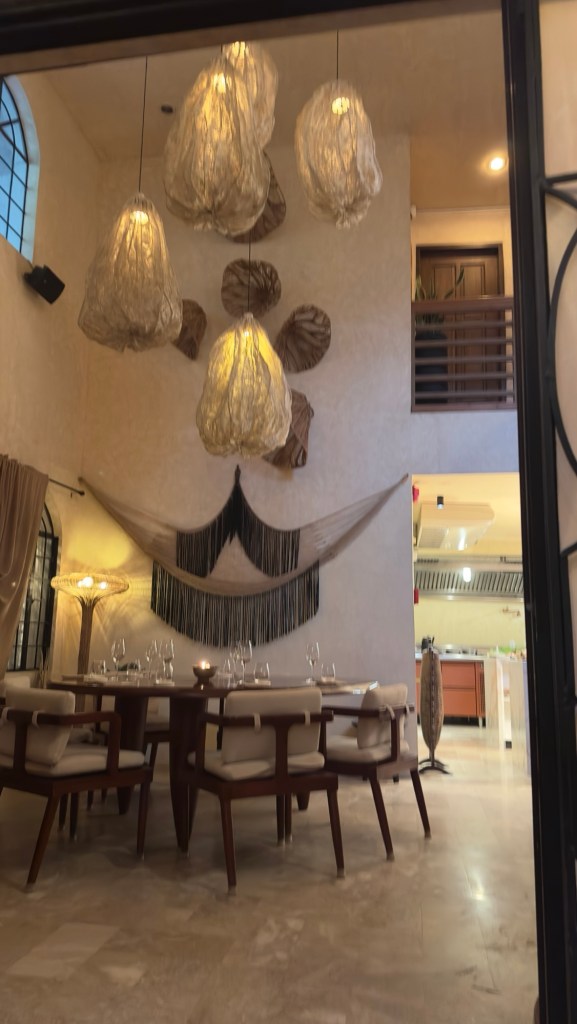
We booked the 5:30 PM slot and arrived a little early, just as the late-afternoon light filtered through the space. Every corner felt intentional, from the tropical textures to the artful details effortlessly Instagram-worthy without trying too hard. Before long, and almost without noticing, we were led to our table, the evening unfolding at an easy, elegant pace.
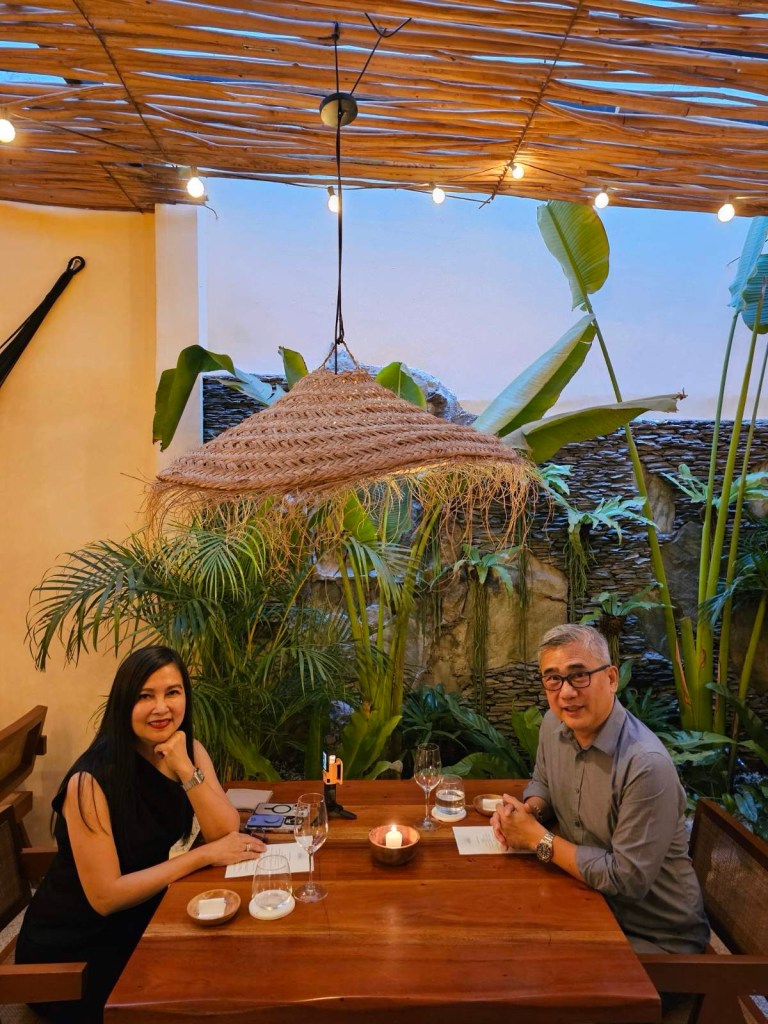
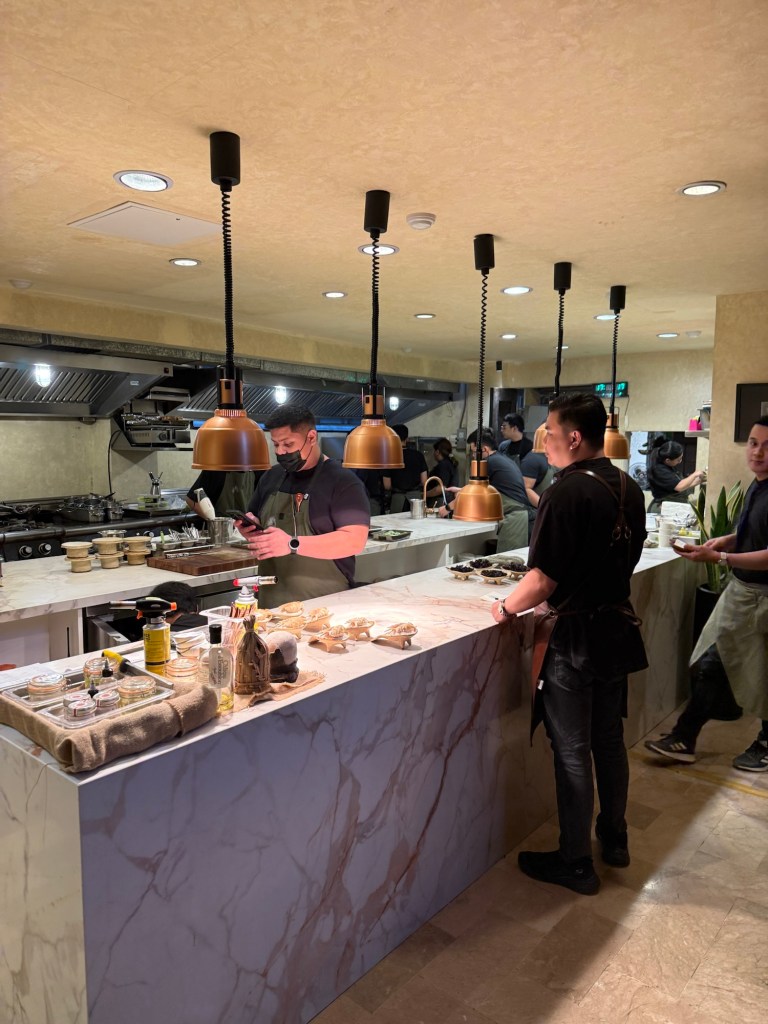
We half-expected to be seated by the open kitchen, something along the lines of the Michelin two-star experience at Helm Manila, but that wasn’t the case. While Kasa Palma does have an open kitchen, the tasting menu unfolds in the pebbled patio, where the tables are set away from the action. À la carte diners, on the other hand, are seated on the opposite side of the house, where counter seats offer a closer view of the kitchen’s quiet choreography.
8 Course Degustacion
French classic dishes using predominantly Filipino flavors and produce
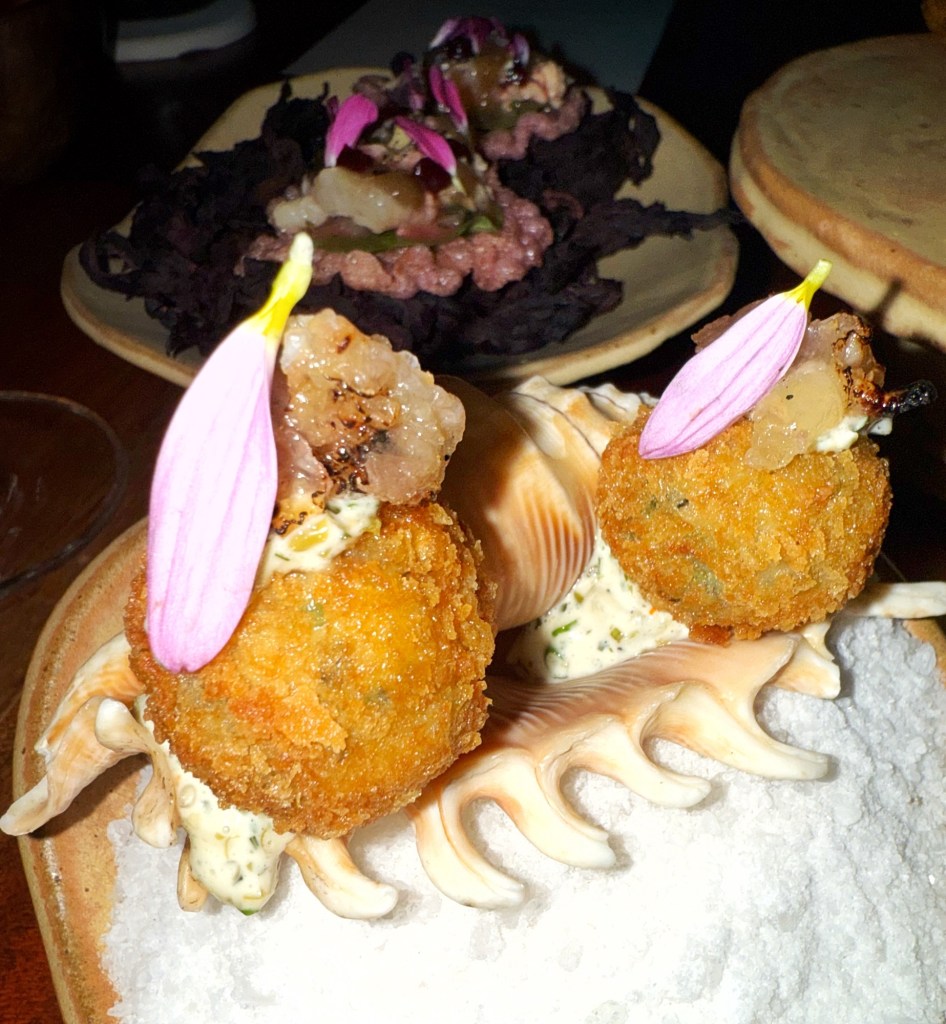
1st course Croquette
Spider Conch, Bilimbi Tartare, Papada Iberico
Served in a spider conch, this bite is all about contrast. The croquette cracks open to reveal bilimbi tartare bright, tangy, and instantly refreshing followed by the rich melt of papada Ibérico. Crunchy on the outside, silky within, it’s a one-bite indulgence that feels playful, creamy, and just a little decadent.
A spider conch is a large, spiky sea snail known for its distinctive, often ornate shell with long, spines and a pearly interior
Bilimbi tartare is a clever misnomer, borrowing the language of classic raw meat dishes to frame something altogether brighter, cheekier, and more playful. The star is bilimbi (Averrhoa bilimbi), known as kamias in Tagalog
Papada Ibérica , is a prized cut from the jowl or neck of the Iberian pig.
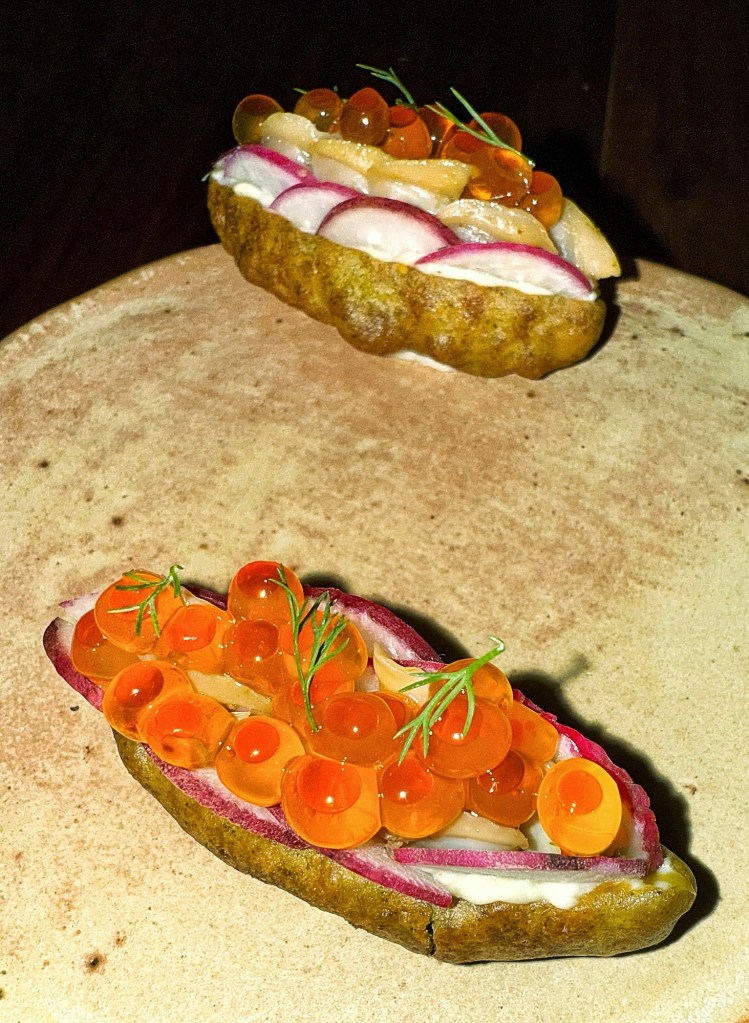
2nd course Tartelette
Seaweed Tart, Manila Clams, Clam Custard, Ikura.
This little tartelette is pure ocean energy. The seaweed tart brings a gentle briny crunch, topped with sweet Manila clams and a silky clam custard that tastes like the sea distilled. Finished with pops of ikura, it’s salty, creamy, and umami-rich, with tiny bursts of freshness in every bite.
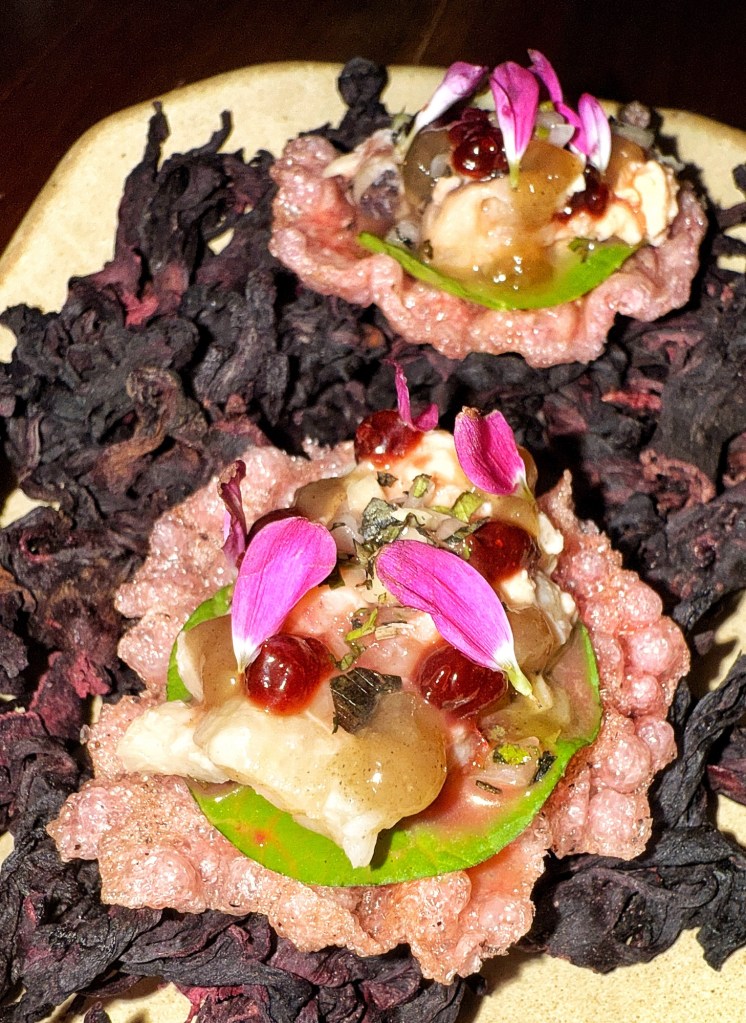
3rd course Ceviche
Sea Mantis, Cotton Fruit Leche de Tigre, Bisque Tapioca Crisp
This is ceviche turned theatrical. The foundation is crispy tapioca chips, light, pinkish , and irresistibly crunchy, serving as the stage for the star: sea mantis, each piece bathed in a hibiscus aguachile. The aguachile, a bright, slightly spicy Mexican-style marinade, imparts floral heat that complements the natural sweetness of the crustacean, while a whisper of hibiscus gazpacho adds cooling, tangy contrast.
Learned something new today . Turned out cotton fruit is “santol” in local parlance and it is used in the dish for its sweet acidity. Binding it all together is the leche de tigre, the Peruvian “tiger’s milk”: a citrus-forward, umami-rich marinade that seeps into every bite, accentuating the sea mantis while lending depth and complexity. The final effect is a harmonious interplay of textures and flavors…crunchy, tart, spicy, and sweet …a ceviche that’s as playful as it is precise.
Cotton fruit / SantoL: A tropical fruit with mild sweetness and a subtle tartness.
Sea Mantis: A crustacean (mantis shrimp); in Tagalog, sometimes called alupihang-dagat.
Leche de Tigre: Citrus-forward Peruvian ceviche marinade with a savory, slightly spicy depth.
Aguachile: Mexican-style marinade of lime juice, chilies, and seasonings, often used to “cook” raw seafood with bright acidity and heat.
Bisque: Smooth, creamy shellfish soup. Tapioca: Starch from the cassava root, used here as crunchy chips.
We were told to start with the croquettes, followed by the tartlets and finally the ceviche
4th course Tartare
Horse Mackerel Crudo, Japanese Cucumber Salad, Cucumber Gazpacho Snow, Yogurt-Mint Aguachile, Seaweed
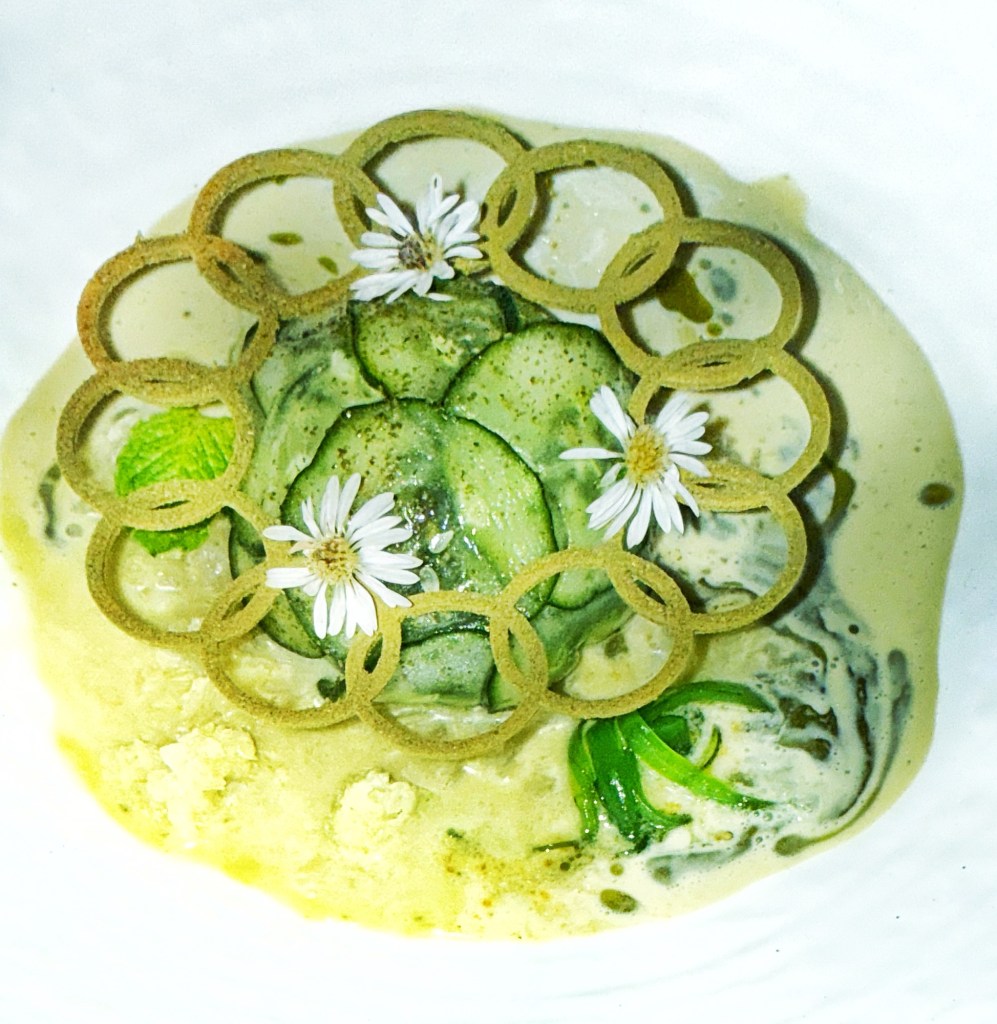
This tartare is all about clean, cool flavors. Delicate horse mackerel crudo sits with a crisp Japanese cucumber salad, while cucumber gazpacho snow melts slowly over the top, keeping everything light and refreshing. A yogurt-mint aguachile adds a gentle tang, and a touch of seaweed brings a salty, ocean finish. It’s bright, chilled, and incredibly refreshing—like a deep breath by the sea.
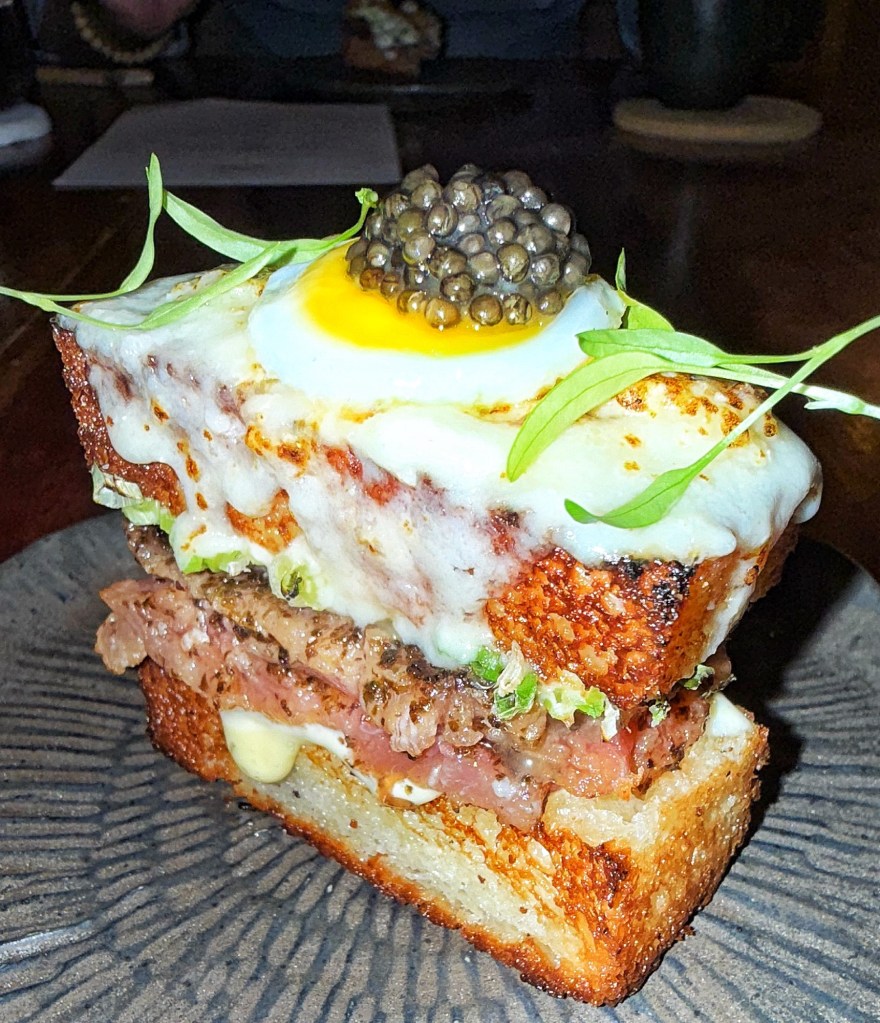
5th course Croque Madame
Yellowtail Tuna & Sea Urchin in Chili-Calamansi, Uni Mornay (bechamel)
House Sourdough Shokupan ( Japanese milk bread) Toast, Parmigiano Reggiano, Quail Egg, Caviar
This isn’t your average croque madame. It’s pure indulgence. Creamy uni mornay blankets house-made sourdough shokupan, while yellowtail tuna and sea urchin swim in a bright, zesty chili-calamansi sauce. A perfectly runny quail egg and a dusting of Parmigiano Reggiano take it over the top, and a sprinkle of caviar adds that final touch of luxe. Every bite is rich, tangy, and utterly irresistible.
I just realized I was enjoying a seafood twist on a classic croque madame ie no meat, just pure indulgence. The house-made shokupan was pillowy and soft, made even cheesier by the rich uni béchamel. Each bite was decadently creamy, thanks to the quail egg melting into the uni mornay. The tuna and sea urchin in the bright chili-calamansi sauce added a refreshing pop, while a sprinkle of Parmigiano Reggiano gave each mouthful a subtle, savory lift. And then the caviar, tiny bursts of salty luxury, made the whole thing feel utterly indulgent
6th course Boudin Noir
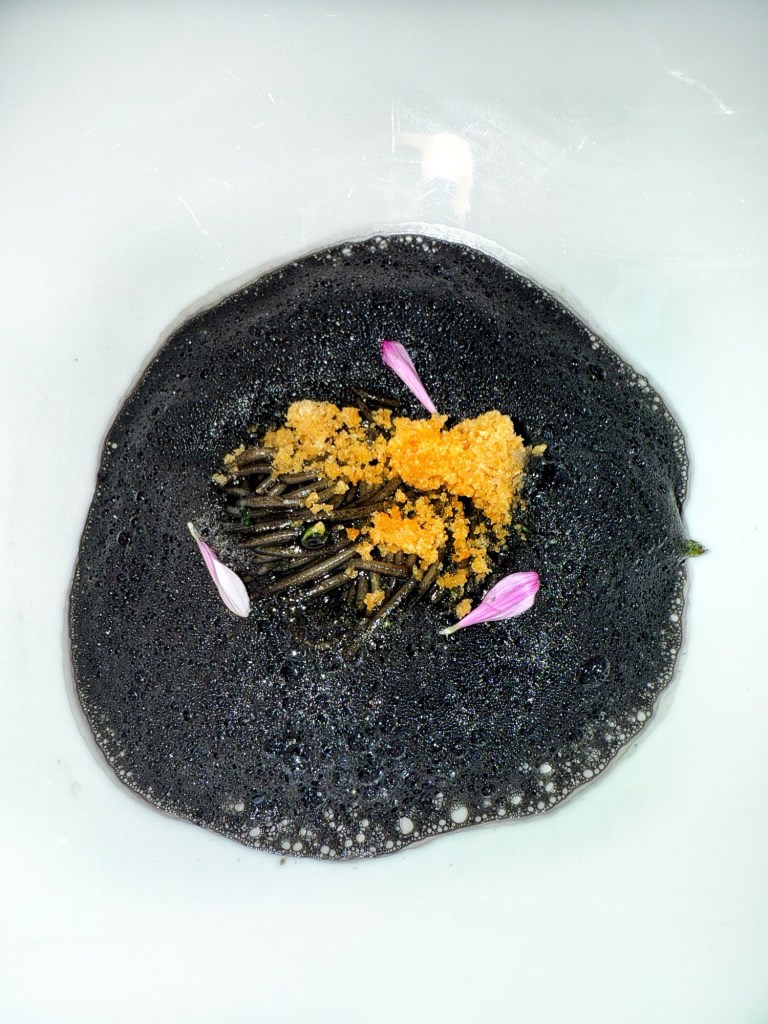
Somen, Squid A la Plancha, Boudin Noir in Cuttlefish Ink, Sigarilyas, Chicharron
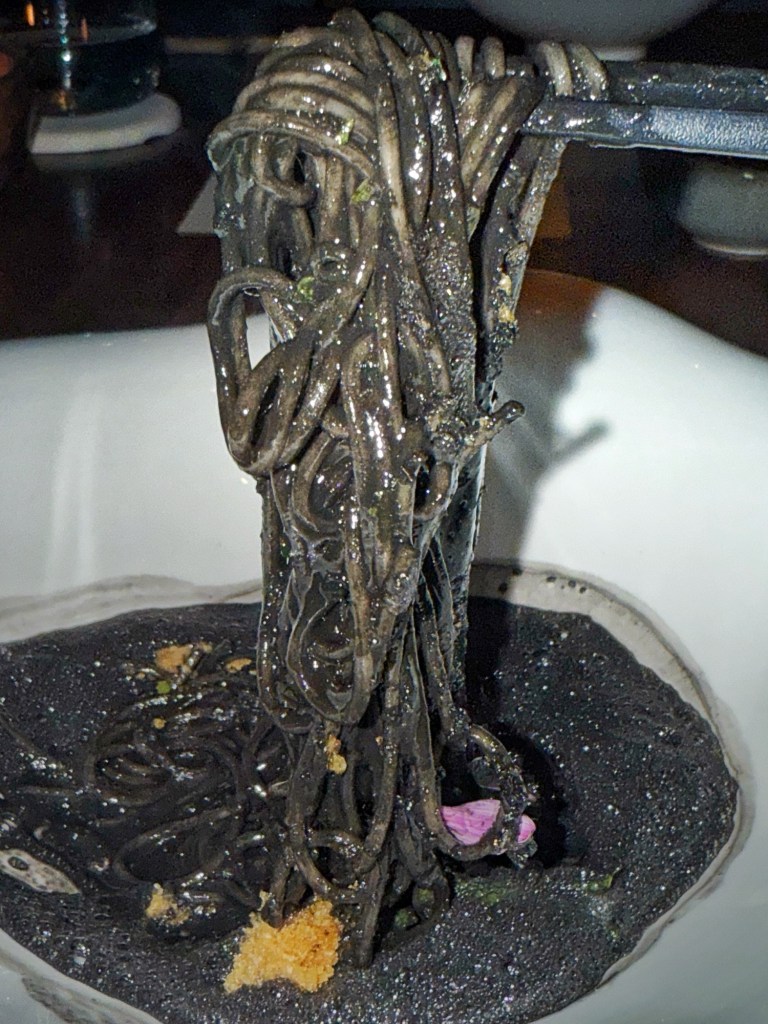
I didn’t even realize there was blood sausage (boudin noir) in the dish, but what a revelation. This is one of my favorites in the degustación. Silky somen noodles cradle tender squid a la plancha, while boudin noir in cuttlefish ink adds a rich, briny depth. A sprinkle of chicharrón adds playful saltiness. The squid ink is luxuriously black and silky, making every bite feel decadent yet perfectly balanced.
7th course Bouillabaise
Ube Bouillabaisse, Fish Trifecta of Grouper, Tilefish & Red Snapper, Ube Fondant
Bouillabaisse Reimagined
I was immediately intrigued by the idea of an ube bouillabaisse. Ube, our beloved purple yam isn’t something you expect to find anchoring a seafood stew rooted in French tradition, so the concept alone promised something playful and unexpected.
Compared to a classic bouillabaisse, which leans heavily on briny depth, tomatoes, and aromatics like saffron and fennel, the ube-based broth takes a softer, rounder approach. It’s earthy with a subtle sweetness that mellows the oceanic notes rather than amplifying them. The fish trifecta—grouper, tilefish, and red snapper—grounds the dish in familiar territory, while the ube fondant reinforces both the color and the theme.
That said, despite how exotic the idea sounds on paper, I still found myself gravitating toward the classic. The fish, while well chosen, didn’t have the freshness or succulence I was hoping for, and without that clean, just-caught quality, the dish lost some of its impact. In the end, it felt a little underwhelming. interesting, yes, but not entirely convincing.
It’s a thoughtful reinterpretation that sparks curiosity, but for me, it also served as a reminder of why the traditional bouillabaisse remains so enduring: bold, briny, and unapologetically of the sea.
8th course Pithiviers
Baked Bun Pithiviers of French Squab, Foie Gras, Pigeon Confit, Beetroot, Adobo Jus,Shishito Farci with Pigeon Liver Mousse & Heart, Tamarillo Gastrique
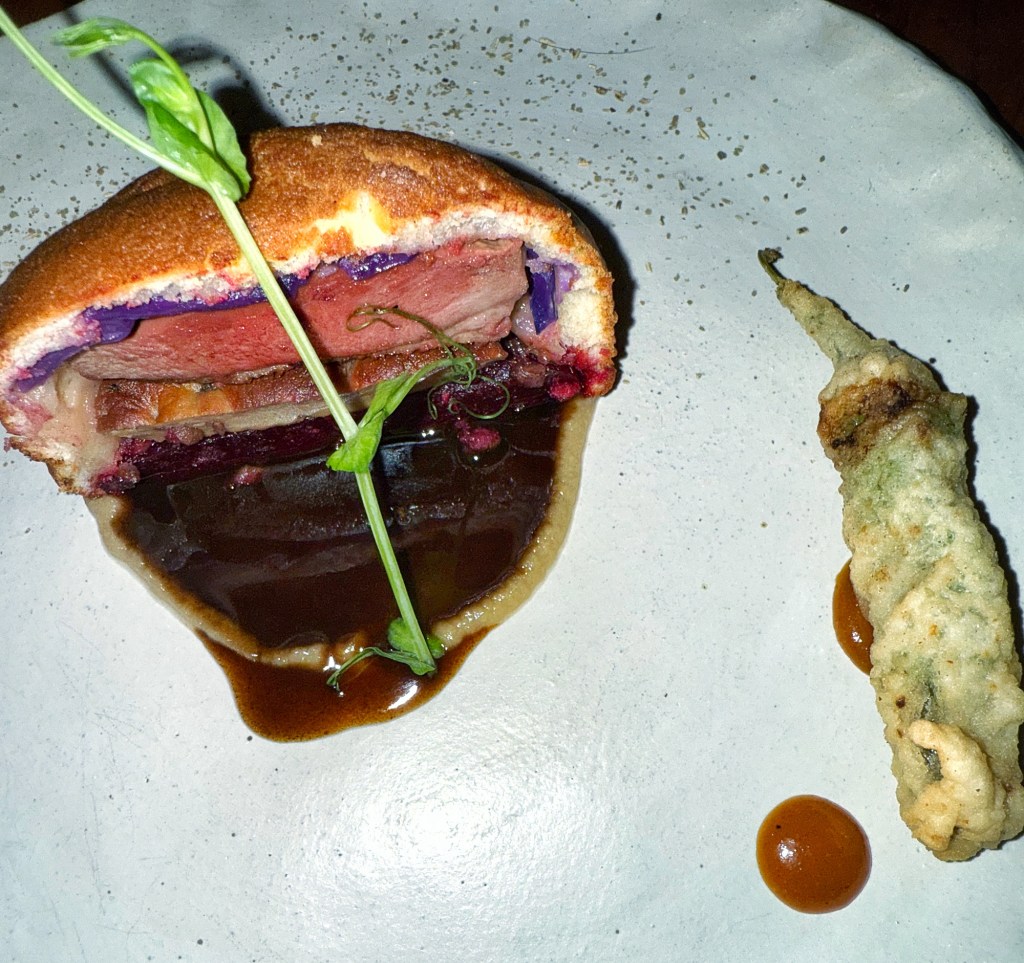
8th Course: Baked Bun Pithiviers of French Squab
My first thought , Beef Wellington reworked with French squab, foie gras, and pigeon confit, wrapped in a bun rather than puff pastry.
While the flavors were clearly well-considered, the bun gently threw me off, its soft, bread-like texture shifting the balance I had been expecting. The adobo jus, liver mousse, and tamarillo gastrique were intriguing and executed with care, though the dish never quite settled into harmony for us. But this is just me and the handsome hubby, after all dining is deeply subjective. It’s one of those dishes best experienced firsthand, and one you should try yourself to see where you land.
9th course Sorbet
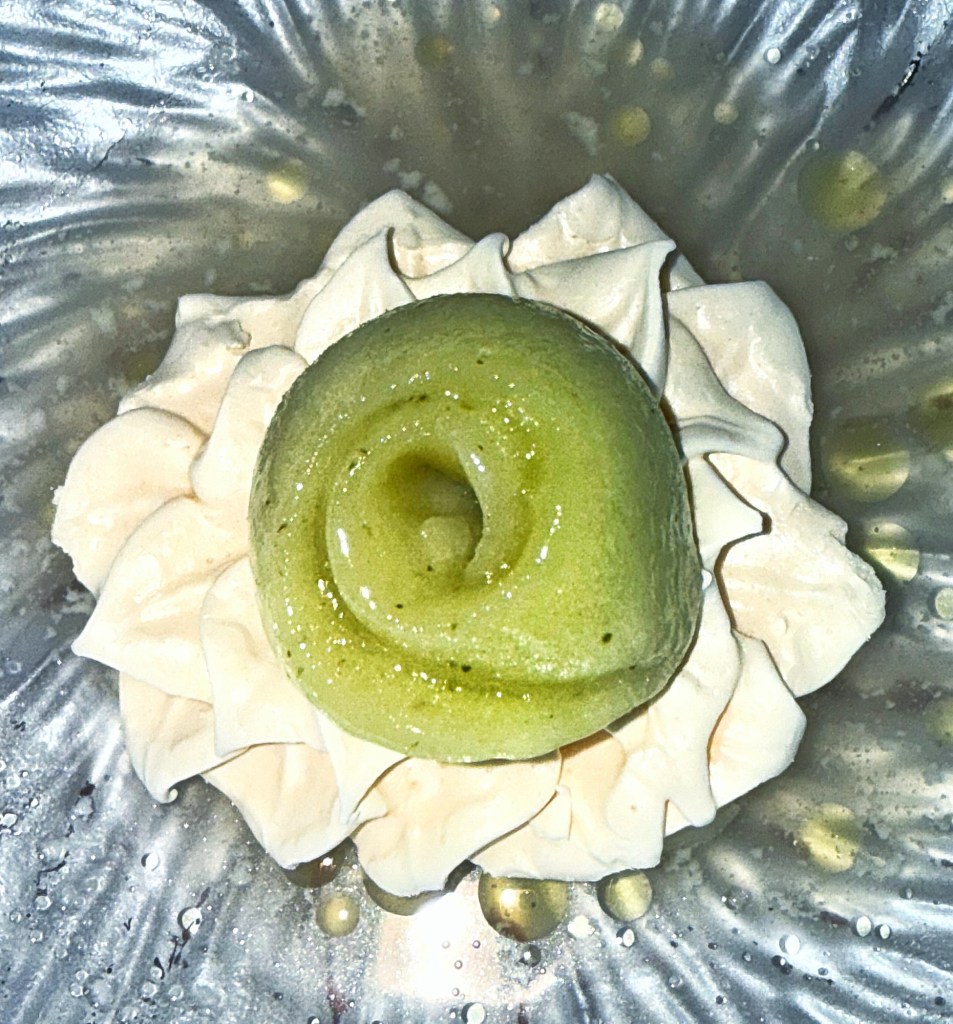
Sorbet of Seasonal Native FruitVacherin, Cashew Frangipane, Longan Compressed in Extra Virgin Olive Oil, Longan Crème, Longan Coulis
After a procession of savory courses, this dessert arrived like a palate reset. The sorbet—made from seasonal native fruit—was delightfully refreshing, its bright acidity cutting cleanly through the richness that came before it. It was the kind of interlude that wakes you up rather than weighs you down.
The sorbet was paired with a vacherin, a classic French dessert element made from crisp meringue layered with cream, adding lightness and crunch in equal measure. Cashew frangipane—a nut-based cream traditionally used in French pastry—brought a gentle, toasty sweetness that grounded the dish without overwhelming it.
Longan appeared in multiple expressions: compressed in extra virgin olive oil for a subtle, almost savory richness; folded into a smooth crème; and finished as a coulis that tied everything together. The interplay was thoughtful and restrained, with acidity and sweetness in constant conversation. Fresh, delicate, and well-composed, it was a quietly confident way to end the meal.
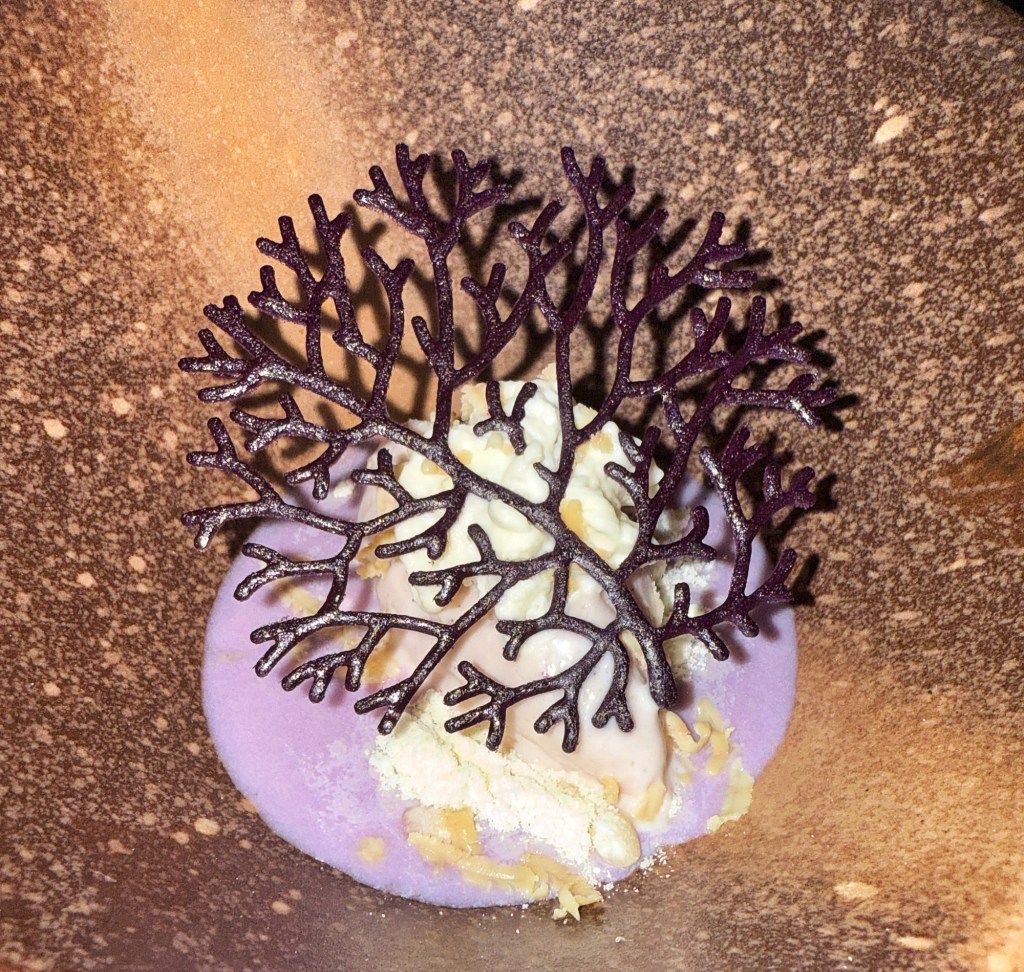
10th course :Glace Purple Sweet Potato Ice Cream, Soy Cereal Crunch, Foie Gras Salted Cream, Grated Frozen Foie Gras, Ube Tuile
Glacé Purple Sweet Potato Ice Cream
Soy Cereal Crunch, Foie Gras Salted Cream, Grated Frozen Foie Gras, Ube Tuile
This was decadence.The ube ice cream was rich and velvety, its earthy sweetness setting the stage for a pairing I’d never encountered before: foie gras salted cream, finished with delicate shavings of frozen foie gras. It was my first time experiencing foie gras in this context and certainly with ube and the result was indulgent, surprising, and undeniably bold.
The foie gras added a savory, buttery depth that pushed the dessert into that intriguing sweet-salty territory, while the soy cereal crunch brought much-needed texture and contrast. An ube tuile echoed the ice cream’s flavor, tying the elements together visually and thematically.
Final note
There were hits and there were misses, something the handsome hubby and I found ourselves gently agreeing on. We’re not chefs or professional food critics, just foodies who love Michelin-caliber cooking and the experience of being pleasantly surprised, even wowed. What stood out, though, was Kasa Palma’s clear sense of intention. Even when a dish didn’t fully resonate with us, the thoughtfulness behind it was unmistakable. It’s this quiet confidence, paired with restraint and craft, that places Kasa Palma comfortably within the Michelin conversation, and leaves a lasting impression beyond individual courses.
8 course tasting menu is P6500 per person
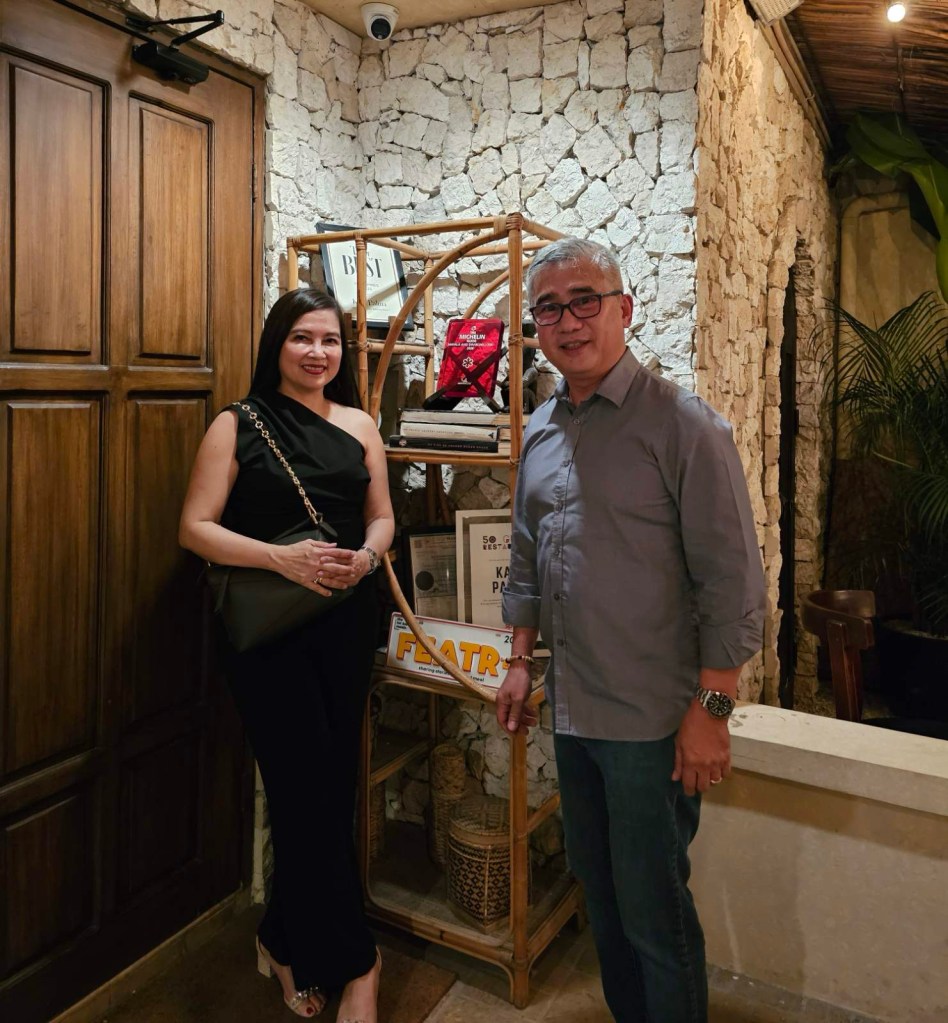
Kasa Palma is located at 6042 R. Palma, Poblacion, Makati City, Metro Manila, Philippines.
 Pigoutmanila