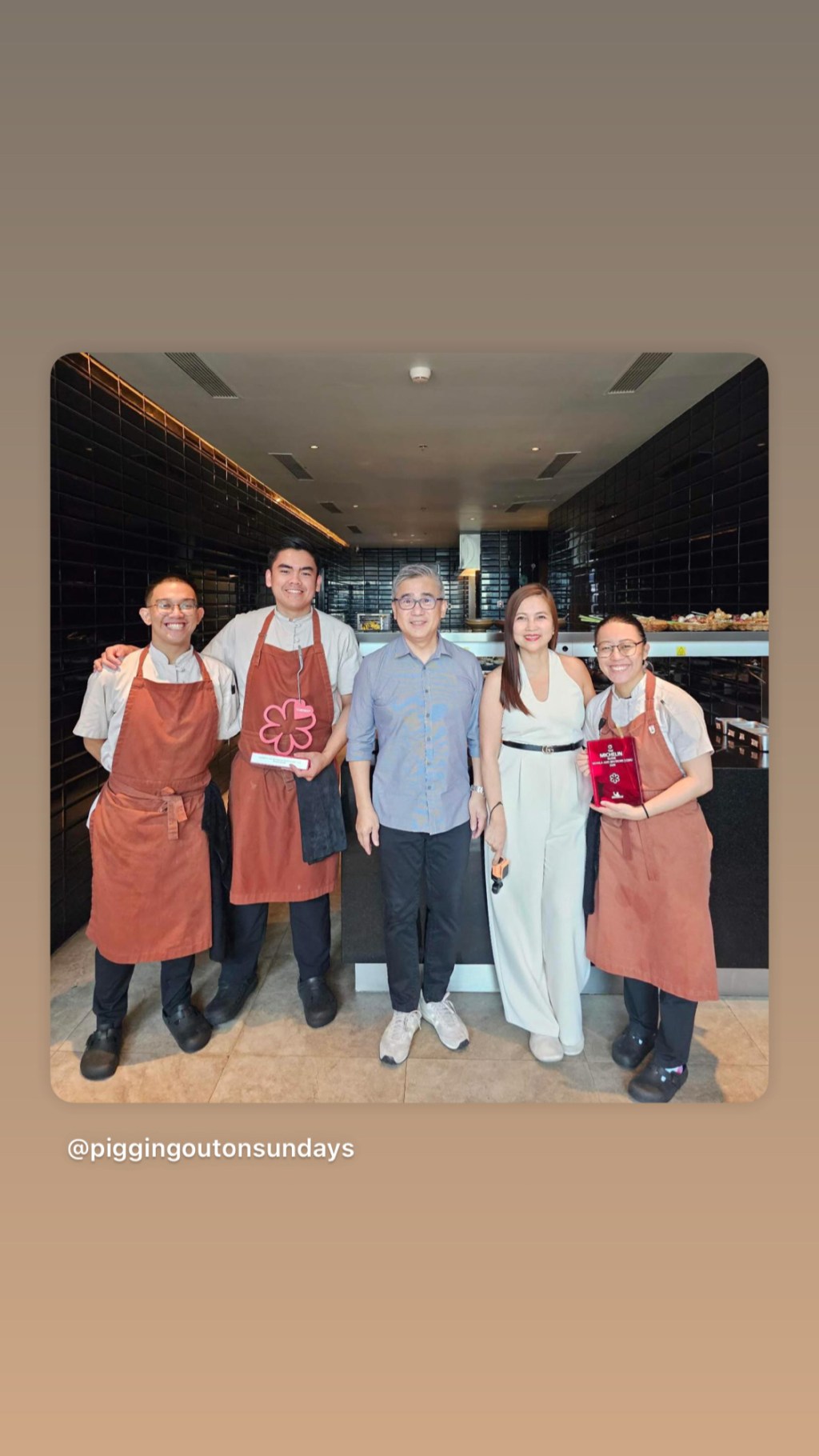
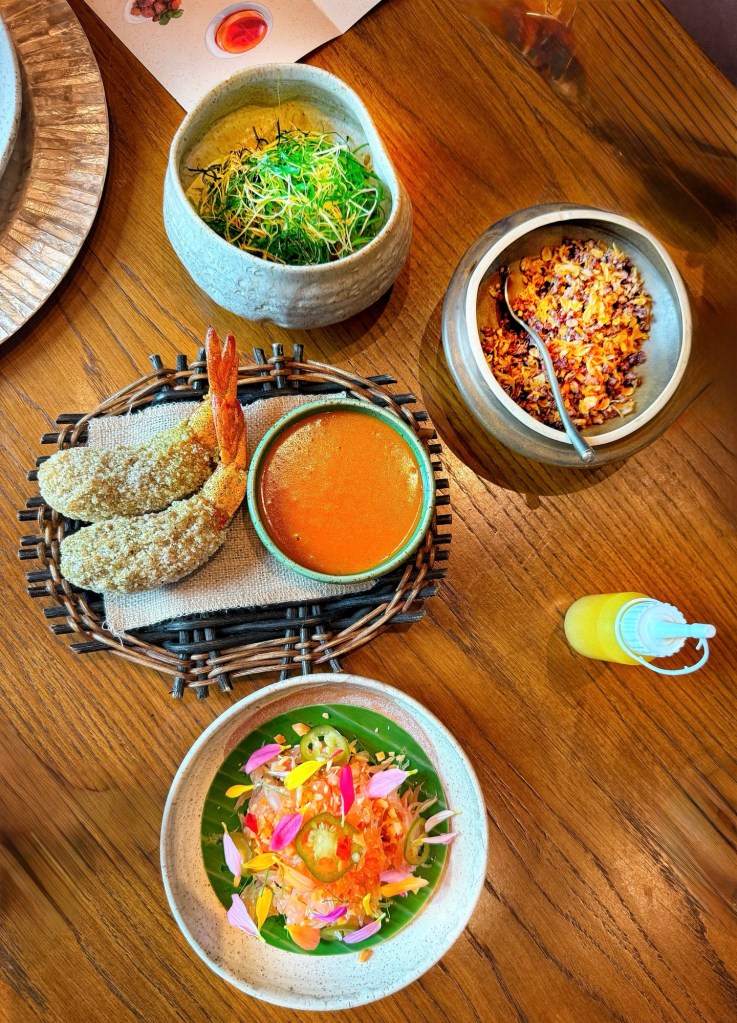
Our hapag adventure opens with a thoughtful introduction to each course inspired by Head Chef Owners John Kevin Navoa & Thirdy Dolatre’ s Western Mindanao sojourns, grounding the experience in story and intention rather than spectacle.
There is novelty in the experience because no written menu was given initially, just artistic rendition of their 8 course menu.
Part 1 of our Hapag experience , link below
https://pigoutmanila.com/2025/12/04/a-first-look-inside-michelin-starred-hapag-manila/
First course:
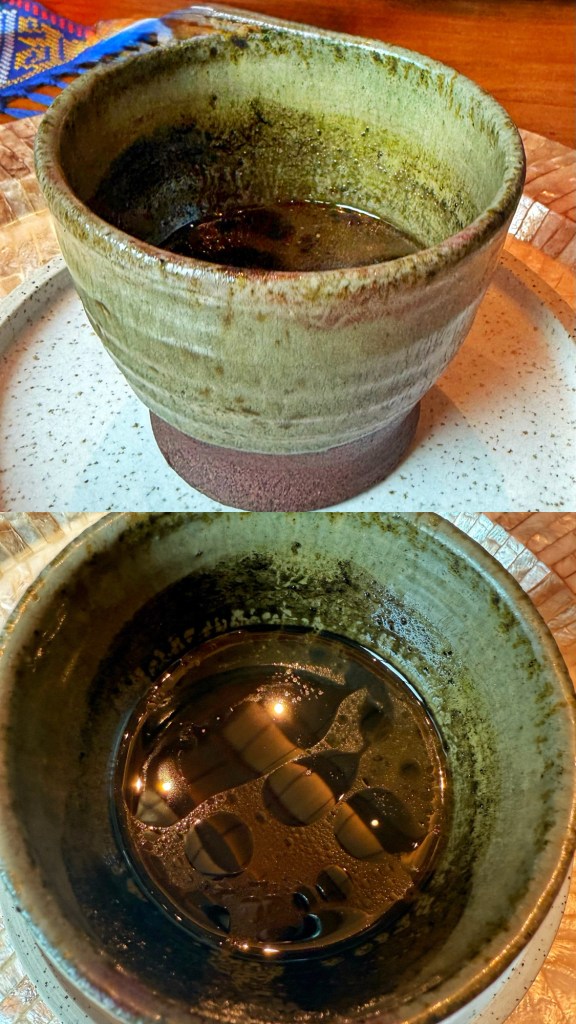
Tiyula Itum,Beef broth, burnt coconut oil, fresh ginger
The first course is Tiyula Itum, a deeply soulful beef bone broth distinguished by its inky hue, derived from charred coconut meat. Beef tendon lends body and silkiness to the soup, while a chorus of aromatics: lemongrass, galangal, and no fewer than three varieties of ginger ,build layers of warmth and complexity.
The galangal, a close relative of ginger commonly used in Malaysian and Indonesian cooking, brings a sharper, more citrusy note. The burnt coconut infuses the broth with a gentle smokiness, giving the dish both depth and quiet intensity.
2nd course : Agal Agal
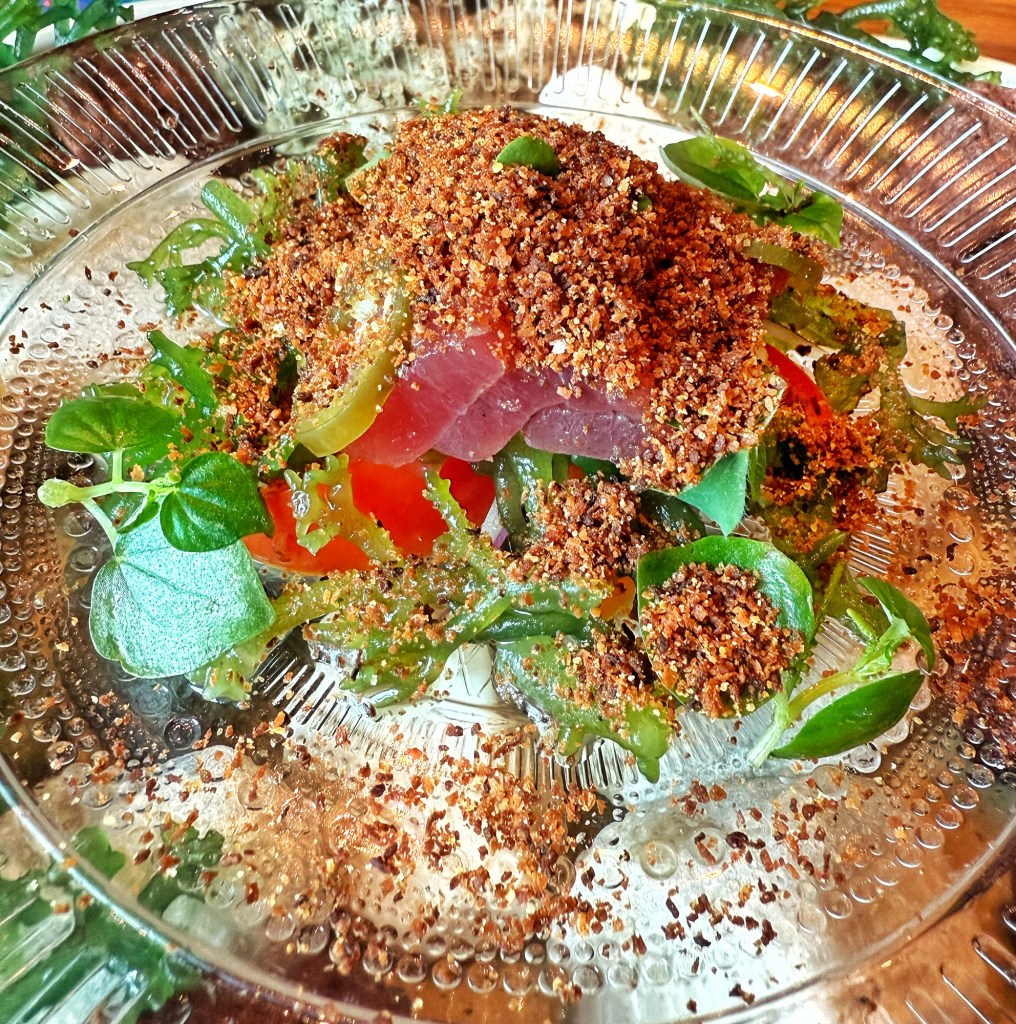
Tuna, gamet dressing, agal-agal, aiko tomato, green mangoes, red onion, gamet shoyu, bubuk
Alongside it is agal-agal, a type of seaweed abundant in Western Mindanao. Commonly found in the kitchens of Tawi-Tawi and Basilan, it is often served simply as a salad, traditionally dressed with soy sauce and calamansi.
Here, however, the dressing is more nuanced: toasted gamet—a dried seaweed fermented for six months—combined with shoyu, or Japanese soy sauce and tuna. The result is savory, briny, and faintly umami-rich, elevating a humble, familiar ingredient into something unexpectedly refined.
3rd course: Mee Goreng , House made noodles, mushrooms, fried egg white, quail egg yolk, calamansi
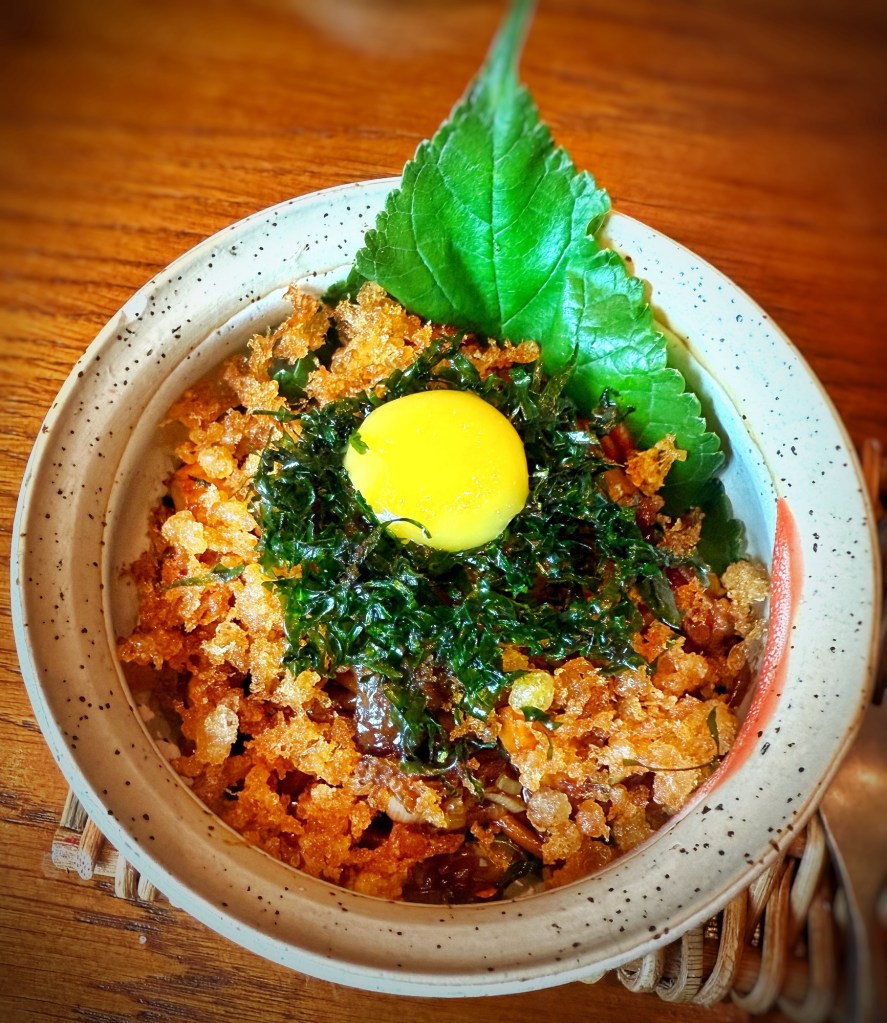
House made noodles, mushrooms, fried egg white, quail egg yolk, calamansi
Mee Goreng arrives not just as a plate of noodles, but as a quiet lesson in history and culture. The chef shared that on their very first night in Zamboanga, they discovered how centuries of continuous barter between the Philippines and Malaysia shaped local tastes—turning mee goreng into a beloved midnight staple in the city.
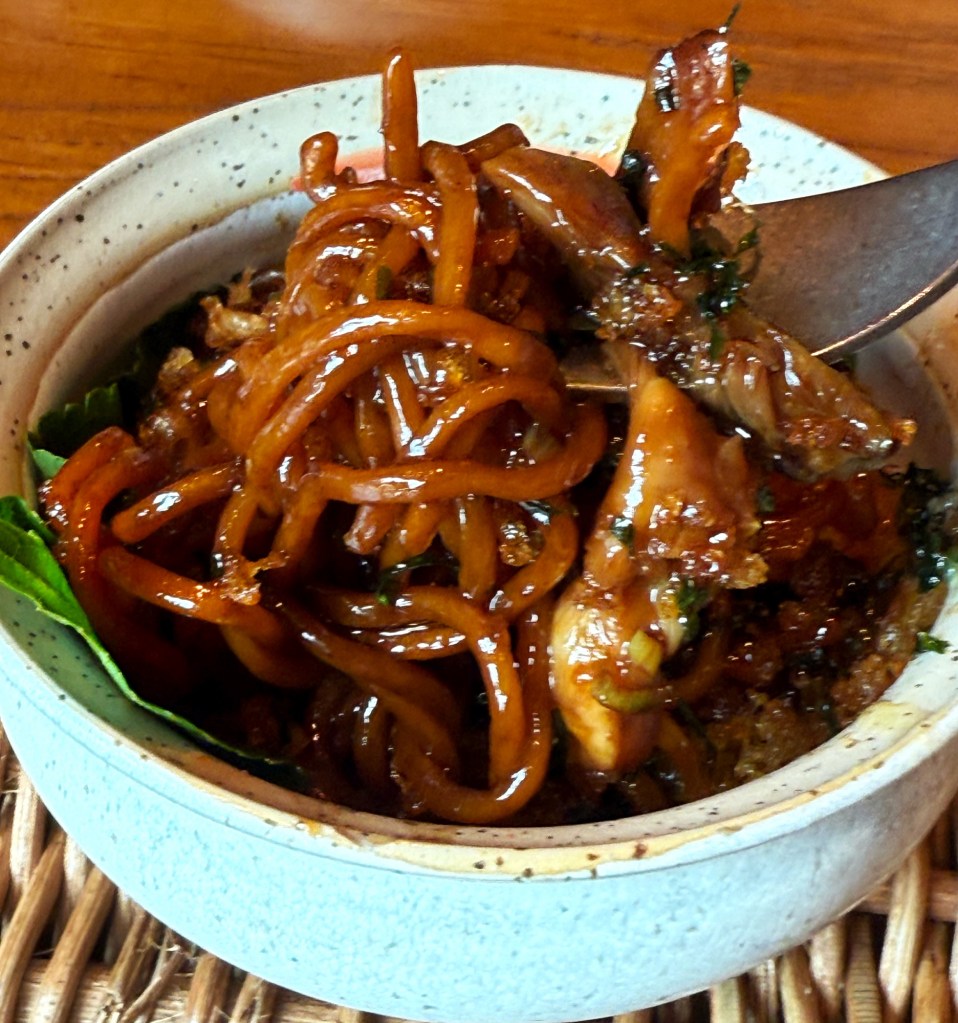
Nearly every element on the plate is made from scratch, a detail that deepens the appreciation. From the house-made noodles to the ketchup, mayonnaise, and the mee goreng sauce itself, the dish reflects patience and craft. These are paired with earthy, brown-roasted mushrooms, crisp fried egg whites, fragrant fried chili leaves, and finished with golden quail egg yolks.
The ritual is part of the pleasure. Pop the yolks, toss everything together, and squeeze over calamansi. The house-made noodles stand out: chewy, substantial, and already flavorful on their own. But it’s the calamansi that works its quiet magic, lifting and tying everything together with a bright, citrusy finish. A humble dish, elevated, yet still deeply rooted in place and memory.
4th course : Leche Flan
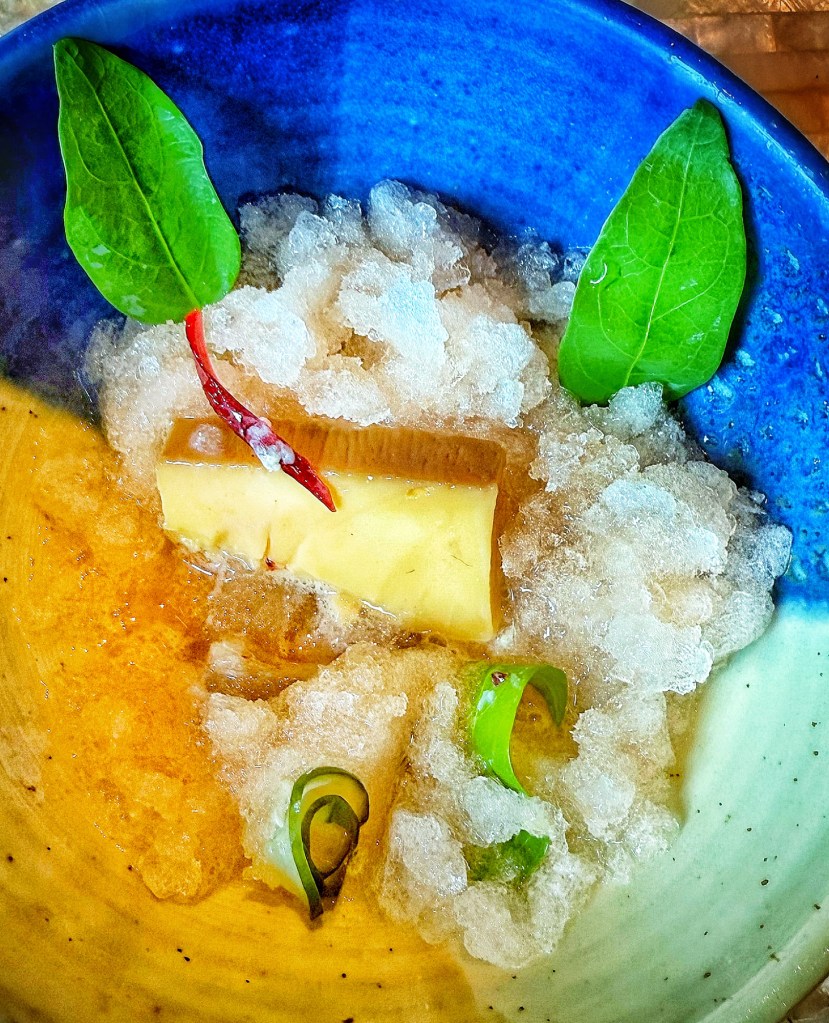
Calamansi tanglad granita, leche flan, scoby, pickled cucumber and roselle, binahian
The course that followed Mee Goreng was called Leche Flan, a name that immediately gave me pause. Surely it was too early for dessert. In Filipino homes, leche flan signals the finale, the sweet punctuation mark at the end of a meal.
But at Michelin-starred Hapag, leche flan is reimagined as a palate cleanser. The custard itself plays with contrast: sweet yet gently sour at the base, layered with pickled onion , adding a quiet briny depth.
Sitting atop the leche flan are pickled vegetables, introducing crunch and acidity before the dish opens up into brighter notes.
A calamansi–tanglad granita brings citrus and herbal freshness, while SCOBY lends a subtle fermented tang. Pickled cucumber and roselle binahian add sharp, floral acidity, keeping the dish lively and cleansing rather than indulgent. Familiar yet unexpected, it resets the palate while cleverly challenging our idea of where leche flan belongs in a meal.
SCOBY stands for Symbiotic Culture of Bacteria and Yeast. It’s most commonly associated with kombucha and other fermented drinks. In dishes like this, SCOBY brings a gentle tang and natural acidity;clean, slightly funky, and refreshing—helping to wake up the palate rather than weigh it down.
Roselle Binahian
Roselle is a variety of hibiscus known for its deep red color and bright, cranberry-like tartness. Binahian refers to a traditional Filipino preservation method, often involving salting, fermenting, or lightly pickling. Roselle binahian adds a sour-floral note with depth, echoing Filipino preservation techniques while providing balance and contrast to the richness of the leche flan.
Together, both elements introduce acidity and fermentation: key to why this “leche flan” works not as a dessert, but as a palate cleanser.
5th, 6th, 7th , 8th course : Salu-Salo
Next comes what Hapag calls a Salu-Salo—a communal interlude that brings together contrast, comfort, and familiarity on one table.
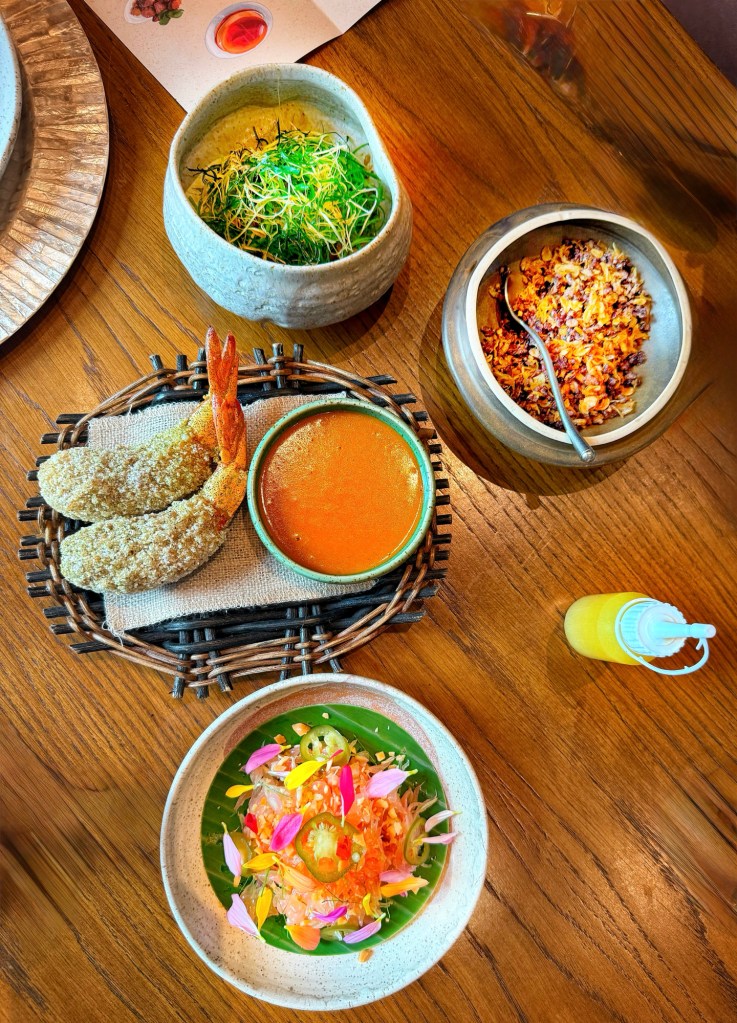
The spread opens with a Pomelo Salad, a bright and refreshing mix of fresh pomelo, pickled jalapeño, lemongrass, shallots, ginger torch, pili nuts, and kaffir lime, all dressed in a fish sauce–calamansi vinaigrette. Light, citrusy, and gently pungent, it refreshes the palate and sets the tone for what follows, doubling as a natural palate cleanser.
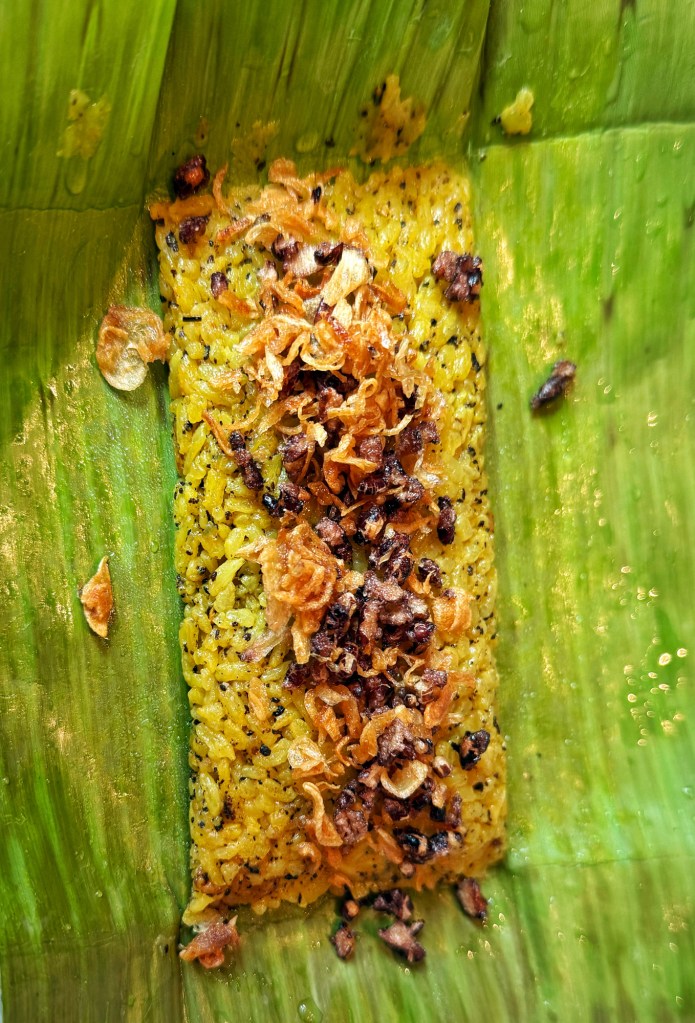
Alongside it is Junay, a fragrant turmeric rice layered with onion, ginger, and shallots, finished with puffed black rice for texture and a squeeze of calamansi for lift. Simple at first glance, but deeply comforting, it serves as the perfect anchor for the richer dishes on the table.
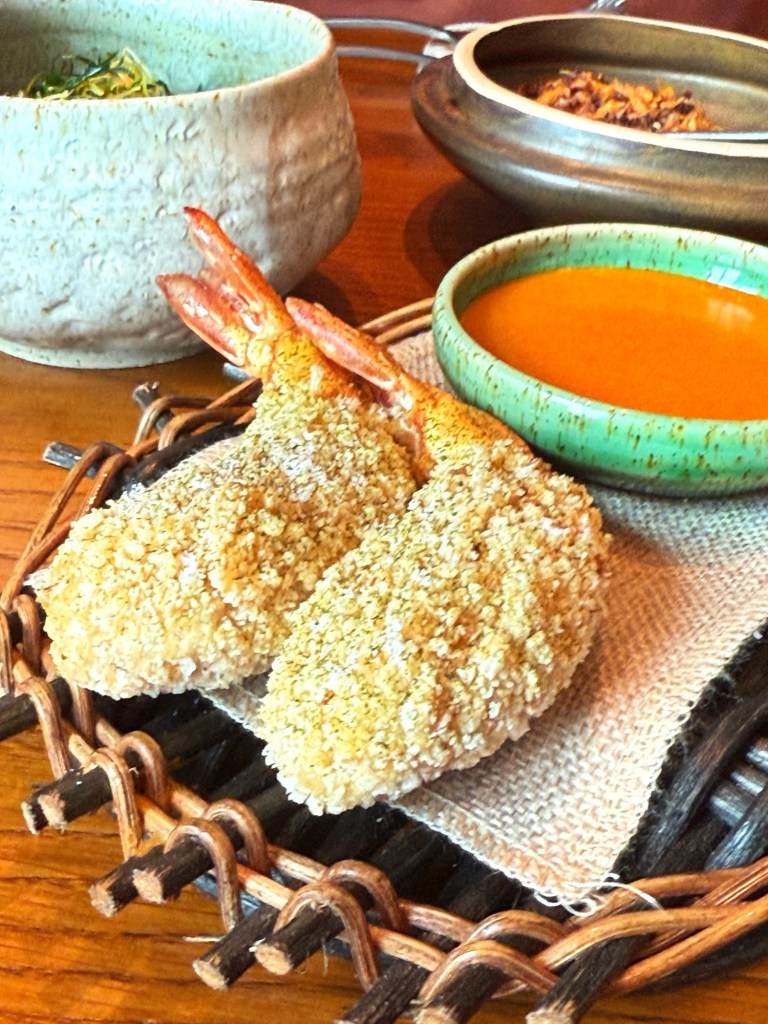
Tiger prawn, pinipig, alavar sauce
The Camaron Rebosado features a tiger prawn coated in pinípig and paired with Alavar sauce. Inside the crisp exterior, the prawn is perfectly cooked—plump, tender, and undeniably succulent.
Rounding out the salu-salo is the Riyandang Maranao: slow-cooked beef short ribs enriched with toasted rice and coconut, perfumed with kaffir lime oil, leeks, and curry leaves.
Deep, aromatic, and intensely satisfying, it shines brightest when spooned over the junay, the turmeric rice absorbing every layer of flavor.
Together, this salu-salo feels like a shared table distilled into a single course: generous, thoughtful, and deeply rooted in the idea of eating together.
Dessert ; Knicker Bocker

Strawberry ice cream, seasonal fruits, langka jam, pickled longan, pineapple jelly, pili nut amazake
Knickerbocker is Zamboanga’s vibrant take on halo-halo—a legacy dessert shaped by local produce and regional tastes. Traditionally, it’s a layered medley of fruits, jellies, and ice, known for its riot of color and playful contrasts.
In the Hapag version, pineapple jelly forms the base, joined by tropical fruits like watermelon and melon, pickled longan, and generous amounts of fermented langka, which adds a pleasantly funky, tangy depth. Instead of using milk, as in classic halo-halo, they finish it with amazake.
Amazake is a traditional Japanese fermented rice drink made during the sake-making process. Here, they inoculate their own house-made koji—the same beneficial mold used for miso, visible in the reception area. The mixture is gently cooked at a stable temperature for eight hours, resulting in a lightly sweet, naturally fermented base with a delicate foam.
The dessert is crowned with strawberry ice cream, dusted with roselle powder for a bright, tangy lift, and finished with edible flowers. It’s quite an elaborate—and thoughtful—reinterpretation of knickerbocker, bridging Zamboanga tradition with precise fermentation techniques from Japan.
Thoughts:
Overall, appreciate the chefs at Michelin-starred Hapag ‘s deep love for their country and a keen awareness of the archipelago’s regional complexity.
That respect for history and culture is seamlessly woven into their cooking, where creativity and imagination come into play as they thoughtfully reinterpret classic Western Mindanao dishes without stripping them of their identity.
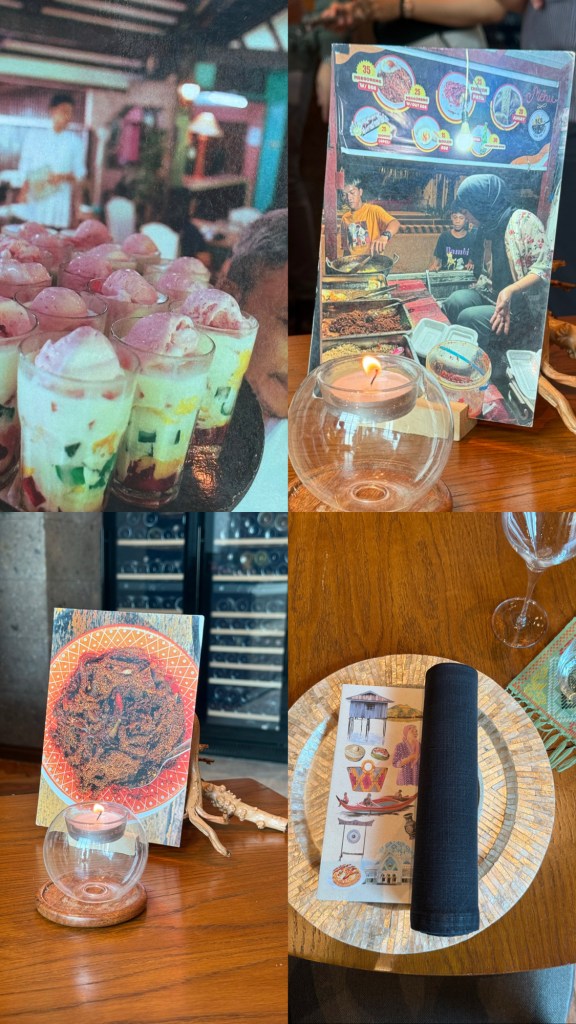
The handsome hubs and I especially loved their show-and-tell moments, when they shared images of the traditional dishes they encountered during their travels in Western Mindanao, along with their reflections and impressions from the journey. It adds warmth and context to the experience, grounding each course in place, discovery, and genuine curiosity.
Dining at Hapag feels like being invited on a shared sojourn: one that gently opens our eyes to the richness, depth, and quiet mystique of Western Mindanao cuisine.
Hapag Tasting Menu – reservation fee 50% per person: ₱2,250 for lunch (₱4,500) | ₱3,500 for dinner (₱7,500)
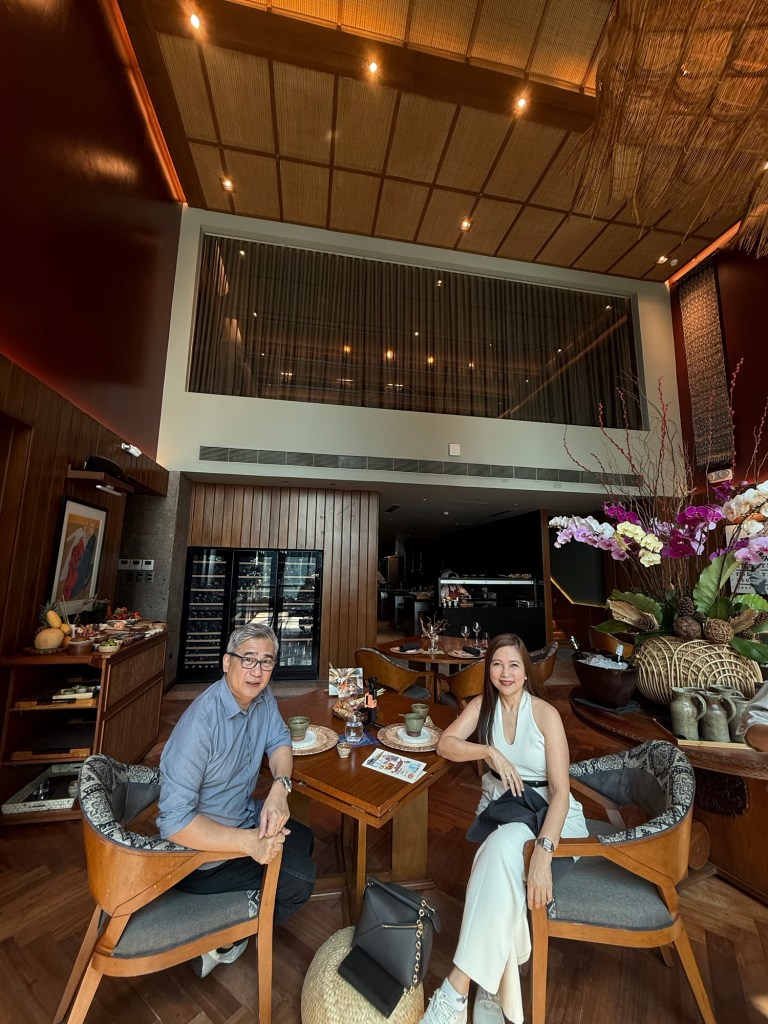
Hapag is located at the 7th floor Balmori Suites
 Pigoutmanila