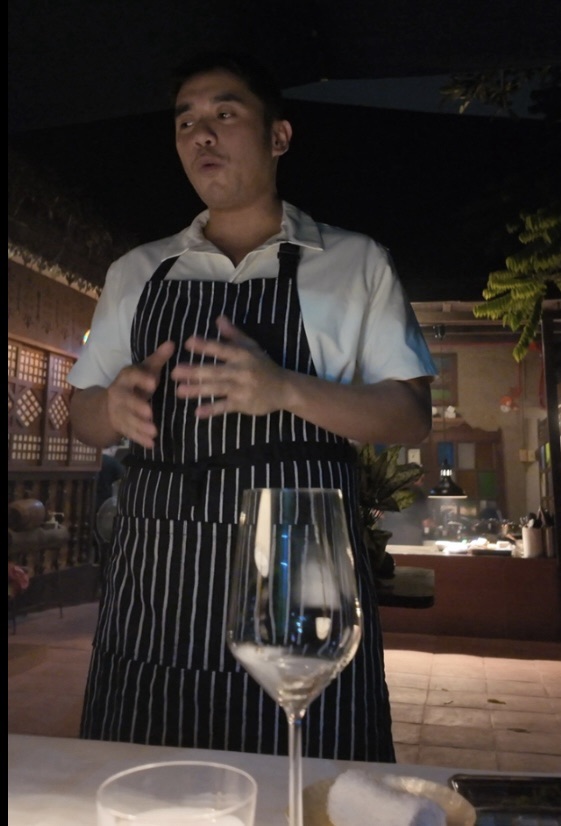
“ So I always say what we do in LINAMNAM is the possibilities of Filipino food, always trying to respect tradition, flavors … but try to be as creative as we can.
So we don’t have any menu. Menu is dependent on 3 things 1) Farmers that we work with 2) fishermen that we work with or 3) based on my travels.
So I have one farmer, he’s in Calaca Batangas and only works with pre World War 2 seeds.
The idea is we’re trying to bring back all the vegetables our Lola’s would have eaten back then . Then we work that with our fishermen as well. They are in Lucena and Capiz… we get fish from them weekly .
For my travels, I actually came back from Ilocos Norte and Quezon, so a lot of ingredients you are having tonight are from those two provinces…”
Michelin Star Chef & Michelin Guide Young Chef Awardee Chef Don Baldosano
https://pigoutmanila.com/2026/03/15/that-michelin-star-linamnam-vibe-part-1/
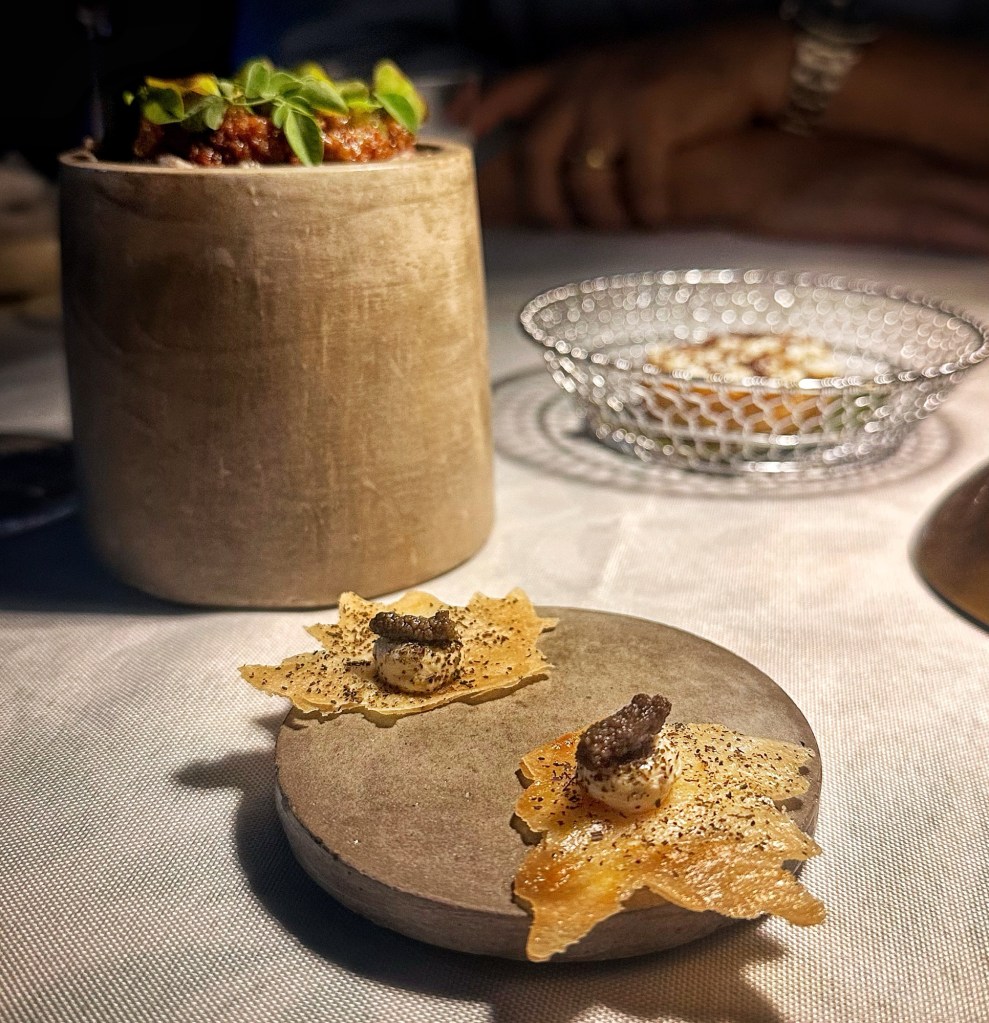
First Course
We began with a trio of starters, each rooted in familiar flavors yet reimagined with finesse.
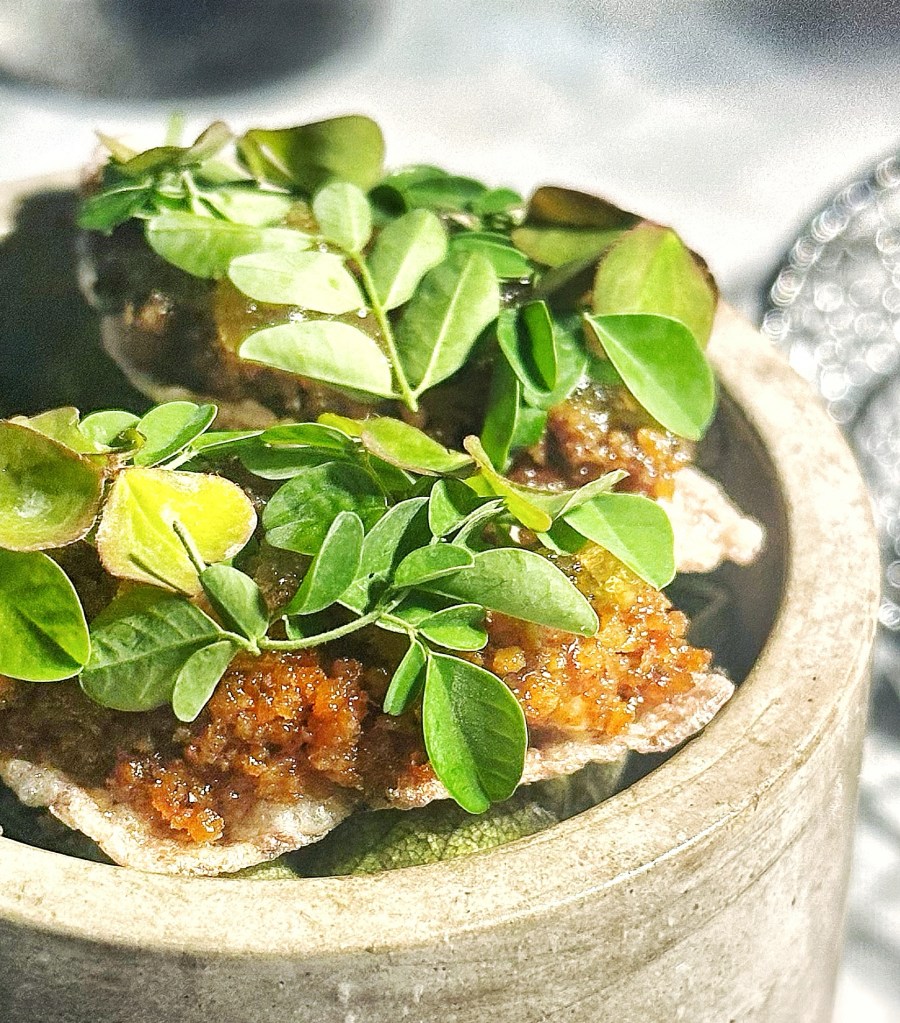
First came the longsilog, deconstructed and elevated. Beneath it lay a rice chip with velvety cream and crumble of longganisa, rich and deeply savory, anchoring the dish with unmistakable Filipino soul.
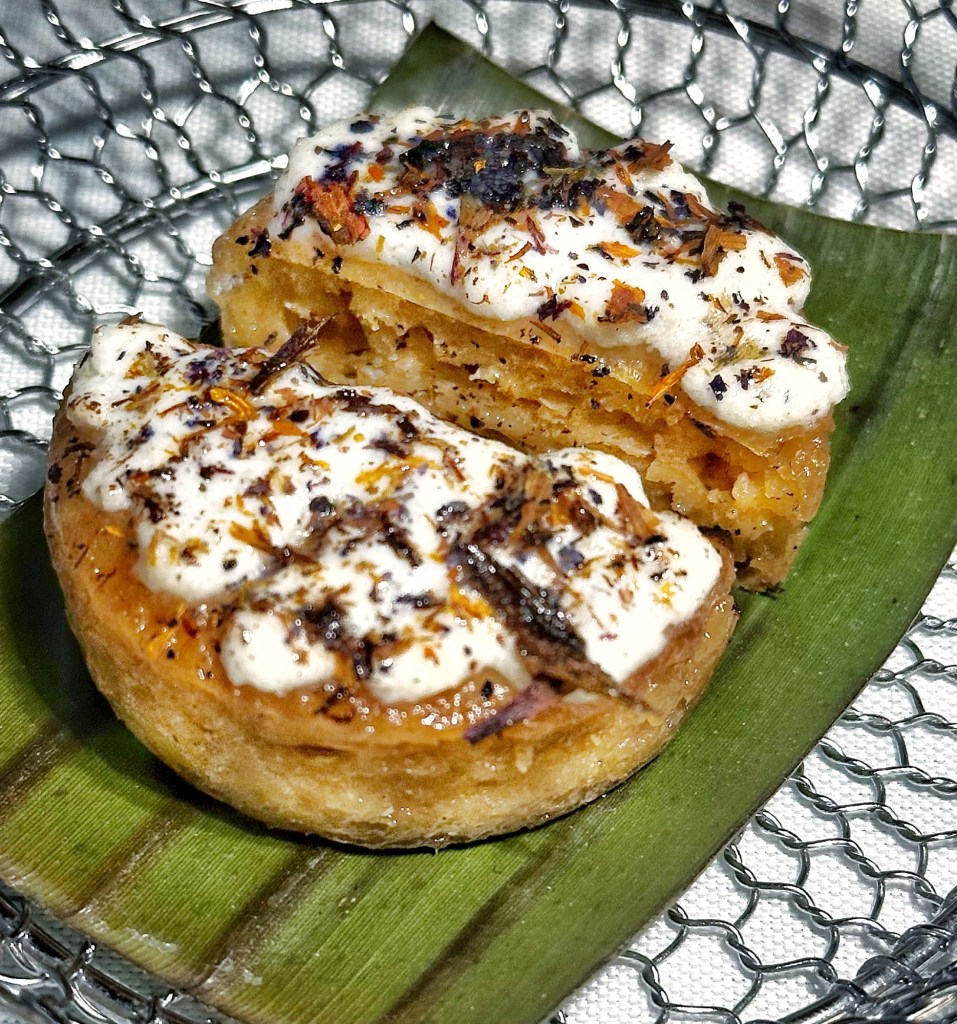
Next was puto sa pula, a thoughtful take on the traditional rice cake. Made with muscovado, it carried a gentle caramel depth, further enriched by kesong puti aged in banana leaves, lending it a subtle tang and earthy aroma.
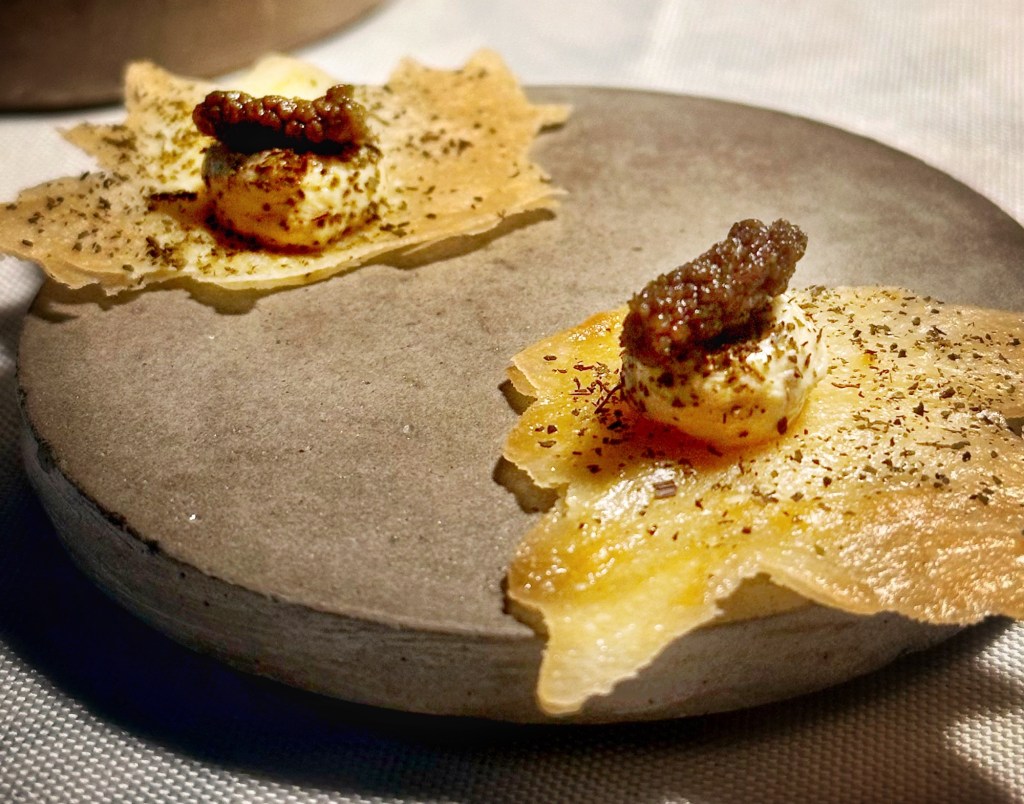
The final starter, an ensalada, proved to be the most intriguing. A delicate chip, cooked in beef fat, rested atop a bed of smoked vegetables and alucon, an indigenous plant whose young leaves and flowers are prized for their unique texture and flavor . Though modest in size, the dish delivered remarkable complexity : smoky, crisp, and deeply layered.
While the longganisa impressed, it was the ensalada that lingered. Small in stature, yet undeniably bold, it packed a surprising punch.
2nd Course : Tinapa of Wild Pampano
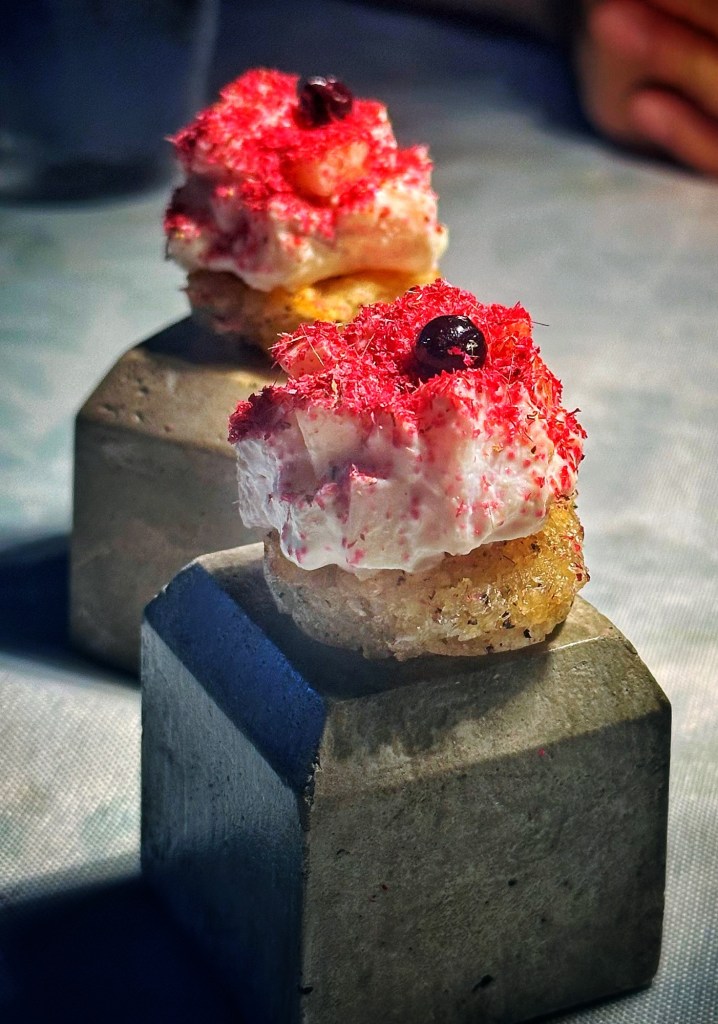
After the trio of starters, the meal unfolds into a beautifully composed tinapa of wild pampano, delicately perfumed with bayabas oil. Beneath it rests a soft, subtly sweet puto lanson—crafted from cassava—its gentle richness brightened by lightly pickled Benguet berries, lending a refined lift of acidity that cuts through with elegant precision.
Puto lanson—more precisely known as puto lansong—is a heritage kakanin from the Visayas, particularly Samar. Unlike the more familiar puto made with rice flour, this version uses cassava (kamoteng kahoy) and undergoes a light fermentation, imparting a delicate tang and a deeper, more nuanced flavor that sets it apart from the usual straightforward sweetness of traditional puto.
3rd Course
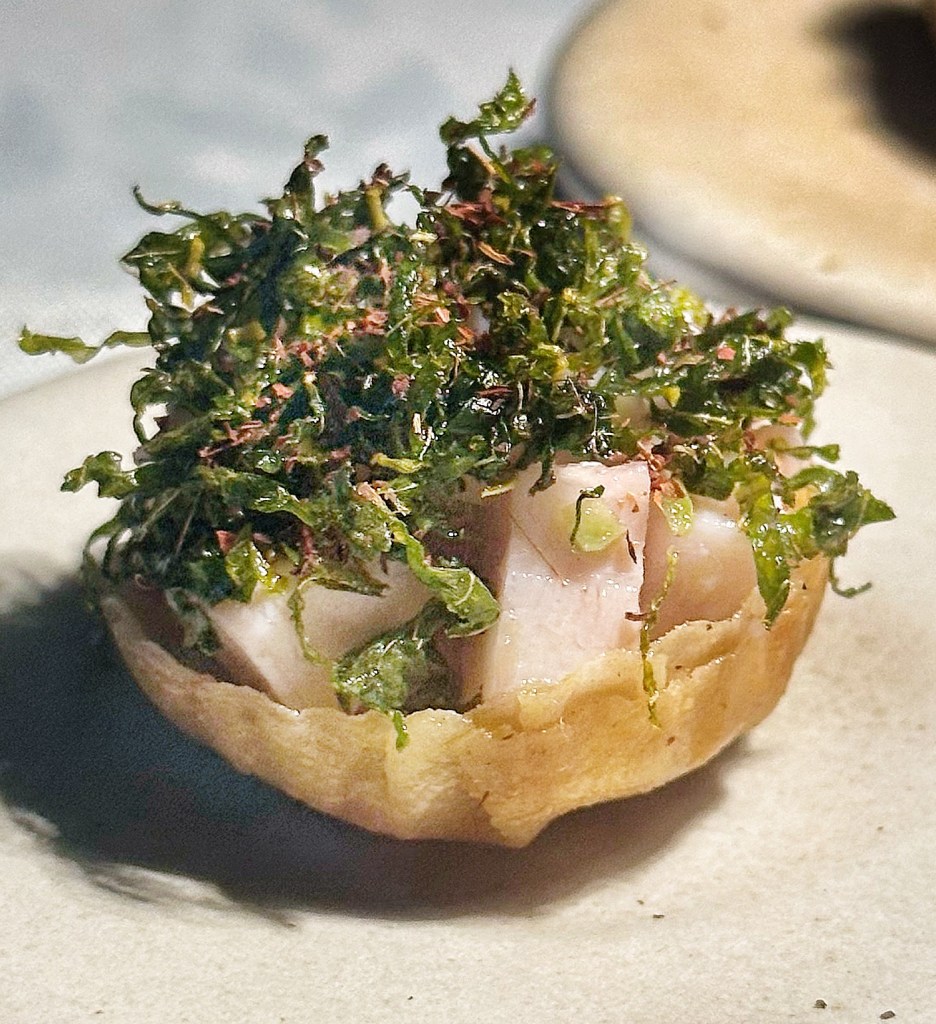
The third course arrives as inihaw na pusit, paired with burong baboy, a fermented pork condiment sharpened by the bright acidity of pahok mangoes. The dish is a nostalgic nod to the chef’s Sunday family lunches, reimagined with finesse.
Taken in a single bite, the flavors come into sharp focus: the clean smokiness of the grilled squid, the savory depth of the burong baboy, and that immediate, mouthwatering acidity from the pahok mangoes. Together, they evoke the familiar brightness of kilaw—our local take on ceviche—where smoke, salt, and sourness converge in perfect harmony.
4th Course & Introduction to Seafood
Okoy
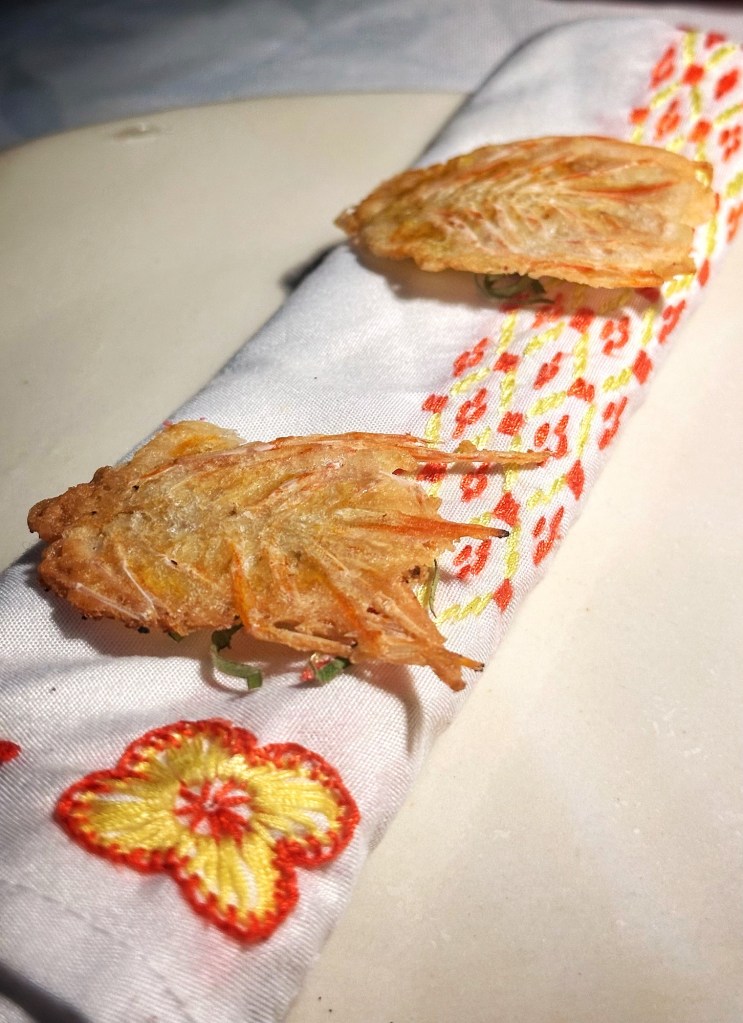
The fourth course, serving as both the final snack and a gentle prelude to the seafood courses, arrives as a playful composition of okoy paired with a side of sabaw or soup.
Here, the “okoy” is a clever reinterpretation: a crisp shard of dehydrated shrimp head resting atop a wild leaf known as alagaw. It’s a delightfully surprising bite : light, crunchy, and far more refined than one might expect from its humble origins.
What does alagaw taste like? It lends a subtle herbaceousness with faint citrusy, slightly peppery notes, an aromatic lift that complements rather than competes with the briny depth of the shrimp.
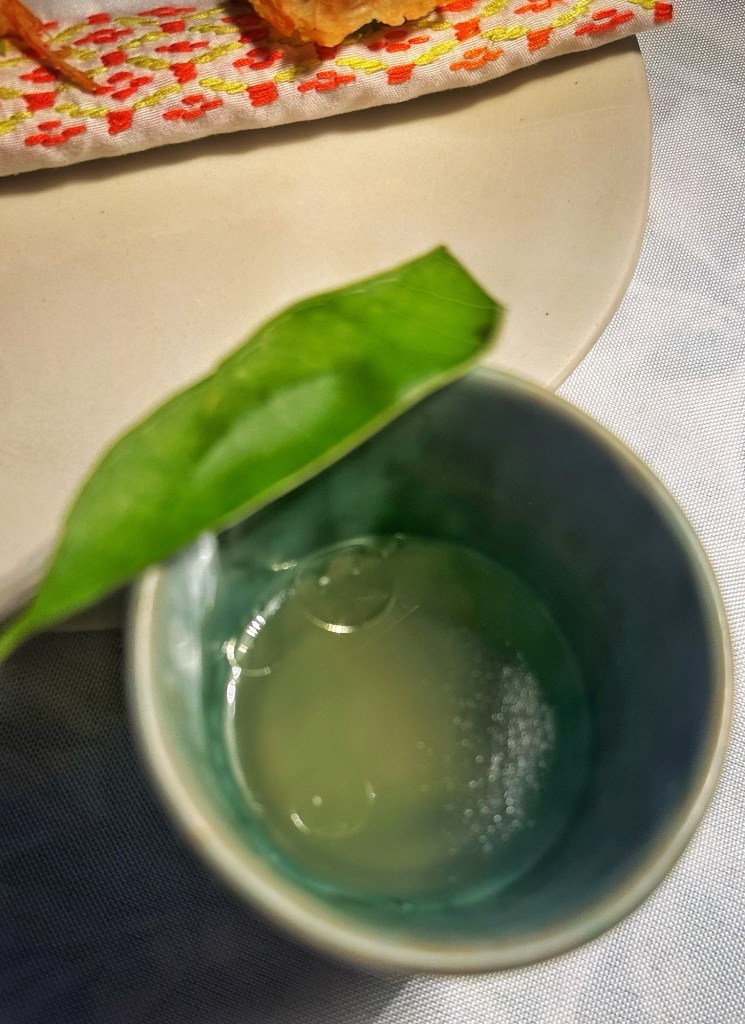
Alongside it is a sabaw inspired by the sinigang of the chef’s childhood, but with thoughtful regional twists. Instead of the usual sampaloc as the souring agent, Chef Don Baldosano turns to libas leaves, intensely tart greens commonly used in Capiz and Iloilo. In place of fresh meat, he incorporates etag, a traditional Cordilleran method of preserving pork through salting and smoking. The result is a broth that is deeply evocative: sour, smoky, and soulful, carrying the quiet complexity of memory in every sip.
Hipon
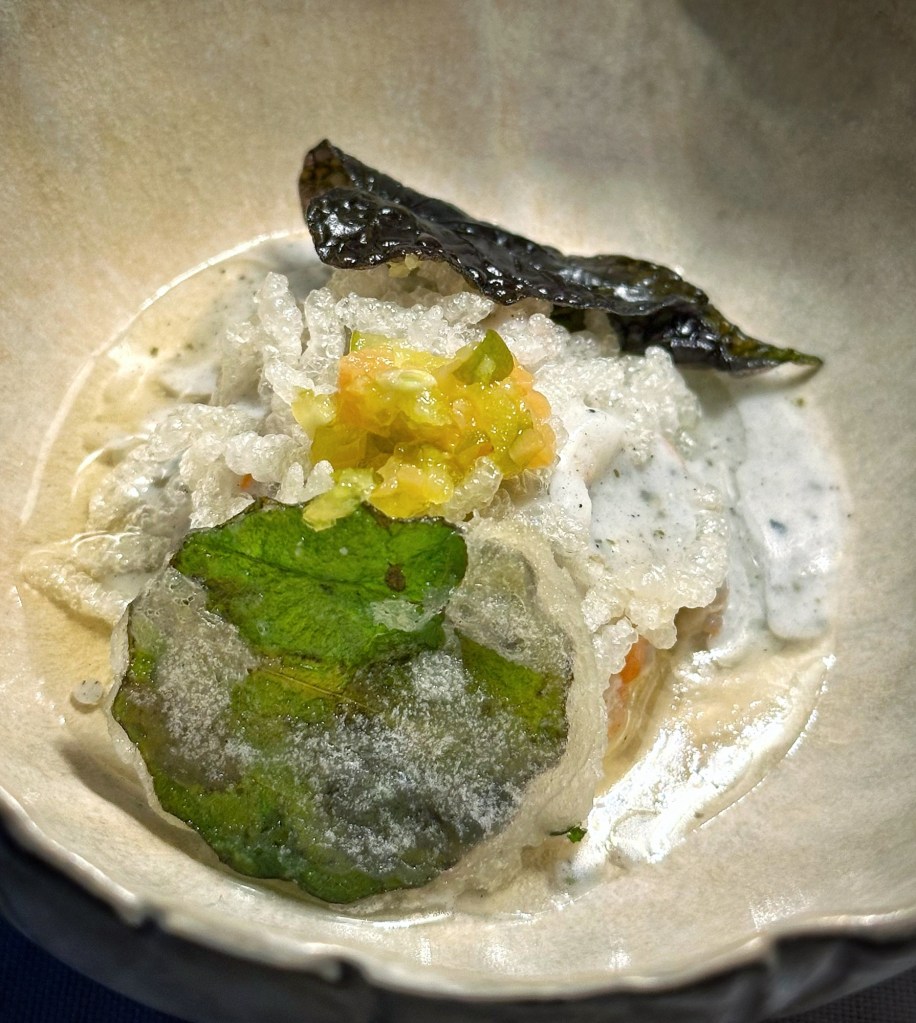
The next two courses draw deeply from the bold, layered flavors of Mindanao. The first presents plump grilled shrimp, lightly seasoned with dried shrimp from Quezon, then cloaked in a delicate ginataan infused with nganga, or betel leaves, lending a gently bitter, almost herbal complexity. A small pool of oil made from sakurab, an heirloom onion found only in Mindanao, adds a subtle sweetness and aromatic depth. On the side, crisp shards of nganga echo the dish’s central note, bringing texture and a lingering, pleasantly astringent finish.
Apahap or Local Seabass
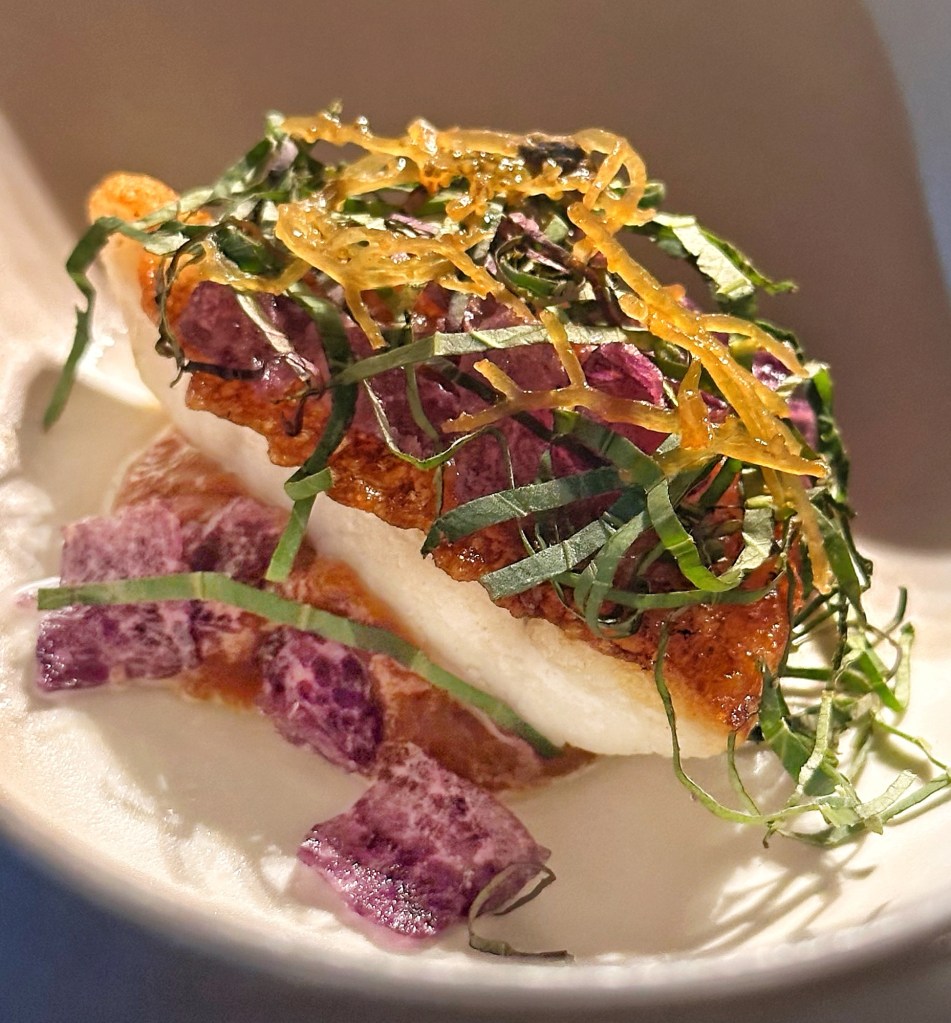
The sixth course featured apahap, or local seabass, delicately cooked on one side to preserve its natural sweetness and tenderness. Beneath it was an XO sauce made entirely from upo: a clever, vegetable-forward take on a typically luxurious condiment.
Traditionally, XO sauce is a rich, umami-packed relish from Hong Kong cuisine, made with dried seafood such as scallops and shrimp, along with cured meats, garlic, and chili. Here, the use of upo offers a lighter yet still deeply savory reinterpretation.
A touch of seaweed sourced from Laoag crowned the dish, adding a subtle brininess that echoed the flavors of the sea. The course was finished with a spoonful of kulma, a Maranao dish reimagined using only seafood and vegetables. Kulma is traditionally a rich, spiced curry from Mindanao, often made with coconut milk, turmeric, and a blend of local spices, typically featuring meat. In this version, the seafood and vegetables lend a more delicate, coastal character while retaining the dish’s signature warmth and complexity.
Molo
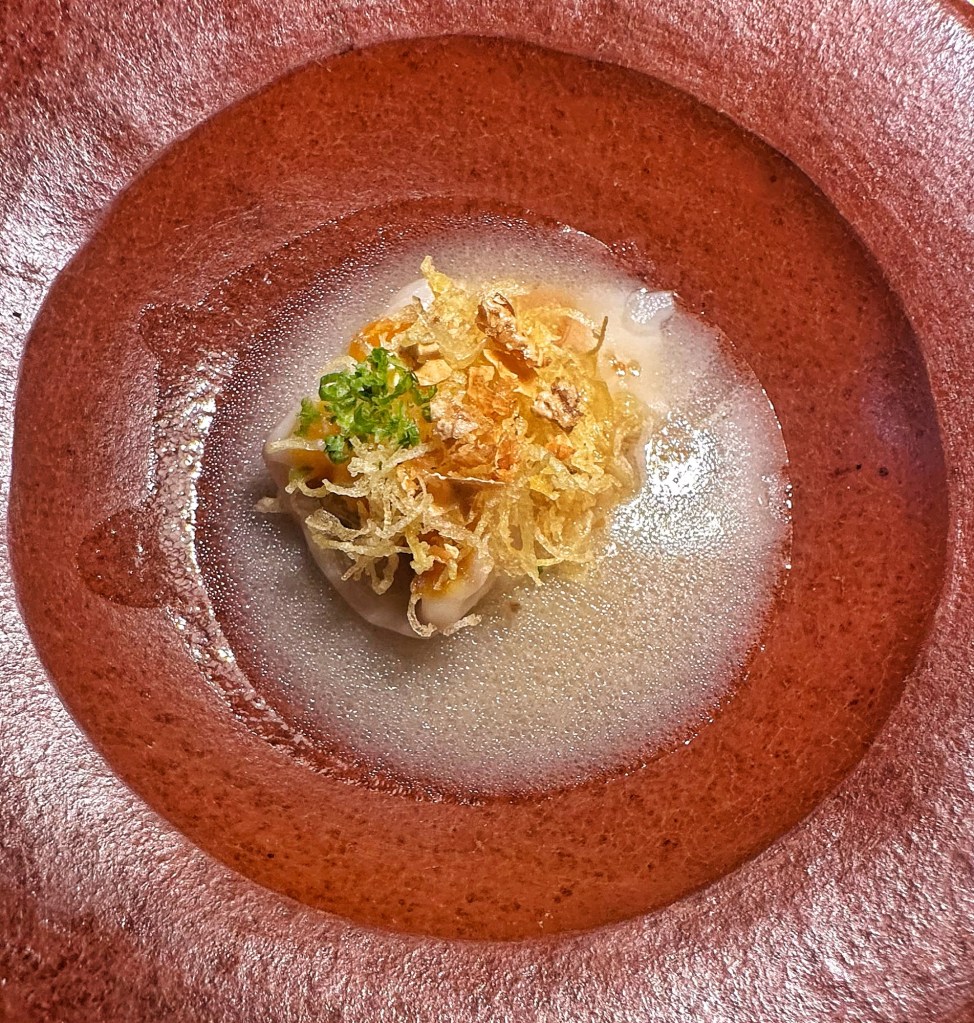
The next course is a refined take on molo, inspired by the Chef’s father’s cherished recipe. one where even the molo wrapper is made from scratch, a testament to tradition and craftsmanship.
In the Chef’s version, the same dedication shines through. The wrapper is handmade, delicately encasing a silky chicken mousse at its core. Each bite reveals layers of texture, further elevated by crisp shards of chicken skin and tender pieces of potato. The dish is brought together by a deeply flavorful chicharon-based broth—rich, savory, and intensely comforting—lending depth and soul to this beautifully reimagined classic.
Lechon
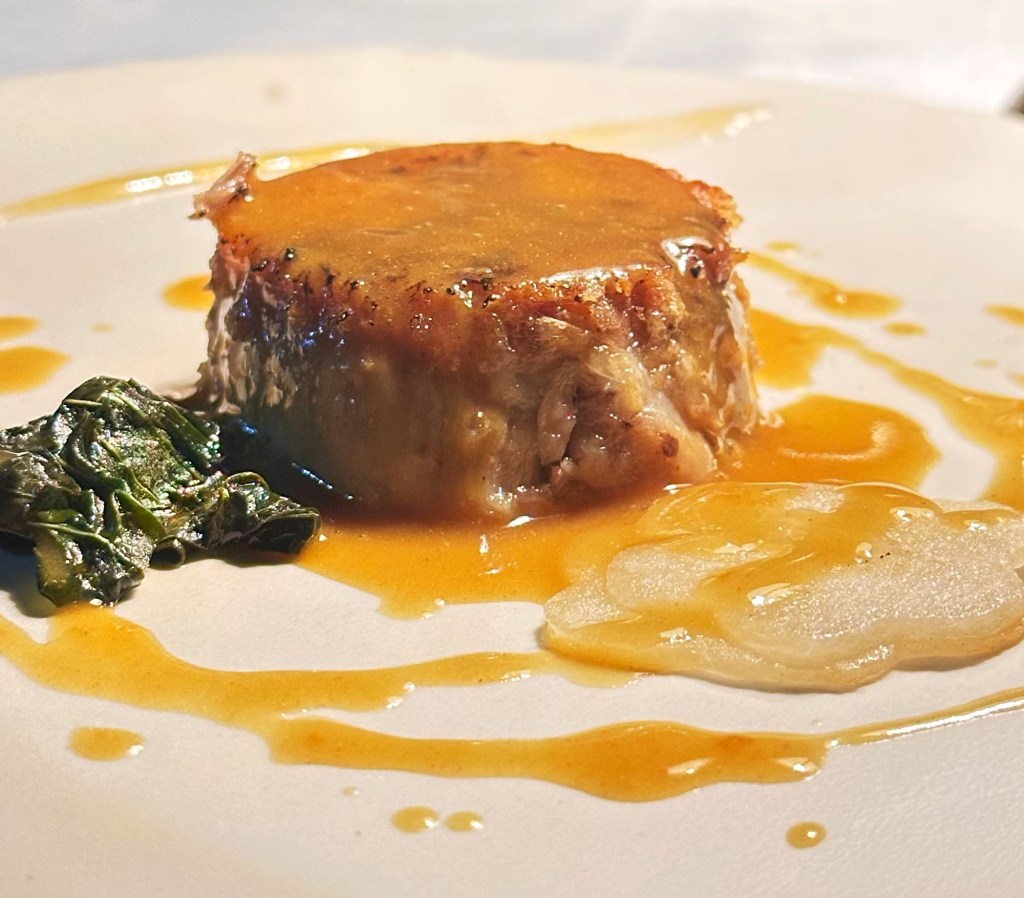
Pork belly, slow-cooked for nine hours until meltingly tender, is paired with a trio of vegetables : upo, singkamas, and talbos ng kamote, each lending a delicate balance of texture and earthiness. On the side, a glistening gel made from fermented mango and chili adds a bright, piquant lift, cutting through the richness. The sauce, meanwhile, draws inspiration from the deep, celebratory flavors of lechon, tying the dish together with its familiar yet elevated character.
Sunog na Kanin ( burnt rice)
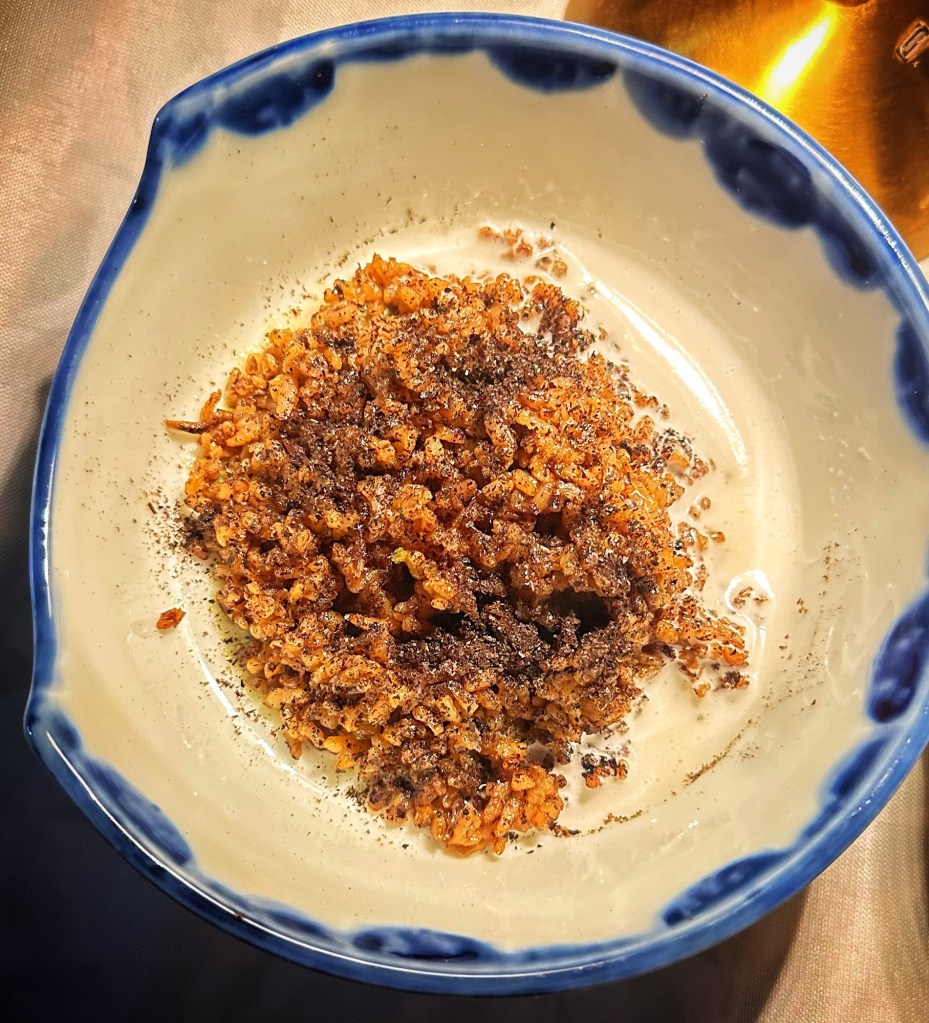
Heirloom grains from Pasil, Kalinga , widely regarded as one of the country’s finest rice-producing regions , take center stage in this thoughtfully composed dish. The rice is cooked in burnt butter and burnt soy sauce, imparting a deep, nutty savoriness with subtle smoky undertones. It is then finished with a touch of am—the starchy liquid drawn from the rice itself—adding both depth and continuity to the dish.
What makes it particularly compelling is how the am is further transformed: thickened, blended until smooth, and aerated in a siphon to create a light, almost ethereal foam. The result is a dish that captures the pure, comforting essence of rice, reimagined through texture and technique.
Dessert
Latik Cake
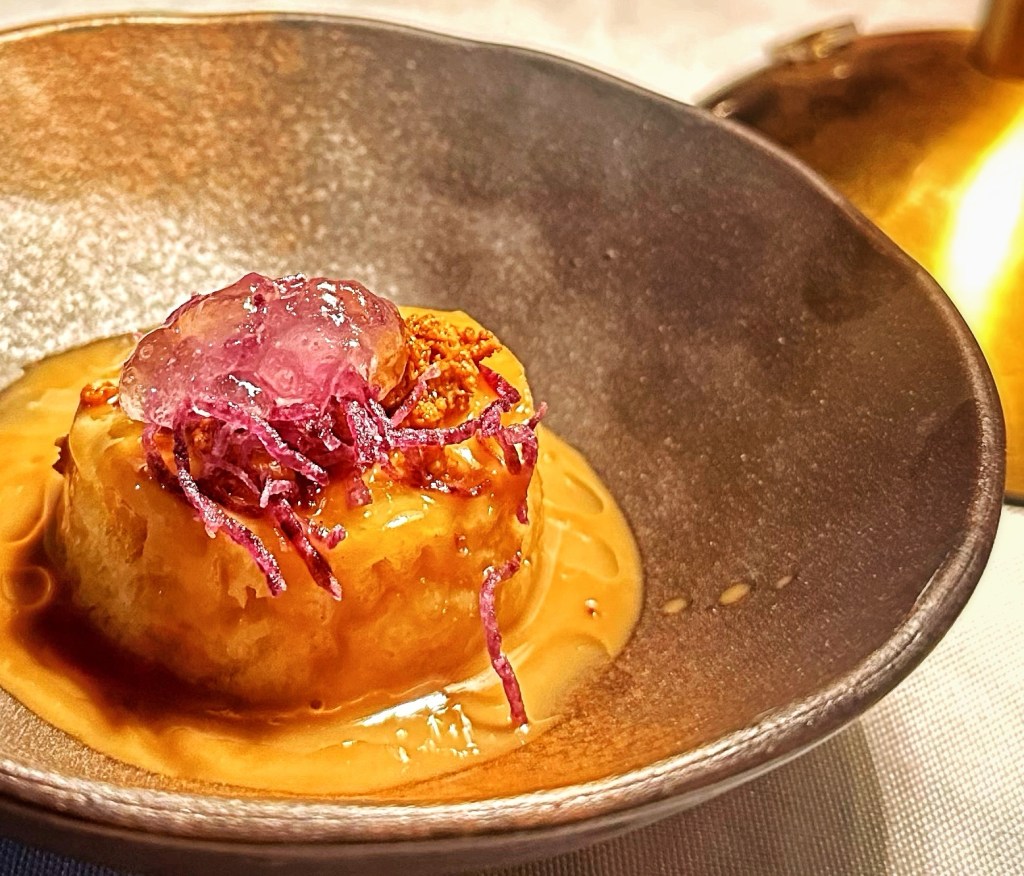
An unconventional creation, the cake is made from steamed beef fat, resulting in a dense, almost custard-like richness. It is enveloped in a latik sa suman sauce, layered with both latik curds and fragrant latik oil—celebrating coconut in its most indulgent forms.
A lambanog gelée crowns the dish, intended to add contrast, but its bitterness slightly distracts from the deep, comforting richness of the latik. While the coconut elements shine beautifully, the top note feels just a touch at odds with the rest of the composition.
Gatas
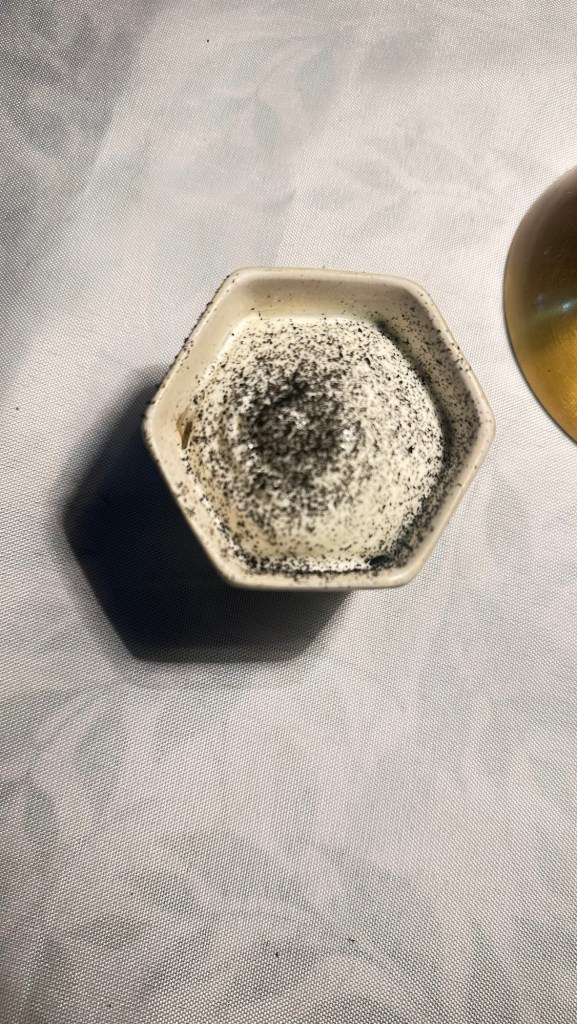
A quiet tribute to milk in its purest and most nuanced forms, this dessert unfolds in three distinct layers. At the base, burnt milk lends a deep, almost caramelized richness. The middle layer features unpasteurized milk, soft and delicately creamy, preserving its natural character. Crowning the dish is gatas ng kalabaw, prized for its lush, full-bodied texture. Together, the layers create a harmonious progression of flavor and depth: simple in concept, yet profoundly expressive.
Final Note
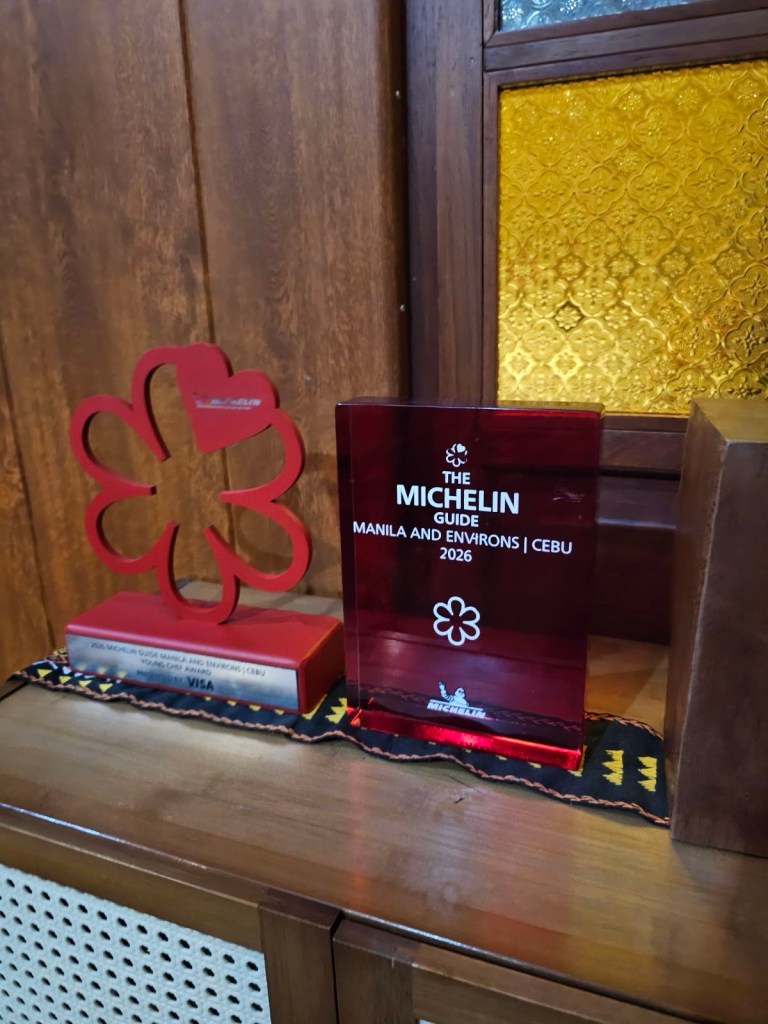
From the Longsilog, ensalada chip, and dehydrated shrimp head reimagined as okoy, to the succulent sea bass cooked on one side with XO sauce crafted from upo; from the shrimp gata infused with nganga (betel leaves) to the burnt rice elevated by the humble am, blended and siphoned into a delicate sauce; and finally, the deeply satisfying nine-hour lechon. Each course built seamlessly upon the last, forming a narrative that was both rooted and refined.
Deserving of a Michelin star, without question.
This was a deeply chef-driven experience, where each course felt intentional and personal. The storytelling by Michelin Guide Young Chef Awardee Chef Don Baldosano was cohesive and compelling, with every dish contributing to a larger narrative that never lost its thread.
Across the 11-course menu, the restaurant clearly understood and delivered on the hallmarks of Michelin recognition. From technique to creativity, from consistency to clarity of vision, it checked all the boxes.
Most importantly, the menu stayed true to the chef’s ethos: a thoughtful, unwavering commitment to locally sourced ingredients, elevated with precision and purpose. With the chef’s vision and creativity at the helm, the possibilities for Filipino cuisine feel truly boundless.
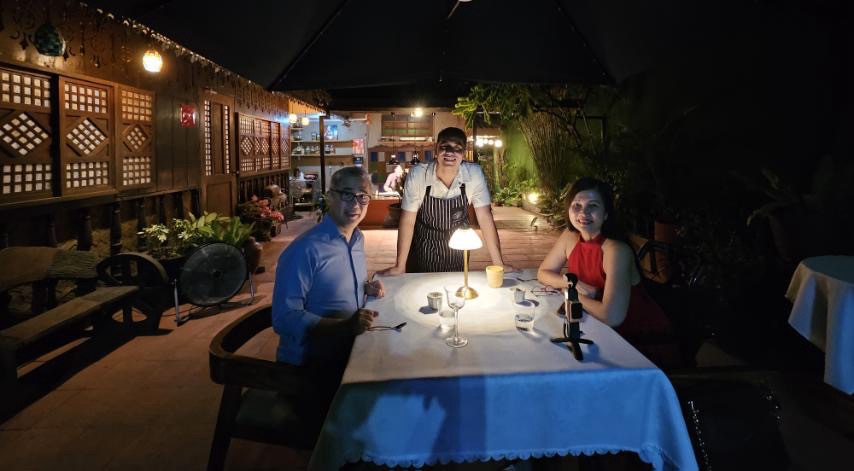
1 course seasonal tasting menu: ₱5,000/person (9 savory and 2 desserts)
16 course extended tasting menu: ₱7,500/person (10 savory and 6 desserts)
Linamnam is located at 31 Greenvale 2, Parañaque, Metro Manila
 Pigoutmanila