
Celebrated the removal of my cast with a tasting menu from Inato.
Inato (emphasis on the first syllable) is a Visayan word which means “our way” and is part of the Toyo family which is also a Michelin Star recipient…
Bahala Na!
The entire menu was called “Bahala Na!” , a phrase that loosely translates to “whatever” or “come what may.” Its roots trace back to Bathala, the ancient Filipino deity, carrying the deeper meaning of surrendering one’s fate to a higher power.
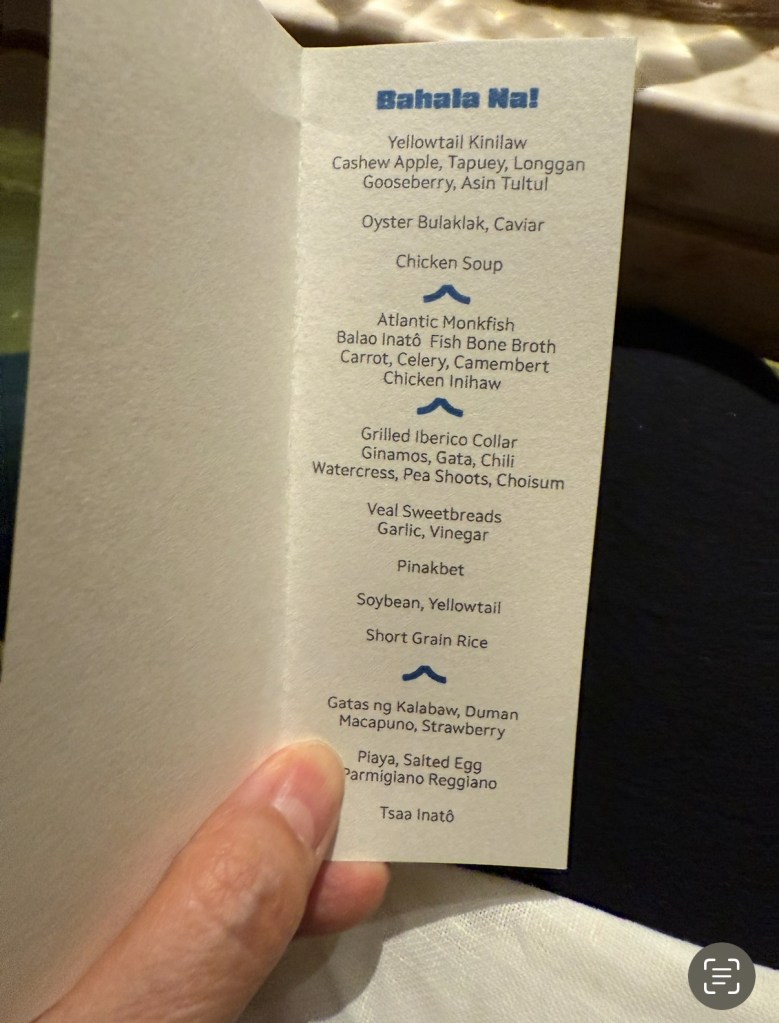
At Inato, however, the phrase feels less like resignation and more like an invitation to adventure. In a restaurant where playfulness dances hand in hand with creativity, “Bahala Na!” seems to mean trusting the chef’s instincts and following wherever inspiration leads. After all, this is a chef-centric menu—a culinary compass guided not by convention, but by imagination.
First course
Yellowtail Kinilaw cashew Apple, Tapuey, Longgan Gooseberry, Asin Tultul Oyster Bulaklak, Caviar Chicken Soup
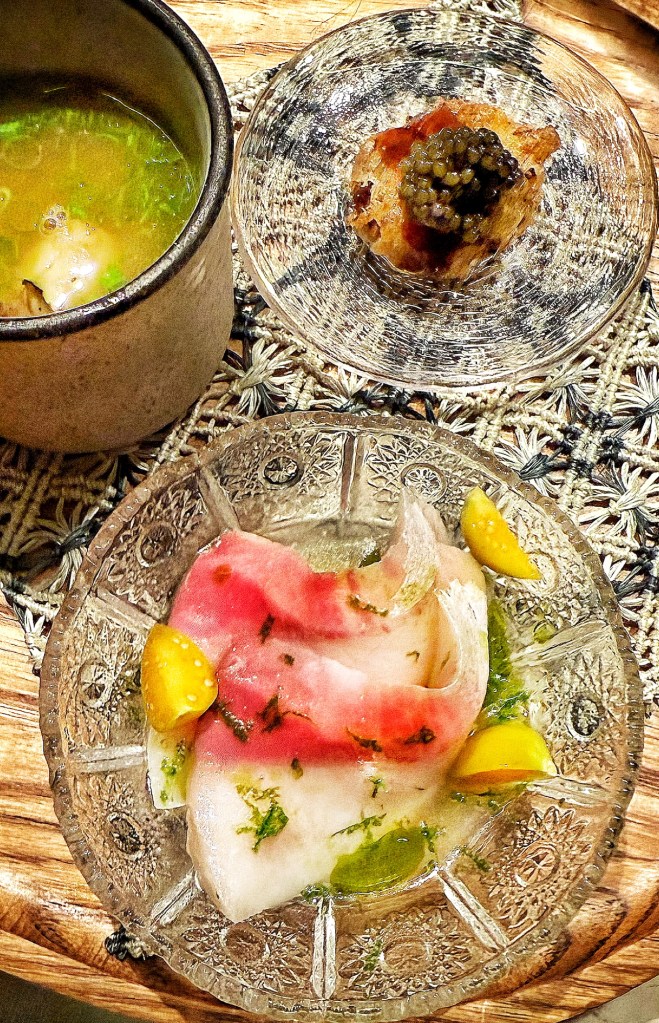
The first course arrived as a trio of dishes served together, and we were told we could enjoy them in any order we pleased. Like choosing which path to take in a garden of curiosities, the decision was entirely ours.
I began with the chicken soup. It was comfort in a bowl—a warm embrace that immediately settled in. Rich, flavorful, and deeply satisfying, it awakened my palate and whetted my appetite for what was to come.
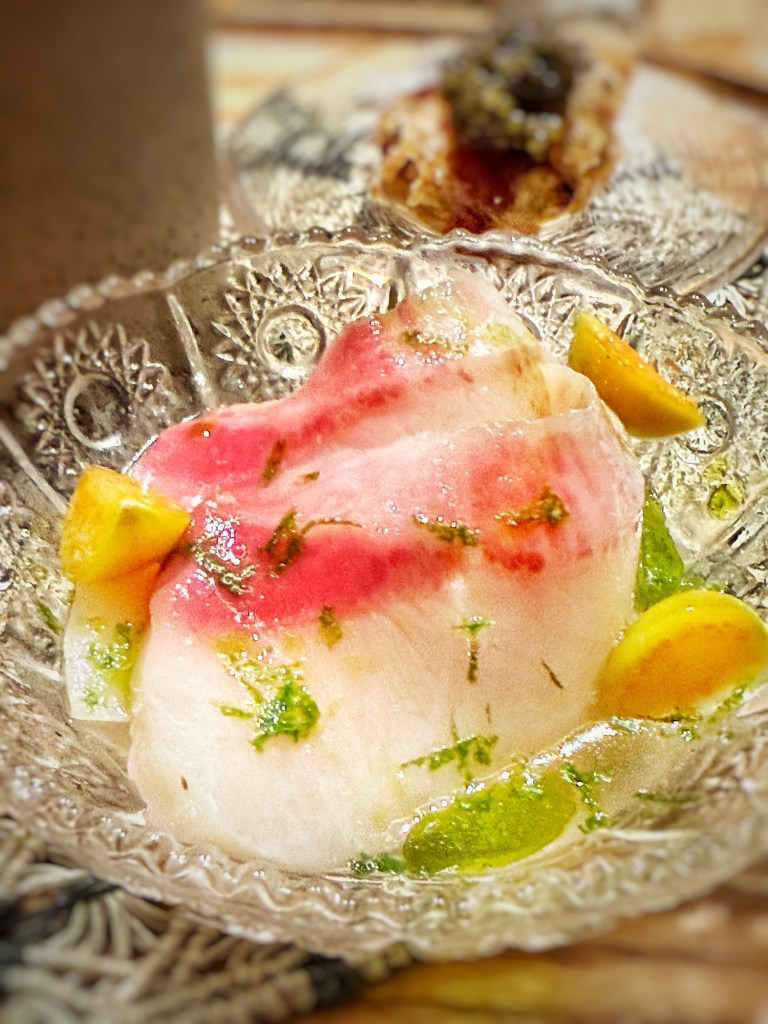
Next was the yellowtail kinilaw, marinated in cashew apple, tapuey, and longgan gooseberry. As I lifted the thick slice of fish, its white flesh capped with a pinkish-red layer, my first thought was how much it resembled a slab of liempo, complete with what looked like a ribbon of fat. But appearances can be deceptive. The moment I took a bite, the ocean unfolded across my tongue. The yellowtail was succulent, briny, and luxuriously thick, its clean flavors swimming beneath the bright acidity of the marinade.
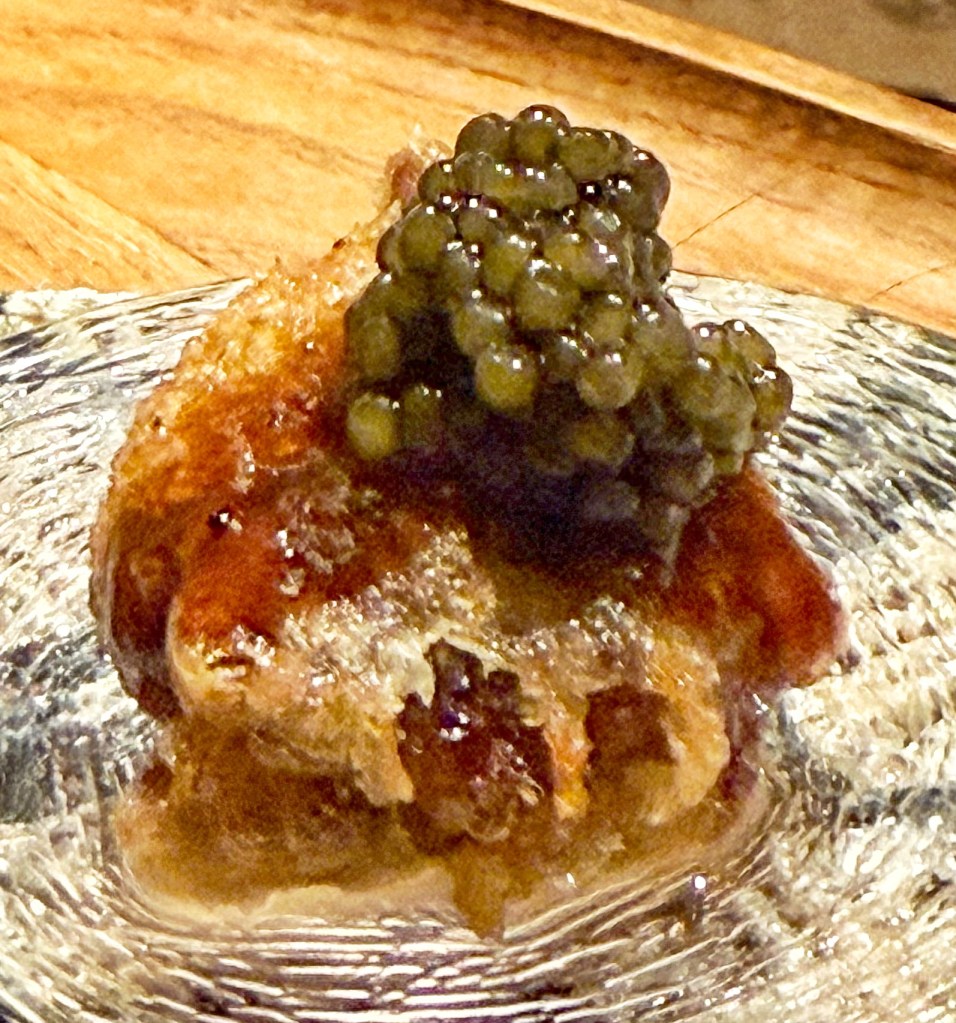
I ended with the oyster bulaklak, the richest of the three dishes. Fried to a satisfying crisp, it brought a welcome dose of indulgence to the ensemble. The caviar added bursts of salinity that popped like tiny fireworks, elevating each bite with concentrated flavor.
Looking back, I wonder if I should have reversed the order. The oyster bulaklak might have made a stronger opening act, allowing the yellowtail to take the final bow. Its pristine, ocean-fresh character would have left a cleaner, more elegant finish on the palate—the culinary equivalent of ending a symphony on a lingering, beautiful note.
2nd Course
Atlantic Monkfish Balao Inatô Fish Bone Broth Carrot, Celery, Camembert
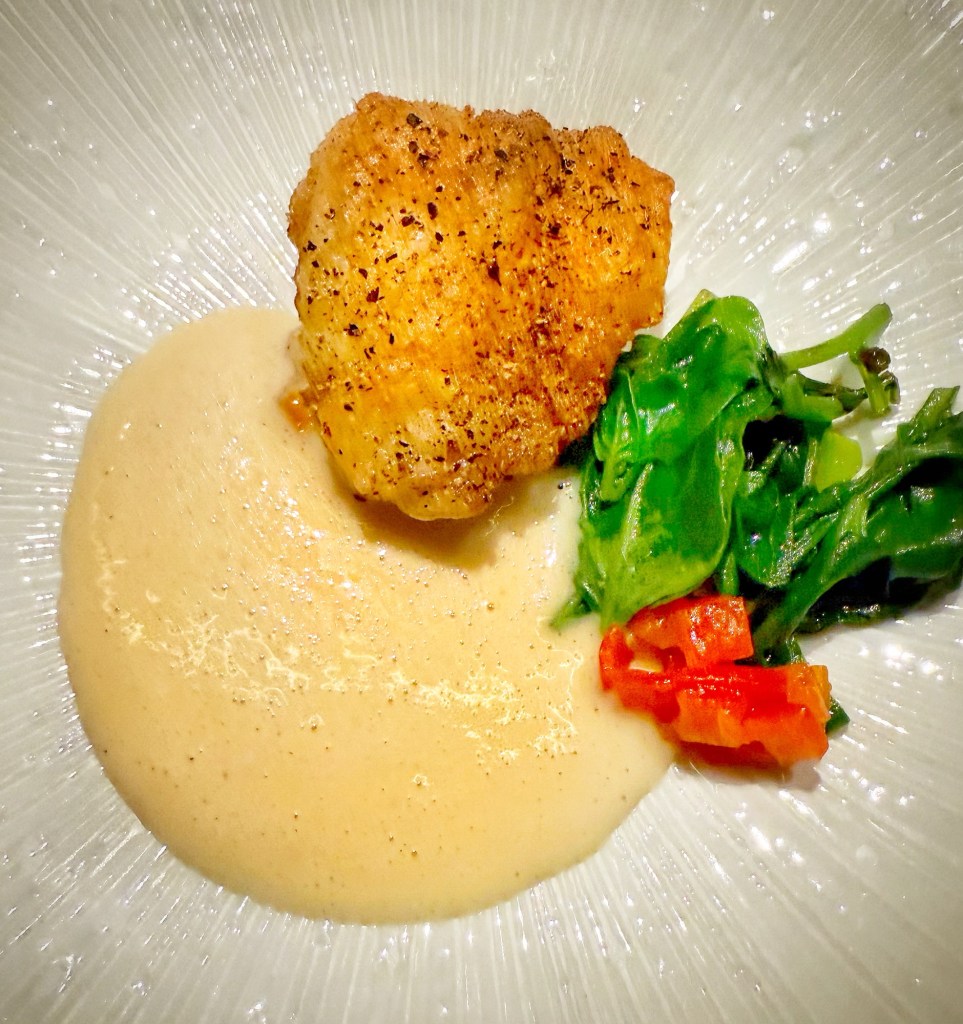
The second course featured Atlantic monkfish with balao, Inatô fish bone broth, carrot, celery, and Camembert.
Interestingly, there is no direct Tagalog translation for monkfish. As a cold-water species native to the coasts of Europe and North America, it has never quite found a place in the Filipino culinary vocabulary. Yet on this plate, it felt surprisingly at home.
The monkfish arrived with a beautifully crisp exterior that gave way to delicate, flaky flesh. It sat in a velvety broth woven from fish bones, carrot, celery, and Camembert : a combination that came together with remarkable harmony. The broth was the dish’s quiet conductor, orchestrating earthy sweetness, gentle richness, and deep umami into a single, seamless melody.
Then came the surprise hidden beneath the fish: balao, a preparation made from tiny fermented shrimps reminiscent of alamang and carrying the familiar soul of bagoong. Like a buried treasure waiting to be discovered, it revealed itself gradually with each forkful, adding bursts of savory intensity that transformed the dish from comforting to captivating.
What made the course so memorable was the interplay of contrasts. The crisp fish and its tender interior, the creamy broth and the sharp umami of the balao, the richness balanced by a touch of greens on the side : each element seemed to converse with the others rather than compete for attention.
At its heart, the dish felt like a meeting of two worlds. The monkfish brought the cold seas of the Atlantic, while the balao anchored it firmly in Filipino flavors. Together, they created a bridge between distant shores, proving that great cooking often happens where the familiar and the unexpected collide.
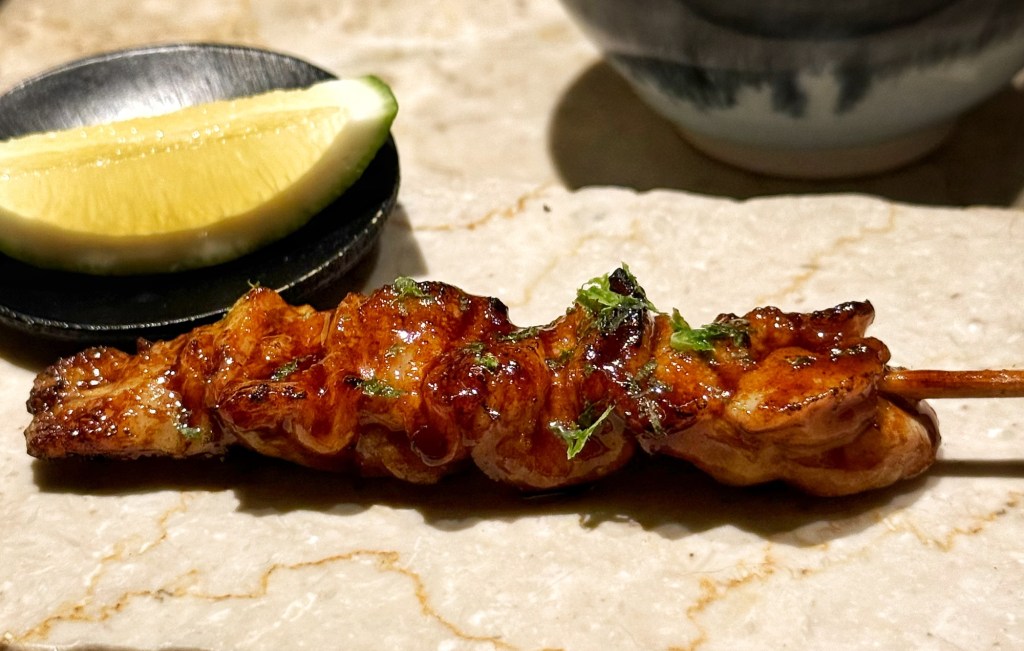
Lest I forget, the course included Chicken Inihaw as well. However, I failed to dovetail it into the lovely monkfish experience. The Chicken Inihaw felt more like an afterthought to me, overshadowed by the elegance and complexity of the fish and broth.
3rd Course
Grilled Iberico Collar Ginamos, Gata, Chili , Watercress, Pea Shoots, Choisum
Veal Sweetbreads Garlic, Vinegar,
Pinakbet , Yellow Tail, Short Grain Rice
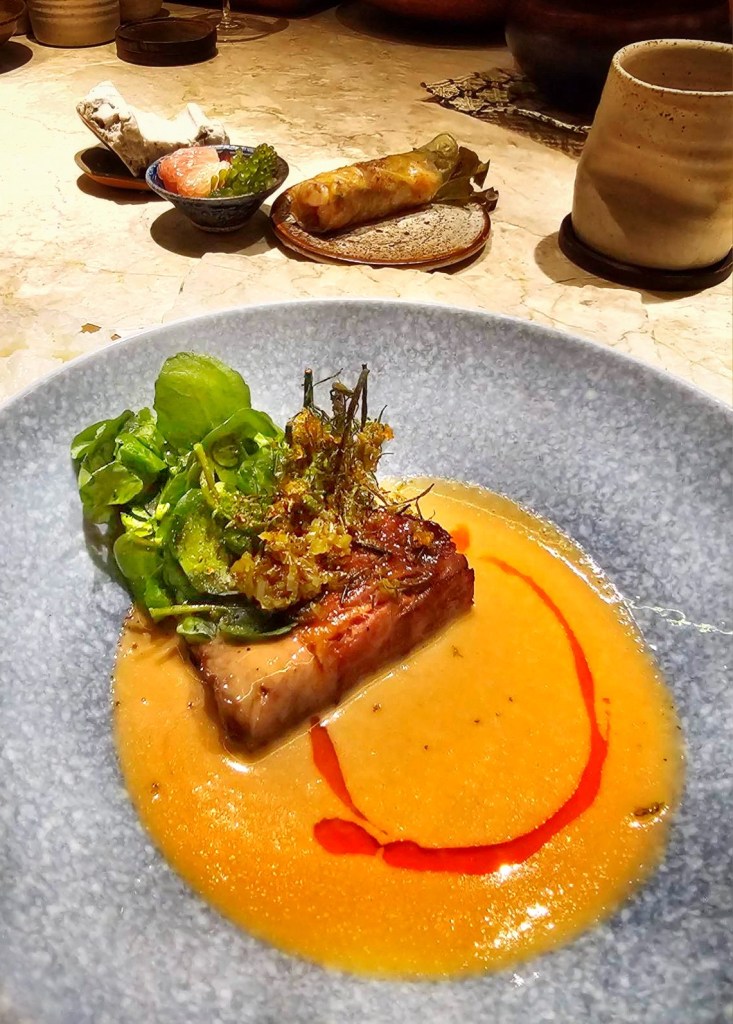
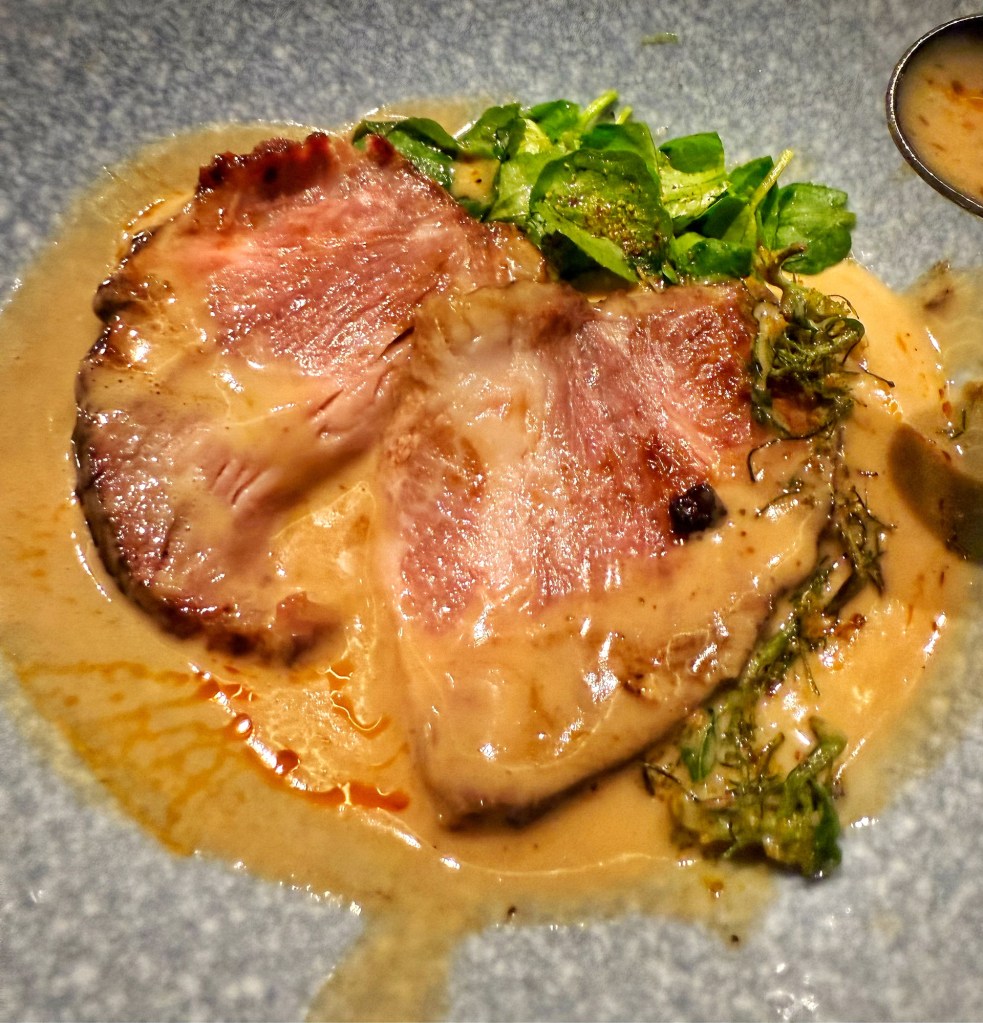
The main course arrived as the centerpiece of the meal: Grilled Iberico Collar with ginamos, gata, chili, watercress, pea shoots, choi sum, veal sweetbreads, pinakbet, yellowtail, and short-grain rice.
The star of the plate was the Iberico collar from Segovia, Spain, a prized cut known for its deep flavor and meaty texture. Chef JP grilled it for four to five hours, allowing fire and time to work their magic. The result was beautifully bronzed pork that was smoky on the outside, yet tender and succulent within. Each bite was rich, savory, and layered with flavor.
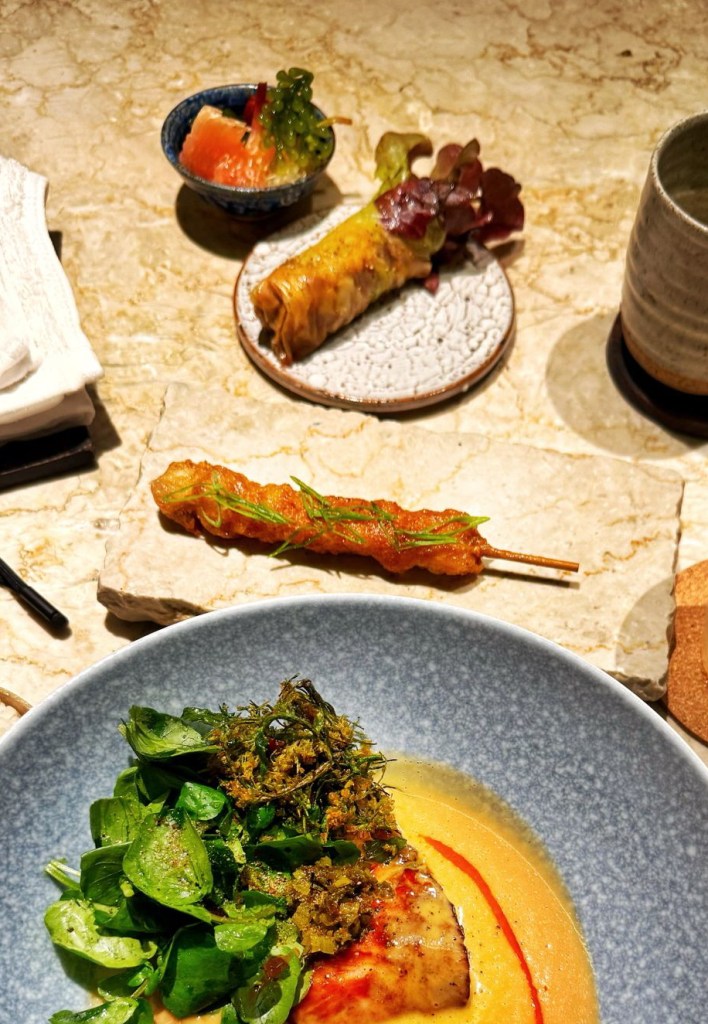
But this dish was more than just excellent pork. The ginamos added a subtle umami depth, while the gata brought a gentle creaminess that softened the dish’s bold edges. Chili provided flashes of heat, and the fresh greens—watercress, pea shoots, and choi sum—offered balance and brightness.
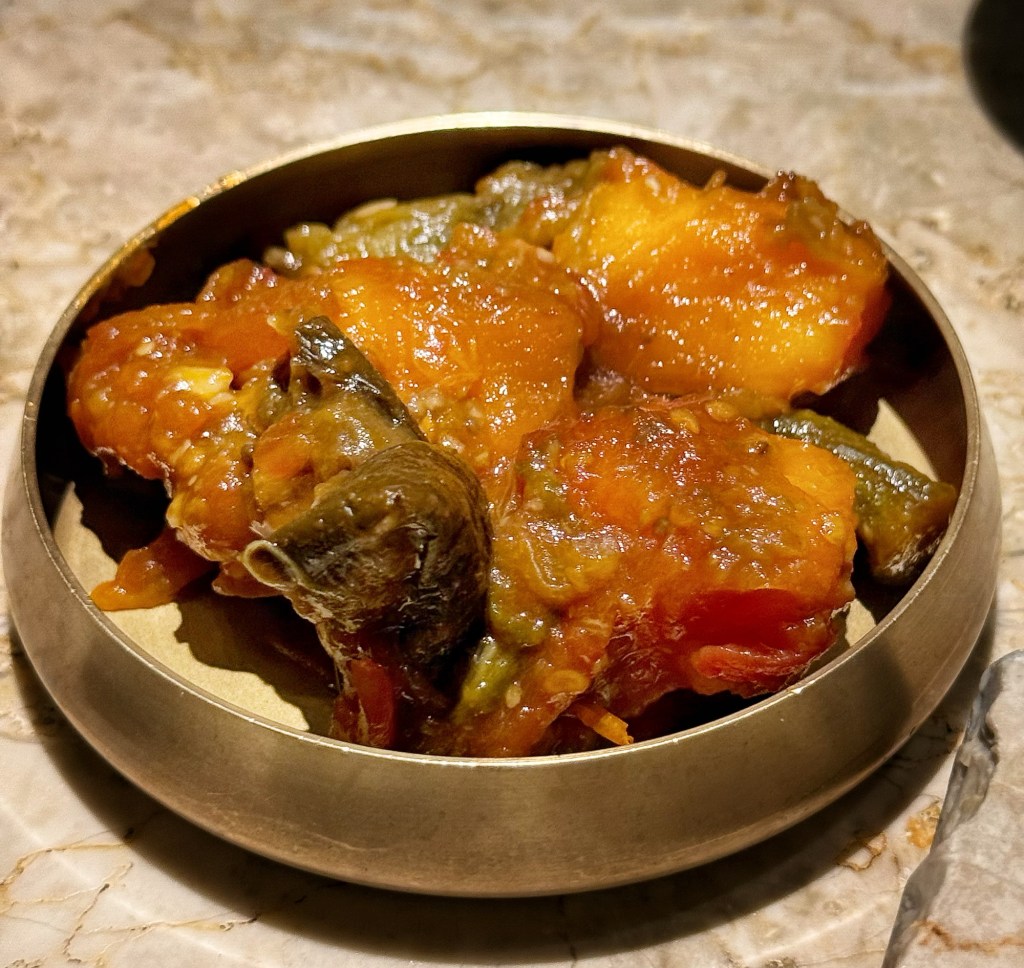
The accompaniments completed the picture. Pinakbet lent an earthy, distinctly Filipino character, while the short-grain rice soaked up every flavorful drop. Crunchy lumpia and a refreshing pomelo salad added texture and contrast, keeping the richness in check.
What made the dish memorable was how effortlessly it bridged cultures. Spanish Iberico pork met Filipino flavors without either overshadowing the other. If the monkfish course was a beautiful melody, this was a full orchestra—bold, harmonious, and deeply satisfying.
Dessert
Gatas ng Kalabaw, Duman Macapuno, Strawberry
Piaya, Salted Egg Parmigiano Reggiano
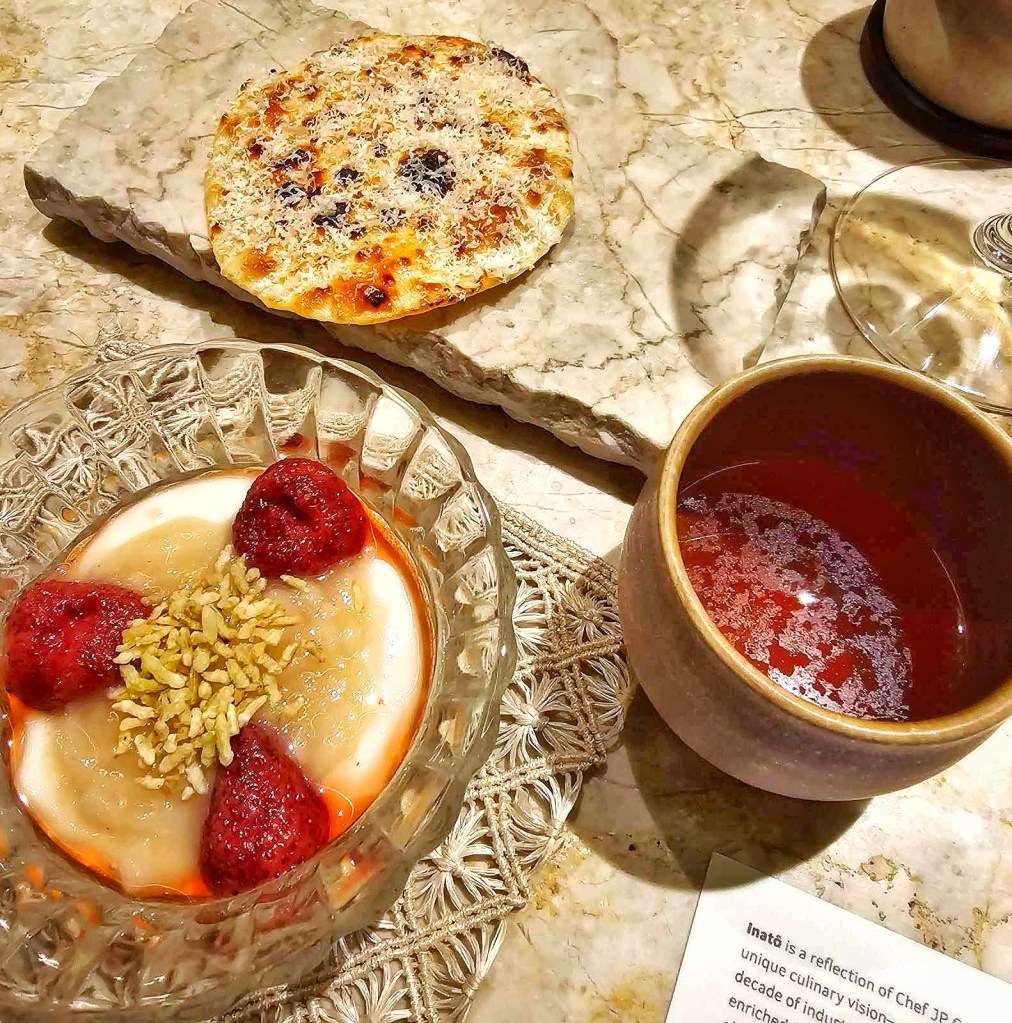
The meal concluded with a trio of desserts: Gatas ng Kalabaw with duman, macapuno, and strawberry; Piaya with salted egg and Parmigiano Reggiano; and Tsaa Inatô.
It was a fitting finale to the Bahala Na! menu : a sweet and satisfying ending to a culinary journey shaped by the chef’s whims and inspirations.
The Gatas ng Kalabaw showcased carabao milk alongside duman, macapuno, and strawberry. Delicate and understated, it offered a gentle sweetness, though its flavors remained somewhat muted for my palate. Even the strawberries seemed content to play a supporting role rather than steal the spotlight.
What truly won me over was the housemade piaya. Freshly crafted from scratch, it struck a beautiful balance between sweet and savory. The salted egg lent richness and depth, while the Parmigiano Reggiano added a nutty, savory edge that elevated the familiar Filipino pastry into something more nuanced and memorable. Each bite felt like a conversation between tradition and innovation, with neither overpowering the other.
Washed down with a cup of Tsaa Inatô, the dessert course brought the meal to a graceful close. If the earlier courses were chapters in an unfolding story, dessert was the final paragraph: unhurried, comforting, and quietly satisfying. It left me with the same feeling that the entire Bahala Na! experience had inspired: trust the chef, enjoy the ride, and savor the surprises along the way.

